Musings on Sports, Politics and Life in general

Latest

Of Trains and Automobiles


Earlier this week, George Will published an opinion piece in which he argued that the reason the liberal wing of our democracy is in love with mass transit is…well…because they see it as a means of imposing a collective social order on Americans. Now, I normally like George, even if he can be a bit long-winded and leave me scrambling for a dictionary. I happen to think that most people who live in our urban metropolises understand the need for mass transit systems, regardless of political bent. I find it hard to believe that anyone who lives in New York or the immediate suburbs can imagine the city without the subway and extensive commuter rail systems. The same holds true for the citizens of Washington DC or Portland or Chicago or any of the other two dozen or so metro areas served by decent mass transit. It’s also hard to imagine that residents of densely crowded metro areas wouldn’t like alternatives (think Los Angeles and Atlanta). So, George probably is just a little off base with his premise. But I can understand where George (and frankly, many conservatives) get his premise: for too long, the discussions of trains and cars has been framed as an either/or proposition. But as any of us who live with both can tell you, the discussion needs to be far more nuanced than that.

The President, in announcing his high-speed rail initiative, failed miserably in seizing the chance to reframe the debate, succumbing to the decades-old “either/or” arguments. What’s more, he missed the opportunity to focus rail projects where they’re vitally needed. And he failed to propose a viable means of funding them.

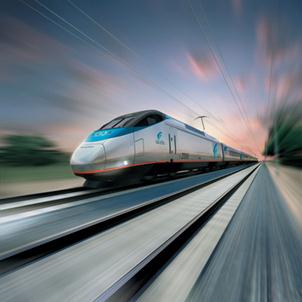
First, the President envisions a country in which high-speed rail is an inter-city solution, rather than an intra-city one. That flies directly in competition with airlines (for long distances) or autos (for shorter distances). In terms of consumer cost, trains can’t compete. For instance, I can fly from New York to Boston for less than it costs to take the Acela. Round trip on the Acela, without 30 day advance booking, is approximately $290. Flying on a regional carrier costs about $250. Take away the federal subsidies for Amtrak, and rail becomes even less competitive. As for autos, I can drive to Philadelphia in about two hours. Total cost, including tolls and even the currently insane price of gas: around $35. Acela to Philadelphia, one-way: $118.

The second issue with this proposal is convenience. The President said something to the effect that he imagines being able to board a train in one place, and then debark at another within steps of your final destination. This is obviously the sign of somebody who doesn’t understand the way rail systems are designed. If I fly, 9 times of 10 I’ll need to rent a car in order to get to my final destination. That other 10% of the time, I’ll need to hire a taxi. If I take the train, 9 times of 10 I’ll need to rent a car to get to my final destination. That other 10%? I’ll need to hire a taxi. If I drive, I don’t need to worry about hiring a vehicle (and the additional costs that incurs). Once you take into account the time it takes to either find a cab or rent the car, driving my own vehicle often takes less time than taking either a train or plane. Another similarity between the rails and the skies is that you’re limited as the number and size of bags you’re allowed to carry-on, which in both cases is insanely inconvenient if taking a prolonged trip, or even a short trip with the whole family. When driving, of course, the only limitation I face is amount of luggage I can put in my car. One other note on the subject of convenience: the President’s vision also includes not having to pass through TSA checkpoints when boarding these high-speed rail cars. I’ll take that one with a grain of salt, as the TSA is already working on plans for “securing” the nation’s passenger rails.

Finally, the matter of funding comes into question. Building and maintaining railways is an expensive proposition. The reason there aren’t any private passenger rail companies today is they aren’t profitable – not even close. Amtrak lost $1.3 billion in 2010 and the American public will end up paying that from our taxes. The Acela service, which is the high-speed line between Washington and Boston, carried roughly 1/5 of Amtrak’s total passenger load of 27.2 million, yet it also lost money. The total ticket revenue from those 27+ million people was $1.6 billion, yet that barely covered ½ of the total operating expenses. That means we subsidized every passenger riding Amtrak to the tune of around $48 each. (If you’re interested, you can look all of this up on Amtrak’s financial statements.) The only hope that a high-speed rail system has for financial health is dramatically higher ridership than we’re currently seeing. The question is, will Americans prefer to travel by train? Over the last 70 years, the answer has been a resounding “No.” We simply prefer the convenience of the car to the train for intermediate distance travel and the speed of the airplane for long distance travel. Before you get on my about these being “high-speed” trains, picture the hullabaloo raised by folks who have a train barreling through their community at 300mph. And at 300mph (which is the current top speed for passenger service anywhere), you’re still traveling around 200mph slower than a plane.

In plain talk, trains can’t compete financially, technologically or convenience-wise, with the way we currently travel. Heck, even if gas went up to $10/gallon, that drive to Philly would still be cheaper and faster than taking the train!

So, refocus your attention where it’s needed, Mr. President. Improve light rail service in our cities. Improve connections between the suburbs and the downtown areas. Figure out a way to make those services profitable – or at least self-sustaining – then come back to us.

Happy Birthday, President Reagan!


Ronald Reagan was a once-in-a-generation leader; the kind of President who America has been lucky enough to produce every quarter century or so. At least, that is, until lately. Since today is the centennial of his birth, it seems only fitting that our nation look back on what his true legacy is and why nobody in current politics seems up to his measure.

I’m sure if he were alive today, the Gipper would be aghast at the current state of political discourse. While there have always been some extreme differences in the view of what role government should play between conservatives and liberals, Reagan was able to bridge them and enact legislation that positively affected every man, woman and child in the United States. Reagan commanded respect, but more than that, people on both sides of the political divide genuinely liked him. And the reason was that Ronald Reagan was genuine; you knew where he stood and you knew where you stood with him.

Reagan was also an eternal optimist. He believed in the promise of America and he firmly held that American Exceptionalism was not a passe term for the history books. He knew our country had a leading role to play in the world and he wasn’t about to be deterred from taking the lead. “Morning in America” wasn’t just a campaign commercial; it was his attitude about life and about what our nation really stands for.

Many forget the challenges he faced upon assuming office on January 20, 1981. The nation, pummeled by a decade punctuated by Watergate, the loss in Vietnam, the Oil Embargo, 3 Mile Island and Jimmy Carter, no longer believed that government could be trusted to do anything right. Stagflation – characterized by high unemployment, high interest rates, high inflation and low growth – was being heralded as the new economic normal. Overseas, America was reeling from Soviet assertiveness in Asia and Europe. Worst of all, a band of militants had invaded the US Embassy in Iran, capturing and holding 52 US citizens. Despite the vaunted power of the US, the country was helpless to rescue them – and humiliated in the process.

Yet, within two years of his inauguration, inflation had disappeared, jobs were growing at the fastest pace since World War II, interest rates were returning to normal levels and the nation’s economy was booming. While people still weren’t ready to entrust their lives to the government, a wave of patriotism swept across the land and it once again became acceptable to salute the flag, as well as the men & women who served under it. Overseas, the Soviets were sent back into retreat – a retreat that, by the end of the decade, would see the end of communist rule in all but a few small countries. America demonstrated that we would stand by our allies, repelling Cubans from Grenada and dispatching Marines to serve as peacekeepers in Lebanon. Those who would dare tweak our nose soon discovered that America was no more  paper tiger, much to the chagrin of nations like Libya and organizations like the Red Brigades.

But all these accomplishments were possible only because of Ronald Reagan’s demeanor and personality and the way he interacted with others. I’ve already mentioned his optimism, but it went far beyond that. He had a gift – he same gift that FDR and Kennedy had before him. The gift to inspire others to do more than they believed they could, to believe in themselves and to believe in the American Way. The Reagan Revolution, in retrospect, was about more than converting lifelong Democrats into Republicans. It was about restoring our faith in ourselves.

That’s why, when I look at the political landscape today, I wonder where that leader is today. I simply don’t see one, in either party. President Obama had his chance, but allowed himself to be dragged into the partisanship that has defined Washington for the past two decades. None of the Republican presidential aspirants have the ability, either. In other words, all of our leading politicians not only play on class and economic divisions, they rely on that strategy to generate votes. Rather than reminding us that we are one nation and that when we act with one voice, we are unstoppable; they continue to survive in a divide and conquer mode. I’ve yet to hear any of today’s crop echo President Reagan’s sentiment that “If we love our country, we should also love our countrymen.” And it our great loss that none are on the horizon.

So, rest in peace, Mr. President. You are sorely missed.

September 12th: the day after


Today is September 12, 2010. It is time for America to move forward and stop looking at the reflection of 9 years and a day ago.

This is not to suggest that Americans should ever forget the events that unfolded on that tragic day; far from it. But our nation has suffered other terrible days and we learned to overcome, to adapt and to move on to tomorrow. 9/11 should join that list of days. Not forgotten, but placed alongside the other brutal and bloody events that have shaped our history. Pearl Harbor in 1941. Gettysburg in 1863. Chosin in 1950. Khe Sanh in 1968.

What makes September 11, 2001 so painful for those of this generation is that happened on our watch. It seemingly came without warning. Nearly 3,000 of our fellow citizens perished in what still seems to most of us to be an act of willful murder – without provocation and needlessly. Nobody had declared a war. Nobody had ever used a means of mass transportation as a deadly weapon. And it all unfolded before nearly everyone’s eyes on live TV.

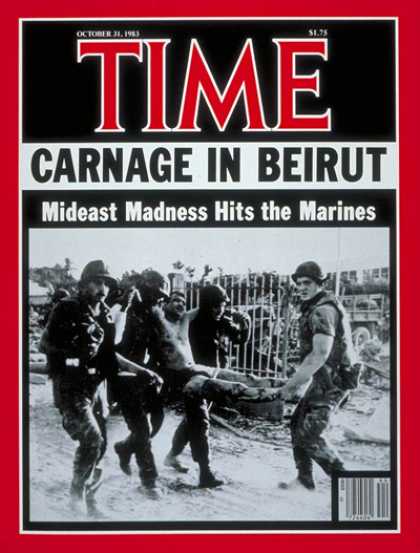
The reality is, that while 9/11 is tragic and the loss of life horrific, it certainly wasn’t unexpected by anyone who was paying attention to the world around them. Like the attack on Pearl Harbor two generations before, the tensions between the US and the unannounced enemy had been escalating for decades. This was not the first terrorist attack on US citizens or property by Islamic radicals – that dubious honor belongs to the Iranian Embassy takeover in 1979. There were subsequent attacks in the intervening years: Beirut in 1983 and the USS Cole in 2000 among them. But since we’re still enthralled by those nine year old images, we refuse to move on to the next stage of the fight.

Our Nation seems stuck in neutral. Rather than addressing the reality of being at war and throwing all of our resources at the enemy, we’ve settled for half-measures that lead neither to victory nor defeat, but a sort of Twilight Zone-ish never ending battle. Afraid to confront an implacable enemy abroad, we’ve willingly stripped away our own liberties little by little. No one questions virtually disrobing before boarding a flight anymore. Where once the idea of government promoting a “See something, say something” campaign would have been resisted on invasion of privacy grounds, today we laud those poor saps for doing their “civic duty.” Rather than react like our grandparents after Pearl Harbor; rather than show the resolve required of great nations as after Gettysburg, rather than displaying the fighting spirit of our parents at Chosin, our generation has decided that American values are not worthy of a fight. Instead of demanding our leaders throw everything but the kitchen sink at those who would do the United States harm, we would rather strip away the Constitution, one layer at a time; much the same way an inexperienced cook peals away bad layers of an onion hoping to find a useful piece beneath. But like the novice chef, what we’re likely left with after all of that peeling is a pile of garbage.

It’s your choice, America. Sit around, flaccid and impotent. Or do the same as we demand of our volunteers for military service: defend the Constitution of the United States from all enemies, both foreign and domestic. Until we accept that we must do the latter, we risk losing something far more important than a battle to the Islamists. Failure to stand and fight will result in the loss of our being Americans.

Fidel learned what Obama won’t


There are numerous reports circulating on the web that Fidel Castro has seen the light. According to Jeffrey Goldberg of The Atlantic, Castro told him “The Cuban model doesn’t even work for us anymore.”

Huh? What? The leader of the Western Hemisphere’s oldest communist dictatorship admitting communism doesn’t work?
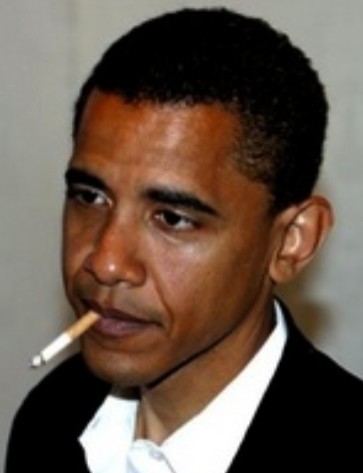
Shock value aside, you have to wonder if (a) Fidel is losing his mind or (b) he’s finally seen the light.

Here’s guessing (b). A little later in the article, Goldberg reports his interpreter said, “I took it to be an acknowledgment that under ‘the Cuban model’ the state has much too big a role in the economic life of the country.”

That’s a WHOA moment if ever there was one. One of the last communist dictators on earth acknowledging government control of the economy doesn’t work. In case you’re wondering, even though Cuba has instituted some economic reforms the country is hardly a bastion of capitalsim. The typical worker earns $20 a month. In the same article, Goldberg describes how the Havana Aquarium was opened especially for Fidel. Just so he could watch a dolphin show. Oh, and all the employees “volunteered” to work on their day off, including the aquarium’s director (who happens to be a – hold onto your hat – nuclear physicist.) You can’t make this stuff up.

Barry takes a break

The question that went unasked in the article is, if the leader of the Cuban revolution realizes that the socialist model failed, why hasn’t the Democratic Party here in the USA? For that matter, why hasn’t our President? This report came out on the same day that President Obama looked to Trotsky and Lenin for political inspiration. He invoked class warfare (tax hikes on the wealthy) and suggested stronger government intervention in key industries is needed to get America back to work. It’s kind of sad, actually, that the last great communist dictator understands what the leader of the free world fails to grasp.

Of course, if Obama and the Democrats get their way, we could wind up with the one thing Cuba can lord over us Americans economically: full employment. Of course, we’ll all earn $20 a month. Oh, and we’ll all have to “voluntarily” give up our days off whenever the President wants to watch a dolphin show.

Besides, who doesn’t want a 1958 Chevrolet in the driveway?

Michael Agosta for NJ-9


New Jersey’s 9th Congressional District, which covers most of Bergen County and in Hudson County, parts of Kearny and Jersey City as well as Secaucus, is currently represented by Steven Rothman. It’s time to change that and elect Michael Agosta to Congress this November.

Steve Rothman is a likeable person. Anyone who doubts that he is doing what he believes is best for the citizens of his district, the state and the nation in general are seriously deluded. Unfortunately for the rest of us, Rothman’s views of what’s best too closely follow the ideas of Karl Marx. That is, Rothman is an unabashed socialist. He honestly thinks every problem we face is best solved by a huge dose of government intervention and wealth redistribution. He doesn’t call himself a socialist, of course; but his voting record speaks for itself. He is ranked as a far-left liberal, having voted for nearly every proposed tax increase and government program that’s been introduced since he took his seat in 1997. Perhaps the best thing to be said about Rothman is that unlike his predecessor, Robert Torricelli, nobody suspects Rothman of undue corruption.


Michael Agosta, unlike Rothman, is a political neophyte who espouses the ideals of smaller government and personal responsibility. He is a man of good standing, although the Democratic Party has certainly tried to impugn his character over the past two weeks. A former Federal Air Marshall and soldier, Mr. Agosta’s national security credentials are born of the front-lines, not of a government-sponsored think tank. And on economic issues, Michael Agosta understands that the only way to revive the economy is to get people back to work – and to do that, we need to reduce taxes and hold the government accountable for their actions.

This November, vote for Michael Agosta. Vote to return America to Americans, not politicians.

Let the “Silly Season” begin


Once every two years, Labor Day signals the opening of the “Silly Season.” What is this “Silly Season” you ask?

In a nutshell, the “Silly Season” is when the general populace joins political junkies in paying attention to the politicians running for office in November. And the politicians, on cue, begin campaigning in earnest. But what it makes the season silly is the way the politicians act. Suddenly, Democrats begin espousing conservative ideals. Ordinarily, they’re joined by Republicans discovering their love of liberal programs.

But this year promise to be sillier than most. With an unsettled economy, unemployment rising and public dissatisfaction in both political parties rising to all-time highs, Democrats are in serious trouble heading into the

campaign season. Many Congressional seats once considered safe for the Donkey Party are now in play; seats once considered as being in-play or toss-up’s are now leaning Republican. As reported in yesterday’s New York Times, the DNC is cutting loose many candidates, hoping to minimize losses in the November mid-terms.

In short, what many Democrats are discovering is that the positions they’ve spent the past four years carving out are not exactly what the country wanted. The reason they won most of their seats – including the Presidency – was national dissatisfaction with the Bush administration. The initiatives the current administration have pushed through have proven even more unpopular than the ones proposed by GWB. How bad is it? 56% of Americans want the abomination that passed as health care reform repealed. Republicans now lead Democrats in all ten of the major issues polls.

Not surprisingly, in light of these developments many Democrats are running as far from their own party as possible. It’s amazing how many Democrats are now against the very health care package they passed earlier this year. (Remember when Nancy Pelosi declared that once we knew what was in the bill, we would love it? Oops.) Even President Obama is finding his conservative voice, as reports suggest he will ask Congress to pass “targeted” tax breaks on Wednesday. To add to the sense of desperation from the Democrats, many are hoping to cast their opponents as extremists who would destroy the fabric of American life.

Of course, Republicans are tempted to equally join in the insanity, but so far have held the line on leaning left. They fully understand that the nation has peeked behind the Progressive curtain and been repulsed by the view. This is turning into one of the strangest elections ever seen, where the minority party is the one fending off negative attacks. Normally the reverse is true, but Republicans don’t need to go on the attack in this cycle. The news, even left-leaning organizations like MSNBC and the NY Times, can’t help but report the dismal employment numbers. So Republicans are remaining more or less silent, except to point out that the news hasn’t been good since the Obama administration took over. That’s attack ad enough. Besides, the left is self-immolating itself well enough that the Republicans don’t need to join in.

So kick back and enjoy the Road to November. It promises to be a fun – if bumpy – ride.

How Bret Schundler inadvertently saved NJ’s schools


All of the furor over the NJ Department of Education’s faux pas, the one that “lost” $400 million in federal education aid, overlooked an important fact. States that are eagerly lining up for the “Race to the Top” funds are simultaneously throwing away more of their discretion in how to educate their youngest citizens. You may be asking yourself how that could be true; after all, isn’t the “Race to the Top” about improving educational opportunity?

Nominally, the answer to that question is yes. But like most federal diktats, the “Race to the Top” became a maze of byzantine rules and regulations far more than a program funneling money to states with innovative ideas for promoting education. The reason New Jersey was denied acceptance into the program is bizarre, even in bureaucratic terms. The scoring criteria included a minimum per-pupil spending increase. Had state officials used budget data from 2008 and 2009, the increase would have been represented; because they used current budget data, the state’s reduction in per-pupil spending was presented.

Only in the bizarro world of Washington D.C. would the state that ranks third in per-pupil spending wind up penalized for getting its fiscal house in order. Yes, New Jersey cut per-pupil spending this year, but what of it? Integral programs to education are intact, despite the hew and cry raised by the NJEA during the long debate leading to the final budget (unless, that is, you consider ice dancing and lacrosse integral to education).

Bret Schundler wasn’t fired for a clerical error. He was fired for lying to the governor about the clerical error. In that respect, Governor Christie had no choice but to fire Schundler; no leader can have morally challenged people on their executive team. But somebody should award Schundler a “Best Mistake of the Year” award. By losing out on those funds, New Jersey is exempt from federal oversight of any “Race to the Top” program mandates. Is it that important? Yes, if you think that the federal Department of Education has yet to live up to the stated reason for its creation. (The unstated reason, of course, was President Carter’s tit-for-tat with the NEA during the 1976 campaign).

In 31 years of federal mandates, administrated by the ED, American children continue to fall further behind their contemporaries in other nations. “No Child Left Behind” has effectively left an entire generation of children behind, unprepared for entry to either college or the workforce. Recent studies consistently demonstrate that higher percentages of students require remediation upon entry to college today than 30 years ago. The Department of Education is meeting its stated mission of ensuring that all students receive the same level of education. Even if the level is well below what an actual education should be.

Due to a clerical error and Governor Christie’s returning power to local school boards, New Jersey is poised to surge to the top in primary education. Which seems a far better option than a Race to the Top.

You’re a US citizen, but you can’t drive in NJ


NJDMV & You - Imperfect Together

According to an article in yesterday’s Jersey Journal, birth certificates from Puerto Rico, issued prior to July 1st are invalid under New Jersey’s 6 point verification program. Talk about a fiasco! American citizens are being denied driving privileges solely due to the circumstances of their birth. In the meantime, citizens of notoriously corrupt nations – such as El Salvador and Nicaragua – are not facing such draconian measures.
This is another example of regulations and bureaucracy standing between citizens and their rights. If you’re old enough, you remember when NJ didn’t even offer a photo ID; now, you need to prove you are who you are 6 different ways in order to legally drive. Of course, under the current system a birth certificate is not required to get a license. But the alternative documents for identification aren’t readily available to most citizens: fewer than 10% have a DD-214, for instance.

A driver’s license remains a privilege and not a right. However, in a state like New Jersey denying someone those privileges often means denying them the means of earning a living, food shopping, getting the kids to school – in short, denying them the basic standard of middle class life. Denial of privileges should only be done in extreme circumstances (repeated DUI, for instance). And revoking privileges for life is rarely done in this state, and usually after repeated major moving violations. Permanently revoking them because a government official in another jurisdiction may have done something illegal? Unheard of.

Of course, the impetus for this is 9/11 and the federal government’s mandate on personal verification. As any good libertarian can attest, that is a very dubious proposal. The very idea that the government doesn’t trust its own citizens and imposes a need for verifiable identification smacks of the draconian measures instituted by Nazi Germany and Soviet Russia in the name of “security.” So, while the idea of a national ID card keeps running into roadblocks put up by liberal and libertarian organizations, the essence of the mandate managed to sneak through. New Jersey’s Puerto Rican population suffers as a result this time. Next time, it could be people born in Arkansas. Or even New Jersey.
In other words, New Jersey is penalizing Puerto Ricans, solely because they were born in Puerto Rico, in fear of losing federal highway funds. All because the federal government is afraid that another terrorist attack will launch from a poorly documented citizen. Really?
Besides, when was the last time somebody from Puerto Rico blew up a skyscraper?
As an aside, Sen. Bob Menedez is Puerto Rican. Anybody wondering if his driving privileges are being revoked?

We’re Moving!


Great news, everyone. I’ve been picked up by Enquirer.com!

Over the next week, I’ll be working to migrate this blog over to my new location, which you can find here. While that process is under way, I’ll be cross-posting, so for the next few days you can still find me right here. In the meantime, bookmark the new site and I’ll see you there!

A Temple to Rights vs. Right


One of the more intriguing topics to come up for debate in this election cycle is the issue of “Park51,” more commonly referred to as the “Ground Zero Mosque.” Despite President Obama’s insistence that his presidency would represent an ascension past the culture wars that have defined American politics since the founding of the nation, this has become the flashpoint issue for 2010.

Like most cultural issues, this one pits two core American values in opposition to one another: our first amendment rights to congregate freely and the freedom from having one group impose its values on any other, as described in the ninth amendment.

Under the First Amendment, the members of the Cordoba Initiative certainly have the right to peaceably assemble, to worship their god and to disseminate information about their beliefs. Those are their stated reasons for wanting to build their edifice virtually on top of the Twin Towers site. They say that they want to foster an understanding of Islam as a religion of peace, not terror. In other words, by building on the site they have selected they hope to heal the wounds many feel are directly causal from an intractable religious dogma that preaches the destruction of all things and people not Muslim. In the Cordoba’s view, that opinion of Islam is distorted and incorrect. But in their attempted healing gesture, they are demonstrating an incredible callousness towards the very society they hope to inform.

What they forgot is that for most Americans, our only exposure to Islam is what we’ve seen on TV, and foremost among those images is the image of the Twin Towers collapsing to the ground – and the Muslim world celebrating the wound inflicted upon the “Great Satan.” 9/11 was not an attack by one nation on another – unlike any assault since the Middle Ages; this was purely a religious war being waged by Muslims acting in the name of Allah. Even if the impression upon our nation is incorrect and this is merely one sect of the religion striking out at their perceived enemy, there are better ways to inform the American public than by pouring salt into the wound. Of course, it isn’t the first time the leader of the Cordoba sect has demonstrated an incredible lack of sense when speaking to the his adopted country: this is the same Imam who, in the days immediately after 9/11, essentially blamed the US for the attack. He is also on record attacking Israel and defending Hamas, to the point of helping sponsor the June provocation.

By refusing to reconsider their position, the Cordoba Initiative ignored the nation they are hoping to educate and thereby, gain further assimilation. It shouldn’t be that difficult for them: suppose a group of extremist Lutherans attacked Mecca? And then the Catholic Church built a large cathedral on the site? Would the Islamic world understand the differences between Christianity, radical Lutheranism and Catholicism? Most likely not – and the local bishop would be considered an idiot if he were to expect any local support.

By stepping into the middle of this muddle, the President turned up the heat on the issue. Perhaps he meant to. Perhaps he miscalculated. Either way, the mosque became definitive of a larger issue; namely, how does a subset of American culture successfully integrate into the mainstream? Is it through legal channels or gradual acceptance? It seems the left wing of the American body politic, as it often does, chose the method of legality: of asserting one constitutional right over another. In so doing, both they and the Cordoba’s have turned their mosque into a temple of rights vs. right and given the nation a new wedge issue. By embracing the intransigent side of the debate, the President has assured his party will bear yet another millstone on their way to the November elections.