September 12th: the day after
Today is September 12, 2010. It is time for America to move forward and stop looking at the reflection of 9 years and a day ago.
This is not to suggest that Americans should ever forget the events that unfolded on that tragic day; far from it. But our nation has suffered other terrible days and we learned to overcome, to adapt and to move on to tomorrow. 9/11 should join that list of days. Not forgotten, but placed alongside the other brutal and bloody events that have shaped our history. Pearl Harbor in 1941. Gettysburg in 1863. Chosin in 1950. Khe Sanh in 1968.
 What makes September 11, 2001 so painful for those of this generation is that happened on our watch. It seemingly came without warning. Nearly 3,000 of our fellow citizens perished in what still seems to most of us to be an act of willful murder – without provocation and needlessly. Nobody had declared a war. Nobody had ever used a means of mass transportation as a deadly weapon. And it all unfolded before nearly everyone’s eyes on live TV.
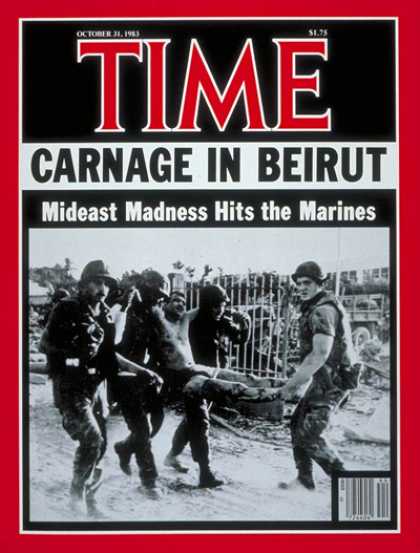
The reality is, that while 9/11 is tragic and the loss of life horrific, it certainly wasn’t unexpected by anyone who was paying attention to the world around them. Like the attack on Pearl Harbor two generations before, the tensions between the US and the unannounced enemy had been escalating for decades. This was not the first terrorist attack on US citizens or property by Islamic radicals – that dubious honor belongs to the Iranian Embassy takeover in 1979. There were subsequent attacks in the intervening years: Beirut in 1983 and the USS Cole in 2000 among them. But since we’re still enthralled by those nine year old images, we refuse to move on to the next stage of the fight.
Our Nation seems stuck in neutral. Rather than addressing the reality of being at war and throwing all of our resources at the enemy, we’ve settled for half-measures that lead neither to victory nor defeat, but a sort of Twilight Zone-ish never ending battle. Afraid to confront an implacable enemy abroad, we’ve willingly stripped away our own liberties little by little. No one questions virtually disrobing before boarding a flight anymore. Where once the idea of government promoting a “See something, say something” campaign would have been resisted on invasion of privacy grounds, today we laud those poor saps for doing their “civic duty.” Rather than react like our grandparents after Pearl Harbor; rather than show the resolve required of great nations as after Gettysburg, rather than displaying the fighting spirit of our parents at Chosin, our generation has decided that American values are not worthy of a fight. Instead of demanding our leaders throw everything but the kitchen sink at those who would do the United States harm, we would rather strip away the Constitution, one layer at a time; much the same way an inexperienced cook peals away bad layers of an onion hoping to find a useful piece beneath. But like the novice chef, what we’re likely left with after all of that peeling is a pile of garbage.
It’s your choice, America. Sit around, flaccid and impotent. Or do the same as we demand of our volunteers for military service: defend the Constitution of the United States from all enemies, both foreign and domestic. Until we accept that we must do the latter, we risk losing something far more important than a battle to the Islamists. Failure to stand and fight will result in the loss of our being Americans.
Fidel learned what Obama won’t
There are numerous reports circulating on the web that Fidel Castro has seen the light. According to Jeffrey Goldberg of The Atlantic, Castro told him “The Cuban model doesn’t even work for us anymore.”
 Huh? What? The leader of the Western Hemisphere’s oldest communist dictatorship admitting communism doesn’t work?
Shock value aside, you have to wonder if (a) Fidel is losing his mind or (b) he’s finally seen the light.
Here’s guessing (b). A little later in the article, Goldberg reports his interpreter said, “I took it to be an acknowledgment that under ‘the Cuban model’ the state has much too big a role in the economic life of the country.”
That’s a WHOA moment if ever there was one. One of the last communist dictators on earth acknowledging government control of the economy doesn’t work. In case you’re wondering, even though Cuba has instituted some economic reforms the country is hardly a bastion of capitalsim. The typical worker earns $20 a month. In the same article, Goldberg describes how the Havana Aquarium was opened especially for Fidel. Just so he could watch a dolphin show. Oh, and all the employees “volunteered” to work on their day off, including the aquarium’s director (who happens to be a – hold onto your hat – nuclear physicist.) You can’t make this stuff up.
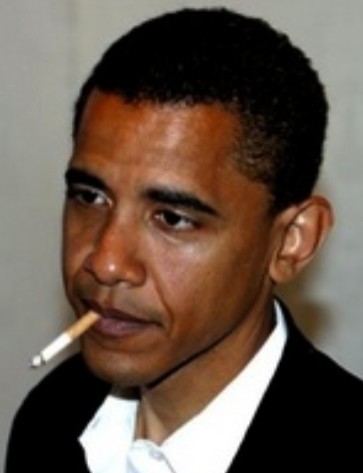
Barry takes a break
The question that went unasked in the article is, if the leader of the Cuban revolution realizes that the socialist model failed, why hasn’t the Democratic Party here in the USA? For that matter, why hasn’t our President? This report came out on the same day that President Obama looked to Trotsky and Lenin for political inspiration. He invoked class warfare (tax hikes on the wealthy) and suggested stronger government intervention in key industries is needed to get America back to work. It’s kind of sad, actually, that the last great communist dictator understands what the leader of the free world fails to grasp.
Of course, if Obama and the Democrats get their way, we could wind up with the one thing Cuba can lord over us Americans economically: full employment. Of course, we’ll all earn $20 a month. Oh, and we’ll all have to “voluntarily” give up our days off whenever the President wants to watch a dolphin show.
Besides, who doesn’t want a 1958 Chevrolet in the driveway?
Michael Agosta for NJ-9
New Jersey’s 9th Congressional District, which covers most of Bergen County and in Hudson County, parts of Kearny and Jersey City as well as Secaucus, is currently represented by Steven Rothman. It’s time to change that and elect Michael Agosta to Congress this November.
Steve Rothman is a likeable person. Anyone who doubts that he is doing what he believes is best for the citizens of his district, the state and the nation in general are seriously deluded. Unfortunately for the rest of us, Rothman’s views of what’s best too closely follow the ideas of Karl Marx. That is, Rothman is an unabashed socialist. He honestly thinks every problem we face is best solved by a huge dose of government intervention and wealth redistribution. He doesn’t call himself a socialist, of course; but his voting record speaks for itself. He is ranked as a far-left liberal, having voted for nearly every proposed tax increase and government program that’s been introduced since he took his seat in 1997. Perhaps the best thing to be said about Rothman is that unlike his predecessor, Robert Torricelli, nobody suspects Rothman of undue corruption.

Michael Agosta, unlike Rothman, is a political neophyte who espouses the ideals of smaller government and personal responsibility. He is a man of good standing, although the Democratic Party has certainly tried to impugn his character over the past two weeks. A former Federal Air Marshall and soldier, Mr. Agosta’s national security credentials are born of the front-lines, not of a government-sponsored think tank. And on economic issues, Michael Agosta understands that the only way to revive the economy is to get people back to work – and to do that, we need to reduce taxes and hold the government accountable for their actions.
This November, vote for Michael Agosta. Vote to return America to Americans, not politicians.
Let the “Silly Season” begin
 Once every two years, Labor Day signals the opening of the “Silly Season.” What is this “Silly Season” you ask?
In a nutshell, the “Silly Season” is when the general populace joins political junkies in paying attention to the politicians running for office in November. And the politicians, on cue, begin campaigning in earnest. But what it makes the season silly is the way the politicians act. Suddenly, Democrats begin espousing conservative ideals. Ordinarily, they’re joined by Republicans discovering their love of liberal programs.
But this year promise to be sillier than most. With an unsettled economy, unemployment rising and public dissatisfaction in both political parties rising to all-time highs, Democrats are in serious trouble heading into the
campaign season. Many Congressional seats once considered safe for the Donkey Party are now in play; seats once considered as being in-play or toss-up’s are now leaning Republican. As reported in yesterday’s New York Times, the DNC is cutting loose many candidates, hoping to minimize losses in the November mid-terms.
In short, what many Democrats are discovering is that the positions they’ve spent the past four years carving out are not exactly what the country wanted. The reason they won most of their seats – including the Presidency – was national dissatisfaction with the Bush administration. The initiatives the current administration have pushed through have proven even more unpopular than the ones proposed by GWB. How bad is it? 56% of Americans want the abomination that passed as health care reform repealed. Republicans now lead Democrats in all ten of the major issues polls.
Not surprisingly, in light of these developments many Democrats are running as far from their own party as possible. It’s amazing how many Democrats are now against the very health care package they passed earlier this year. (Remember when Nancy Pelosi declared that once we knew what was in the bill, we would love it? Oops.) Even President Obama is finding his conservative voice, as reports suggest he will ask Congress to pass “targeted” tax breaks on Wednesday. To add to the sense of desperation from the Democrats, many are hoping to cast their opponents as extremists who would destroy the fabric of American life.
Of course, Republicans are tempted to equally join in the insanity, but so far have held the line on leaning left. They fully understand that the nation has peeked behind the Progressive curtain and been repulsed by the view. This is turning into one of the strangest elections ever seen, where the minority party is the one fending off negative attacks. Normally the reverse is true, but Republicans don’t need to go on the attack in this cycle. The news, even left-leaning organizations like MSNBC and the NY Times, can’t help but report the dismal employment numbers. So Republicans are remaining more or less silent, except to point out that the news hasn’t been good since the Obama administration took over. That’s attack ad enough. Besides, the left is self-immolating itself well enough that the Republicans don’t need to join in.
So kick back and enjoy the Road to November. It promises to be a fun – if bumpy – ride.
How Bret Schundler inadvertently saved NJ’s schools
 All of the furor over the NJ Department of Education’s faux pas, the one that “lost” $400 million in federal education aid, overlooked an important fact. States that are eagerly lining up for the “Race to the Top” funds are simultaneously throwing away more of their discretion in how to educate their youngest citizens. You may be asking yourself how that could be true; after all, isn’t the “Race to the Top” about improving educational opportunity?
Nominally, the answer to that question is yes. But like most federal diktats, the “Race to the Top” became a maze of byzantine rules and regulations far more than a program funneling money to states with innovative ideas for promoting education. The reason New Jersey was denied acceptance into the program is bizarre, even in bureaucratic terms. The scoring criteria included a minimum per-pupil spending increase. Had state officials used budget data from 2008 and 2009, the increase would have been represented; because they used current budget data, the state’s reduction in per-pupil spending was presented.
Only in the bizarro world of Washington D.C. would the state that ranks third in per-pupil spending wind up penalized for getting its fiscal house in order. Yes, New Jersey cut per-pupil spending this year, but what of it? Integral programs to education are intact, despite the hew and cry raised by the NJEA during the long debate leading to the final budget (unless, that is, you consider ice dancing and lacrosse integral to education).
Bret Schundler wasn’t fired for a clerical error. He was fired for lying to the governor about the clerical error. In that respect, Governor Christie had no choice but to fire Schundler; no leader can have morally challenged people on their executive team. But somebody should award Schundler a “Best Mistake of the Year” award. By losing out on those funds, New Jersey is exempt from federal oversight of any “Race to the Top” program mandates. Is it that important? Yes, if you think that the federal Department of Education has yet to live up to the stated reason for its creation. (The unstated reason, of course, was President Carter’s tit-for-tat with the NEA during the 1976 campaign).
In 31 years of federal mandates, administrated by the ED, American children continue to fall further behind their contemporaries in other nations. “No Child Left Behind” has effectively left an entire generation of children behind, unprepared for entry to either college or the workforce. Recent studies consistently demonstrate that higher percentages of students require remediation upon entry to college today than 30 years ago. The Department of Education is meeting its stated mission of ensuring that all students receive the same level of education. Even if the level is well below what an actual education should be.
Due to a clerical error and Governor Christie’s returning power to local school boards, New Jersey is poised to surge to the top in primary education. Which seems a far better option than a Race to the Top.
You’re a US citizen, but you can’t drive in NJ

NJDMV & You - Imperfect Together
According to an article in yesterday’s Jersey Journal, birth certificates from Puerto Rico, issued prior to July 1st are invalid under New Jersey’s 6 point verification program. Talk about a fiasco! American citizens are being denied driving privileges solely due to the circumstances of their birth. In the meantime, citizens of notoriously corrupt nations – such as El Salvador and Nicaragua – are not facing such draconian measures.
This is another example of regulations and bureaucracy standing between citizens and their rights. If you’re old enough, you remember when NJ didn’t even offer a photo ID; now, you need to prove you are who you are 6 different ways in order to legally drive. Of course, under the current system a birth certificate is not required to get a license. But the alternative documents for identification aren’t readily available to most citizens: fewer than 10% have a DD-214, for instance.
A driver’s license remains a privilege and not a right. However, in a state like New Jersey denying someone those privileges often means denying them the means of earning a living, food shopping, getting the kids to school – in short, denying them the basic standard of middle class life. Denial of privileges should only be done in extreme circumstances (repeated DUI, for instance). And revoking privileges for life is rarely done in this state, and usually after repeated major moving violations. Permanently revoking them because a government official in another jurisdiction may have done something illegal? Unheard of.
Of course, the impetus for this is 9/11 and the federal government’s mandate on personal verification. As any good libertarian can attest, that is a very dubious proposal. The very idea that the government doesn’t trust its own citizens and imposes a need for verifiable identification smacks of the draconian measures instituted by Nazi Germany and Soviet Russia in the name of “security.” So, while the idea of a national ID card keeps running into roadblocks put up by liberal and libertarian organizations, the essence of the mandate managed to sneak through. New Jersey’s Puerto Rican population suffers as a result this time. Next time, it could be people born in Arkansas. Or even New Jersey.
In other words, New Jersey is penalizing Puerto Ricans, solely because they were born in Puerto Rico, in fear of losing federal highway funds. All because the federal government is afraid that another terrorist attack will launch from a poorly documented citizen. Really?
Besides, when was the last time somebody from Puerto Rico blew up a skyscraper?
As an aside, Sen. Bob Menedez is Puerto Rican. Anybody wondering if his driving privileges are being revoked?
Economic Revival: Fact or Fiction?
This article appeared in yesterday’s edition of Forbes. The authors, economists employed by First Trust Advisors, postulate that the economy is in recovery is underway. The only thing holding us back is unwarranted pessimism.
Phil Gramm’s thoughts on the economy have come back, it seems. You remember Gramm – during the 2008 election, he spouted off that the only thing wrong with the economy was the public’s perception. Shortly thereafter, Gramm joined the long unemployment line that was merely a figment of his imagination.
The indicators they point to, such as the increasing trade imbalance and devalued housing stock, are rife with the reasons the economy is in such a mess. Once again, we have economists pointing to debt-fueled consumption as the way to end the current economic slump. Nobody in their right mind is going to increase their debt load in this climate and for good reason. Basic common sense; the type of common sense missing from many economists and politicians psyches, tells us that we cannot borrow our way to prosperity any longer. Yet these types of articles continue to be published and their views continue to corrupt our discourse.
What is needed to get the economy rolling again is demand. The right type of demand, fueled by sustainable methods of production and innovation, not by gimmicks derived from debt restructuring, is the surest way to sustainable growth. So how do we get there – and remove the parasites who feed on debt?
We start by demanding government remove the binders on innovation and consumption. By continually bailing out mismanaged companies and decrepit industries, governments are preventing new industries and companies from establishing roots and flourishing. Regardless of the political unsavoriness that allowing large companies to fail and industries to wither presents, the process of “creative destruction” is essential to a growing and vibrant economy. The same way you prune dead shoots from a rose bush to allow larger blooms to grow is the same way the government should approach handling the economy.
Pursuing such a policy will cause employment displacement – but government officials can hardly claim the policy of propping up failed businesses hasn’t resulted in the same (nearly 1M newly unemployed this month can attest to that). This is where the government can assert a positive force, by providing short-term financial assistance to those displaced by the new economy. Likewise, government can fuel new growth by ensuring those displaced receive the training they need to compete.
Unfortunately, we’ve already wasted more than $1T in bailing out failed industries, leaving a huge debt sinkhole without anything to show for it. Instead of prudent financial management, it looks like our leaders – enamored with, and products of, the culture of debt – consigned the nation to a long period of economic malaise. While the second half of the program outlined above was made infeasible by the debt policies pursued by the federal government, the first half can be attained. The economic pain will not be any worse than what the nation currently feels. But given an intransigent White House and bickering Congress, it doesn’t seem likely they will change course.
The Fed Announces It’s Time to Panic
It isn’t often that the political right and left in this country agree on anything, but if two articles I read this morning are any indication, we may have finally found common ground on the issue of the stagnated economy. More significantly, articles in Forbes and The Huffington Post are both sounding the same alarm bells about the Fed’s actions yesterday. If there are two publications more diametrically opposed in terms of editorial slant, I can’t think of them. After all, on most issues the Huffington Post is slightly to the left of Fidel Castro and Forbes founder (and namesake) is the epitome of neo-conservatism.
What the Fed did yesterday is press the panic button. I’m sure the President and congressional Democrats can’t be too happy about that – after all, various administration members have assiduously assured us that the economy is all fine and those of us complaining are simply making mountains out of molehills. The Fed (or more accurately, the Federal Reserve Board of Governors) said, “Um, maybe not. The economy is slowing and we’re headed for a second recession.” As their statement said,
“Information received since the Federal Open Market Committee met in June indicates that the pace of recovery in output and employment has slowed in recent months…investment in nonresidential structures continues to be weak and employers remain reluctant to add to payrolls…the pace of economic recovery is likely to be more modest in the near term than had been anticipated.”
In case your wondering, when the Fed uses terms like “slower than anticipated,” that is simply a banker’s way of saying that things are really, really bad. How bad? In the January 2010 report, the “anticipated growth rate for GDP” was 2.8% – 3.2%. If you prefer, the Fed was anticipating anemic growth already – if they’re now saying the actual rate of growth is even less than that, then it’s safe to say we’re approaching negative growth. If the economy was shedding jobs during a period of supposed growth (albeit anemic growth), what happens when growth turns negative?
Thus, the Fed is panicking. That is, nine of the ten members of the Board of Governors are panicking. (I’ll get back to the tenth in a moment). It’s perfectly understandable, since the only thing that can make a banker afraid more than a lack of government bailouts is the thought of angry mobs demanding their deposits. The actions the Fed took yesterday – converting the sizable investment in mortgage bonds they currently hold into treasuries and keeping the funds rate near 0% – indicate an organization that is under the misled belief that there isn’t enough money in the economy today.
The nine members who voted for these policies ignored a huge source of money that is available, but lacks the impetus to spend. As has been widely reported, corporations are sitting on approximately $1.8 trillion in cash assets. That equals about 12% of estimated GDP for this year – or nearly double the economic “stimulus” spent by the federal government since 2008. Those huge cash reserves, if invested back in the economy, would represent the most effective stimulus possible, since those funds would be directly spent on investment, including capital expenditures and employment. But by depressing interest rates, the Fed is holding down any incentive for businesses to invest.
This point was brought up by Thomas Hoenig, the one member of the Fed Board who didn’t vote to hit the panic button. (Told you I’d get back to him). In a nutshell, Hoenig is worried that by depressing interest rates while pumping more money into the economy, all the Fed is accomplishing is creating another bubble. Nobody is prescient enough to tell you what industry that bubble will encompass (my guess is health care), but it’s certain to come. As Hoenig pointed out, in 2003 the Fed took similar actions – and gave us the housing bubble, which led to the current recession. In 1997, the Fed took similar actions – and gave us the tech bubble.
It can be argued, and perhaps rightly, that the Fed’s overzealousness in 1997 and 2003 was warranted, since monetary policy was the best option for jump-starting stagnating economies. There is a major difference this time around, and that difference is the vast cash reserves companies have built up during this recession. The Fed’s current monetary policy is a huge disincentive for those companies to invest in what are typically long-term assets with high immediate and near-term costs; namely people and equipment. How? First, by limiting inflationary pressures, there is no reason to invest cash into something that will lose value in the near-term. Once inflation does kick in (and it will; the amount of money currently floating around plus artificially depressed interest rates guarantees it), every dollar invested now loses value not only through depreciation but also in the natural devaluation that comes with inflation. (If inflation were held at the Fed’s target rate of 5%, a dollar today would only be worth 95 cents next year). It makes much more sense, from a business perspective, to invest that money into something that almost certainly will appreciate in value. It is the mindset that explains the stock market’s insane gains this year.
So what should the Fed do? I argue the Fed should look for ways to take money out of the economy – raising interest rates and selling those securities it purchased over the past 2 1/2 years. By thus shrinking the money supply, those business currently hoarding cash are forced to begin spending again. Why? Cash flow is the lifeblood of business. Right now, business can ignore normal consumer markets because they’re making huge profits by investing their capital in the stock market, in many cases buying back their own stock and driving the prices up, ensuring positive cash flow. Once the excess cash is removed from the economy, the financial markets will react as they always do to inflation: prices will drop and indices will decline, drying up the current avenue for establishing business income. Those same inflationary pressures will force businesses to reconsider investing in long-term capital – investing their cash before its purchasing power declines.
Unfortunately, the Ben Bernanke’s and other Greenspan disciples (including the Treasury secretary) are not of a mind to engage in this type of monetary policy, fearing that jump-starting the economy by raising inflation will result in the type of over-inflation from the 1970’s and wind up uncontrollable. Oddly, many left thinking economists (notably Paul Krugman) are like-minded, although they prefer government spending over monetary policy to pump more cash into the economy. Either way, I can’t help but wonder if they’re seeing the same economic landscape those of us in the real world see. Oh, and if they realize that the policies of “priming the pump” we’ve pursued for the past 2 years haven’t worked and may very well have pushed the real economy off the cliff.
My biggest fear is they don’t see it – and they’ve taken the very social order of the first world with them in their mad dash chasing after rainbows.
Joe Fed Makes Twice What You Do (and for Doing 1/2 the Work)
More depressing news from Washington. According to this article in USA today, if you work for the federal government you’ll earn; er, make about twice as much as if you worked in the real world.
I did some back of the napkin calculations to see how much money that wastes in a year, even assuming we need all of those federal workers. (I don’t think we do, but until we get the private sector hiring again, leave ’em where they are). The number is…staggering. This is based on the average fed worker receiving $121K in annual compensation, the number specified in the article.
(Number of federal employees x $121,000) / 2=estimated overpayments
(2,150,000 x $121,000) / 2 = $130,075,000,000.
That is 130 billion, 75 million dollars.
Or, as my dear departed Granddad would say, “that’s a shitload of samoleans!” (I never really found out what a “samolean” was, but I always assumed it was something mean that traveled in big packs – like government employees).
I don’t know about you, but if the Keynesians want to spend some government dough around, I’d suggest they have a way to pay for it without adding to the debt. Simply tell all those federal employees they’re getting a 50% reduction in pay. It would also accomplish something else: all those beauracrats would actually begin to understand what it’s like to take drastic pay-cuts, only to see your job disappear 6 months later.
We can only hope…
Time for a New Consensus
One thing is becoming painfully obvious: the way we, as Americans, view economic opportunity is out of step with the way the world operates today. It is time that we recognize this and address it in a positive manner, without the political fire-bombing that is hurled daily on both the left and the right.
The left is stuck with an early 20th century Keyensian view of economics. I’d argue that particular view didn’t really work then and won’t work today. Massive infusions of government capital during the 1930’s into public works projects did build some marvelous edifices, such as the Hoover Dam, but did not absolutely nothing to end the Great Depression. America didn’t return to full employment until the advent of World War 2 – the result of increased war production and more than 10 million men entering military service. Once the war ended, the economy again returned to near-Depression era levels of unemployment. What finally proved the cure for the economic ills of the 1st half of the 20th century was that in the post-war period, only the US remained capable of providing the goods and services needed by the world. It was an export economy, fueled by international demand, which put America back to work.
The right seems permanently wed to supply-side economics. Strict adherence to that model might have worked, but we’ll never know. While government receipts during the supply-side era (1981-2008) outpaced inflation by (See fig. 1), government spending at all levels increased at an even more dramatic pace, leaving us with unsustainable levels of debt and continuing government deficits – and a seemingly insatiable public demand for services that we cannot afford.

Fig. 1
The current model being followed is a strange amalgam of the two diametrically opposed economic philosophies, with government interventions and expanded spending coupled with “targeted” tax breaks. In one sense, this new model has worked: businesses are sitting on a virtual mountain of cash. But in a much larger sense, these haven’t worked to stoke the economy – and for one simple reason, the demand needed by businesses to invest that capital doesn’t exist now. Employment data continues to remain bleak, representative of the fact that businesses are not investing in human capital. Part of the reason is undoubtedly tied to regulatory uncertainty, since anyone running a business needs to properly plan and account for the funds allocated for human resources. But that uncertainty alone cannot account for the downward pressure July’s economic data displayed on employment.
What is needed is recognition by both those on the right and the left that a new demand model is required for our current age. Modern technologies have made many labor-intensive occupations of the late 20th century redundant. Cloud computing and SaaS technology reduce the need for office and technical staffing, closing off two of the high-growth industries of the past 30 years. Manufacturing tasks that once required dozens of people can now be fully automated, with only one operator required. (Just last night I watched a documentary on Zippo lighters – the entire assembly line only needs 5 people to run it; a perfect example). Even many low-wage jobs have been replaced – the other day I went food shopping. No cashiers were available; the entire checkout line was self-service with two people running 20 checkout lanes.
In other words, there are two possibilities now facing the country:
- Current unemployment levels are now the “new normal” and a return to sub-5% unemployment is unlikely. In this event, the current social services are inadequate and need serious revamping. Unemployment insurance as currently exists needs to be discarded, replaced by a system that is more proactive in returning the unemployable to the workforce while ensuring that people are not discarded like yesterdays news. Such a program needs to be structured so that chronic unemployment and other abuses are not permitted. In short, in such a world, unemployment services should not be a state duty, they should very much be a federal-corporate symbiosis. It is impossible – and against a state’s interests – to train somebody for employment opportunities in another state, but it is in a company’s best interest to do so.
- Current unemployment levels are an aberration; a temporary result of career displacement due to a technology upheaval. Such upheavals have occurred before and the nation weathered those storms, most recently in the late-1970’s as the nation shifted from a manufacturing base to a services based economy. In this case, the government needn’t do much of anything, except make career retraining available and mandatory, in order to continue receiving unemployment insurance payments. Once, that is, the new employment needs are identified.
I’m not going to pretend I’m smart enough to know which of the two scenarios is correct. What I do know is that until we begin to honestly discuss them, no action can be planned or undertaken. But as I mentioned at the top of this post, neither side seems ready to abandon decades-old dogma. I doubt either will over the next 90 days, as we begin a new national election cycle and both sides seem to only care about scoring political points by feeding raw meat to their adherents.
It’s up to the American people to put aside our natural inclination to fear in uncertain times and force our political leaders to engage in an honest discussion of the situation. And if they won’t?
Then it’s up to us to replace them this November with people who will.
Show Us, Missouri
Tomorrow is primary day in Missouri. Though I live in New Jersey, there is one item on the statewide ballot there that has captured my attention. If you live in Missouri, I certainly hope you’ve studied Proposition C and plan to vote for it. Missourians, this is your opportunity to show the rest of the nation that government intrusion on the personal liberties of Americans will not be tolerated.
For the uninitiated: Proposition C is a ballot measure that would, by statute, exempt all Missourians from the oppressive federal mandate to purchase heath insurance or face stiff penalties. By its passage, Missouri would send a message to the folks in Washington that Americans do not want the government subverting personal liberty in order to cover for a mess the federal government created. Although other states have enacted similar measures, those have been passed by legislative action – not by direct vote. With this ballot initiative, the good people of Missouri have the chance to show that it isn’t only legislators who are opposed to the “progressive” ideal that the Nanny State knows what is best for you and your family. It is ordinary Americans who are opposed to an usurpation of the long-established tradition that “those rights not especially enumerated in the Constitution are considered as belonging to a free people…The powers delegated by the proposed Constitution to the federal government are few and defined.” James Madison wrote that phrase in the Federalist Papers, and he meant it to illustrate to a skeptical populace that the federal government would not and could not take away a fundamental freedom simply because it had not been mentioned in the Constitution.
Certainly, decisions about which types of products to purchase are a fundamental right. Should the federal government assume he power to direct the citizenry to purchase a particular product (in this case, medical insurance) then our nation has ceded the a fundamental right. More, the nation will have undermined the very Constitution and the principle on which the nation was founded. If you do not have a fundamental right to decide when, whether and how to purchase any product, then are you truly free to pursue life liberty and happiness?
The Obama administration realizes the fallacy of their central argument during the run-up to passage of Health Care Reform; that essentially, the Commerce Clause grants this power to the federal government. This is why, in their preparations for the defense of the indefensible in court, they have resorted to declaring the mandate is essentially a tax – a power that is reserved by the Constitution for the Congress. If that is the case, then this is the largest tax hike in history and also paves the way for a federal take-over of the entire health care industry. In short, the Obama administration is trying to lay the groundwork that by declaring medical insurance is a de facto tax, then those who provide that product are, in essence, appendages to the federal government. To anyone who has any concern about personal freedom, this is an affront to the very ideals of national identity.
Already, the “progressive” forces are hard at work to discredit Proposition C’s passage. They are making numerous and rather spurious claims that its passage are only due to an intemperate electorate that will be heavily Republican on primary day. They are claiming that it will not hold any import, since a state law cannot supersede a federal mandate (this, by the way is currently winding its way through the court system and is certain to end in a decision by the Supreme Court).
What “progressives” are afraid of is a state law, passed not by legislative fiat but by popular vote, that directly tells an over-reaching federal government it has overstepped its bounds. The reason is, as always, the ideal of progressive theology is that individuals are not intelligent enough to make sound decisions and only an apparatchik of federal authority should have such authority. It was this very notion, in the past called “monarchism,” that both angered and frightened those that created our nation from the dust of their boots. It is the same principle applied by socialists and communists in defining the role government.
So Missouri: pass Propostition C. Do it in overwhelming numbers. And show the rest of us that our nation still exists for the purpose of guaranteeing the ideals of liberty and freedom.
You can read the full Proposition here.
Obama’s “View”
In case you missed it, Barack Obama finished the job started by Bill Clinton and completely sunk any credibility in the Presidency this morning. Yes, he made a guest appearance on ABC’s The View.
(For those of you who have actual lives, The View is a daytime talker hosted by 5 ancient would-be stars, who spend copious amounts of time kvetching that the World Doesn’t Conform to their Liberal View. Riveting television it isn’t, unless you’re one of those unhappy souls who likes listening to your mother-in-law for hours on end.)
Since I didn’t really have anything better to do, I sat and watched what passed for an interview. I mean, I could have spent the hour pulling my toenails out with tweezers and had more fun, but I thought the President might actually say something insightful. Or witty. Heck, I’d even have settled for pithy. You know how every once-in-a-while, a pitcher will toss up an “eephus” pitch and the batter will swing and miss the 50mph offering? That’s what I felt like I was watching. Question after question, the Venerable Ones would toss the One a softball. And question after question, the One would swing and miss. It was worse than watching the really fat, drunk guy at the company softball game (you know the one – the guy who falls down after every swing).
I realize the MSM will be talking about how Obama used the forum as a way to talk about how well job creation is going, how his handiwork saved the country from financial ruin and about how he loves his family. But you know what I heard, over and over again? A President who is so full of himself, he can’t understand why the United States of America isn’t simply jumping on his gravy-train to freedom. He never missed an opportunity to complain about how he’s being mistreated by the opposition; about how the media is constantly blowing things out of proportion and how stupid all of us out here in the heartland must be. He made one paean to the fact that the economy sucks – I forget the exact wording, but it was something like “I realize that Americans are hurting because I read their letters every night” – but quickly said that the economy would be so much worse if not his profligate spending. He mentioned that there are real differences on basic issues such as the role of government, but tried to sweep them under the rug as being personal attacks on his person.
Sorry, Mr. President. Before this appearance, I questioned your policies, but never questioned your intellect. But now I’m left wondering if the Nation didn’t somehow elect the most narrow-minded idiot we’ve had in the White House since Benjamin Harrison.
One Last Word about Race
Last week, the world was abuzz with Andrew Breitbart’s posting of a video that depicted Shirley Sherrod in a racist light. As a result, the Obama administration (showing their usual fortitude when the going gets tough) called Ms. Sherrod while she was driving and demanded her immediate resignation. It was only after the full video came to light that the administration realized that in attempting to quell a political firestorm before it erupted, they triggered another. By Friday, Secretary of Agriculture Tom Vilsack was forced to issue a public apology and offer Ms. Sherrod a new job.
Most of the coverage of this event seems to gravitate towards one of two veins:
- The media messed things up badly by not vetting the story before airing/printing it. True enough, but then again, we haven’t had professional journalists in charge of newsrooms for a generation – I’m at a loss as to why anyone is surprised when gibberish comes out of them.
- The Obama administration over-reacted to a perceived political threat. Well… yes, they did. But this is hardly anything new for this President or his closest advisors. Don’t forget, Obama is the same guy who publicly dissed his own pastor rather than stomach the ensuing political fight while he was Candidate Obama.
But what is most disturbing to me is that once again, our Nation has let a potentially culture-altering moment slip into the abyss of silence. Because really, if you stop to think about it, this moment was created by our Nation’s inability to come to grips with our inherent cultural differences.
A quick history lesson: immediately prior to the scalping of Ms. Sherrod’s reputation by Mr. Breitbart, the NAACP issued a statement that, in effect, called the Tea Party a racist movement. What predicated that statement is a very real perception in communities of color that the very ideas expressed by the Tea Party movement are, in themselves, racist. Mr. Breitbart then either received or created an edited video seeming to depict a NAACP meeting espousing equally racist ideology, which he then posted to his blog. I have no way of knowing if Andrew Breitbart is racist. I have no way of knowing the same about the President of the NAACP, Ben Jealous, is a racist. I don’t know either man, and quite frankly, I could care less if either one is. This post isn’t directed to the true racists (be they white, black or whatever) – you know who you are, and you can stop reading here. The world has always had your kind and quite frankly, while we would be better off without you, at least you aren’t very ambiguous about your views.
But what the entire episode demonstrates is that our nation, conceived in the concept of equality for all, has a long way to go before we realize that ideal. And the reason we do is much more subtle than racism. It is called prejudice, and its ugly head will keep appearing in our national discourse until everyone does something about it.
Prejudice differs from racism in very profound ways. Odds are you harbor prejudicial tendencies – even if you aren’t aware of them. Prejudice simply means that your perception of something is biased by your subconscious thoughts, often irrationally. People generally harbor hundreds of prejudices, and not only in regards to race. You may prefer Chevrolets to Toyotas without knowing why. Perhaps your father and grandfather always drove Chevrolets and spoke rudely about Japanese automakers, which created a subconscious impression that Chevrolets are superior to Toyotas. Much the same away, impressions regarding race and racial stereotypes are given to us when we are young. In order to overcome them, we wind up spending a lifetime – and rarely succeed in entirely dispensing with our prejudices. Think about how you overcome your prejudices to any other thing, aside from race: you learn by association, constant and reinforced association. To go back to the car analogy, you probably start slowly. You go for a ride in a friends Toyota and discover the car isn’t that bad. Then you rent one for a business trip and discover that the car basically handles like any other car. Eventually, you buy one for yourself.
The speech given by Ms. Sherrod actually addressed that reality and her struggles to overcome her own prejudices. For those who still haven’t heard her biography, here is the Cliff’s Notes Version: her father, a civil rights activist, was murdered by the KKK when she was a girl. Nobody was ever brought to trial for the crime, which (unfortunately) was all too common for the time. Fast forward to 1990 and Ms. Sherrod is a paid advocate for poor farmers; she happens to get the case of a poor – but white – farmer. Succumbing to her own prejudices, she sends the farmer to a white lawyer for assistance. Only later does she realize that she had, because of prejudice, abandoned her duty to the farmer and make a conscious effort to never allow that to happen again.
In a not-so-violent way, I can relate to Ms. Sherrod’s story. I was raised in a relatively cloistered community, decidedly rural and definitely WASP-ish. I never met a person of a different ethnicity, much less race, before joining the Marine Corps. And I certainly had more than my share of racial missteps stemming from prejudices over the intervening 27 years. And like Ms. Sherrod, I make conscious efforts daily to not allow them to interfere with my daily life. Most of the time, I succeed. Occasionally, I do not. Those occasions where I fail, though, are moments I reflect on and identify the reasons for my failure. I then resolve to learn more about the cause of the particular prejudicial thought and reaction and address ways to overcome it. While I will never be able to say I have the life experience of somebody from a black community, I can learn to appreciate the culture. The same holds true with other communities my life has led me to interact with – Puerto Rican, Mexican, Chinese, and Philipino, Jewish and on the list goes. But you get the idea (I hope).
I truly believe that until we begin to associate with one another, not as hyphenated Americans but simply as Americans, until we learn to recognize that we all harbor prejudices and work to overcome them as individuals, we will never move past the issue of race in American life. The good news is that like many other people I’ve met, we can all overcome our personal prejudices without undue effort. It’s time to make that effort. It’s time to get out of our cloistered communities and begin that association – and to understand that until we begin to discuss those things that make us different we cannot discuss the things that bind us together.
Extending Benefits
I’m certain many of you have been watching the unfolding – seemingly in slow-motion – debate on extending unemployment benefits. Then again, I’m also certain that quite a few of my fellow citizens haven’t given it more thought than which sunscreen to bring to the beach. After all, it is July. This is hardly the time of year when political juices get flowing for most of the electorate.
However, I have two strikes against me when thinking about this: for one, I am an admitted political junkie and two; I am one of those approximately 6,800,000 Americans who has been officially unemployed for longer than 6 months. (That’s a pretty dismal number, but it’s actually rosy when compared to the long-term underemployment number and the actual numbers of Americans who have been unemployed so long that the feds stopped counting them. But I digress.) So, I’ve been watching and listening with keen interest.
Being fiscally conservative (ok, ϋber-conservative) and also unable to secure new, permanent employment, I find myself torn between the two very real issues at play. Those two issues are, to put it simply, how do we reconcile a real need to prevent utter destitution for the millions like myself – and at the same time, do it in a way that doesn’t further bankrupt the country? It seems to most reasonable Americans that the proposal put forth by the Republican caucus – paying for the cost of extending unemployment benefits by using some of the remaining funds from last year’s gargantuan stimulus package – is a good compromise. Why the Democratic caucus is so opposed to the idea has been beyond me. After all, even that most liberal of economists, Paul Krugman has said repeatedly that unemployment benefits are “a highly effective form of stimulus.” Congress loves “earmarks,” or setting aside money for pet projects. In an election year when there are likely upwards of 20 million voters who face the prospect of losing everything on a daily basis, it seems logical that Congress would earmark $38 billion of pre-existing expenditures on a pretty popular program. It would be a win-win, something that almost never happens for a politician: they could claim both the labels of “caring liberal” and “fiscal conservative” with one vote. So why won’t they?
The answer (as with almost everything Congress does these days) lies in the details. The program is part of H.R. 4213, a 412 page megalith that deals with a whole of stuff not at all related to employment or economic stimulus. In fact, the section dealing with the benefit extensions is Title V, subtitle A of the bill. It incorporates all of 9 ½ pages of the bill.
I’m sure you’re asking yourself what could be in the other 402 pages of the bill. Well, here are a few highlights. Feel free to hit the link and read it for yourself:
*Provisions to build sewer systems
*Alternative fuels vehicle credits
*Energy efficient appliance tax credits
*New standards for windows and doors (You can’t make this up, folks)
*Railroad track maintenance credits
*Rum excise tax relief for Puerto Rico and the US Virgin Islands. Hey, even if we’re all broke, at least we should be able to swig cheap rum, get drunk and forget this mess!
The list goes on and on. There are over 500 individual line items in this bill. Not only have our congressmen been busy putting earmarks into this thing, it seems they’ve taken special care to pack it with more pork than a Jimmy Dean breakfast sausage. No wonder they couldn’t find the $38 billion! (By the way, by the Obama administrations own estimates, there should be nearly $340 billion left from last year’s budget buster.)
Oh, and one final note regarding the supposed disincentive of providing unemployment benefits: In ordinary times, I agree that extending unemployment benefits can be a disincentive to finding gainful employment. But these are not ordinary times; not when estimates range from five to eight people for every available job opening. And speaking from personal experience, I can assure you that getting 30% of my prior earnings in an unemployment check doesn’t exactly meet my monthly commitments. Here’s hoping Sen. Jon Kyl and Senatorial candidate Sharron Angle, who have publicly espoused this thought, take a good look around their respective states and come to their senses. They are not properly representing their constituents, their party or the nation as long as they hold that view.
Announcement
As some may have noticed, I’ve been writing for Zell’s Pinstripe Blog. Feel free to read my baseball musings there, at http:zellspinstripeblog.wordpress.com.
You can still join me here for the latest in political conversation.
The Declaration Demystified
Yesterday, I posted the Declaration of Independence, in its entirety. I hope you have had a chance to read it. If not, please do – it is our republics founding document. The principles laid out by Thomas Jefferson and agreed to by the other founding fathers represent more than why the United States came into existence. Those principles are the very lifeblood of our nation and the primary reason that for the past 234 years, millions of people have risked everything to call the USA “home.”
What are those principles, those core beliefs that identify what it means to be an “American?”
I’ve decided to write a series to cover what are best called “The American Principles.” Today begins the lesson.
First and foremost, an American believes the core phrase from the Declaration: “All men are created equal, that they are endowed by their Creator with certain inalienable rights; that among these are Life, Liberty and the pursuit of Happiness.” That is a heck of phrase, outlining the four tenets of Americanism in only 27 words. Yet, those 27 words are the key to understanding every vital document that came before and after. Let’s break them down and truly understand the meaning.
The first thing to understand is that while the Founders were deeply spiritual men, they did not all conform to the same religion. While most were Protestant, at least two were Catholic and two were Jewish. Additionally, there were deep divisions in terms of what types of Protestantism were observed by the rest. There were Quakers, Shakers, Baptists, Calvinists and Anglicans. So, while all of these men agreed in principle that there is a God, not all were comfortable with using the word. (It is sacrilegious for some to mention the name of God). Additionally, none felt comfortable in obligating the rest to a specific observance, since one of the major impetuses leading to settlement of the colonies was the pursuit of religious freedom and tolerance. And so, in our founding document we see the result of the tension between government and religion (or more precisely, government and multiple religions): the idea that the government should not endorse a particular religion. This creed was later adopted and formalized in the First Amendment to the US Constitution (Congress shall make no law respecting an establishment of religion, or prohibiting the free exercise thereof…). However, it should be pointed out that while the Founders did not believe the government should formally recognize any particular religion for fear of giving it privileged status (in effect, creating a state religion), they also did not believe that government should be devoid of any spiritual context. As a result, the founders inserted the generic “Creator” into the Declaration, although each member of Congress interpreted that to mean God as understood in the typical Judeo-Christian ethos.
This is crucial to understanding this phrase. Men are created and given rights by that which created them; therefore, their rights are divinely formed. It follows that governments, which are institutions of men, cannot supersede a divinely given right. So, therefore, the rights that are expressly enumerated – Life, Liberty and the pursuit of happiness – are divine rights, granted to men by God and inviolable. No legal government can usurp those rights and if it attempts to, then it is the right of the people to overthrow the government.
Where do the people derive the right to overthrow an unjust government? We’ll cover that in the next part…
The unanimous Declaration of the thirteen united States of America
In Congress, July 4, 1776
The unanimous Declaration of the thirteen united States of America
When
in the Course of human events, it becomes necessary for one people to dissolve the political bonds which have connected them with another, and to assume among the powers of the earth, the separate and equal station to which the Laws of Nature and of Nature’s God entitle them, a decent respect to the opinions of mankind requires that they should declare the causes which impel them to the separation.
We hold these truths to be self-evident, that all men are created equal, that they are endowed by their Creator with certain inalienable Rights, that among these are Life, Liberty and the pursuit of Happiness. That to secure these rights, Governments are instituted among Men, deriving their just Powers from the consent of the governed, -That whenever any Form of Government becomes destructive to these ends, it is the Right of the People to alter or to abolish it, and to institute new Government, laying its foundation on such principles and organizing powers in such form, as to them shall seem most likely to effect their Safety and Happiness. Prudence, indeed, will dictate that Governments long established should not be changed for light and transient causes; and accordingly all experience hath shewn, that mankind are more disposed to suffer, while evils are sufferable, than to right themselves by abolishing the forms to which they are accustomed. But when a long train of abuses and usurpations, pursuing invariably the same Object evinces a design to reduce them under absolute Despotism, it is their right; it is their Duty, to throw off the such Government, and to provide new guards for their future security – Such has been the patient sufferance of these Colonies; and such is now the necessity of which constrains them to alter their former Systems of Government. –The history of the present King of Great Britain is a history of repeated injuries and usurpations, all having in direct object the establishment of an absolute Tyranny over these States. To prove this, let facts be submitted to a candid world.
He has refused his Assent to laws, the most wholesome and necessary for the public good.
He has forbidden his Governors to pass Laws of immediate and pressing importance, unless suspended in their operation till his Assent should be obtained; and when so suspended, he has utterly neglected to attend to them.
He has refused to pass other Laws for the accommodation of large districts of people, unless those people would relinquish the right of Representation in the Legislature, a right inestimable to them and formidable to tyrants only.
He has called together legislative bodies at places unusual, uncomfortable, and distant from the depository of their Public Records, for the sole purpose of fatiguing them into compliance with his measures.
He has dissolved Representative House repeatedly, for opposing with manly firmness his invasions on the rights of the people.
He has refused for a long time, after such dissolutions, to cause others to be elected; whereby the Legislative Powers, incapable of Annihilation, have returned to the People at large for their exercise; the State remaining in the mean time exposed to all the dangers of invasion from without, and convulsions within.
He has endeavoured to prevent the population of these States; for that purpose obstructing the Laws of Naturalization of Foreigners; refusing to pass others to encourage their migrations hither, and raising the conditions of new Appropriation of Lands.
He has obstructed the administration of justice, by refusing his Assent to Laws for establishing Judiciary Powers.
He has made judges dependent on his Will alone, for the tenure of their offices, and the amount and payment of their salaries.
He has evinced a multitude of New Offices, and sent hither swarms of Officers to harass our People, and eat out their substance.
He has kept among us, in times of peace, Standing Armies without the Consent of our Legislatures.
He has effected to render the Military independent of and superior to the Civil Power.
He has combined with others to subject us to a jurisdiction foreign to our constitution; and unacknowledged by our laws; giving his assent their Acts of pretended Legislation.
For Quartering large bodies of armed troops among us:
For protecting them, by a mock Trial, from punishment for any Murders they should commit on the inhabitants of these States:
For cutting off our trade with all parts of the world:
For imposing Taxes on us without our Consent:
For depriving us in many cases, of the benefits of Trial by Jury:
For transporting us beyond seas to be tried for pretended offenses:
For abolishing the free system of English Laws in a neighbouring Province, establishing therein an Arbitrary government, and enlarging its Boundaries so as to render it at once an example and fit instrument for introducing the same absolute rule into these Colonies:
For taking away our Charters, abolishing our most valuable Laws, and altering fundamentally the forms of our Governments:
For suspending our own Legislature, and declaring themselves invested with the power to legislate for us in cases whatsoever.
He has abdicated Government here, by declaring us out of his protection and waging War against us.
He has plundered our seas, ravaged our Coasts, burnt out towns, and destroyed the lives of our people.
He is at this time transporting large Armies of foreign Mercenaries to compleat the works of death, desolation and tyranny, already begun with circumstances of Cruelty and perfidy scarcely paralleled in the most barbarous ages, and totally unworthy the Head of a civilized nation.
He has constrained our fellow Citizens taken captive on the High Seas to bear arms against their Country, to become the executioners of their friends and Brethren, or to fall themselves by their Hands.
He has excited domestic insurrections amongst us, and has endeavoured to bring on the inhabitants of our frontiers, the merciless Indian Savages, whose known rule of warfare, is an undistinguished destruction of all ages, sexes and conditions.
In every stage of these Oppressions we have Petitioned for Redress in the most humble terms: Our repeated Petitions have been answered only by repeated injury. A Prince, whose character is thus marked by every act which may define a Tyrant, is unfit to be the ruler of a free people.
Nor have we been wanting in attention to our British brethren. We have warned them from time to time of attempts by their legislature to extend an unwarrantable jurisdiction over us. We have reminded them of the circumstances of our emigration and settlement here. We have appealed to their native justice and magnanimity, and we have conjured them by the ties of our common kindred to disavow these usurpations, which, would inevitably interrupt our connections and correspondence. They too have been deaf to the voice of justice and of consanguity. We must, therefore, acquiesce in the necessity, which denounces our Separation, and hold them, as we hold the rest of Mankind, Enemies in War, in Peace Friends.
We, therefore, the Representatives of the united States of America, in General Congress, Assembled, appealing to the Supreme judge of the world for the rectitude of our intentions, do, in the Name, and by the Authority of the good People of these Colonies, solemnly publish and declare, That these United Colonies are, and of Right ought to be Free and Independent States; that they are absolved from all Allegiance to the British Crown, and that all political connection between them and the State of Great Britain, is and ought to be totally dissolved; and that as Free and Independent States, they have full Power to levy War, conclude Peace, contract Alliances, establish Commerce, and do all other Acts and Things which Independent State of right do.
And for support of this Declaration, with a firm reliance on protection of Divine Providence, we mutually pledge to each other our lives, our Fortunes and our Sacred Honor.
Who’s Driving?
I’m certain by now you’ve heard that Rolling Stone published a pretty scathing article about Gen. Stanley McCrystal. For all the hoo-ha about comments made about the current administration, the article is about much more than that: it tears the administration a new one on the current war policy and strategy. It also highlights a a problem I blogged about last week; the administration’s inability to make a command decision.
I really could care less about the parts of the story that have gained the most media airtime. In case you were under a rock, the press has been having fun with the fact Gen. McCrystal doesn’t have much respect for the President, Vice-President or US Ambassador to Afghanistan? To which I say, So What? Most people in the military have little respect and less regard for any of them. That’s not news; it’s simply a wake-up call to those who have never served that the military mindset prefers direct action over consensus building. Even though the article paints an unflattering picture of McCrystal as a Col. Kurtz type character (the narcissistic commander in “Apocalypse Now” played by Marlon Brando), it’s pretty clear throughout the article that none of the rank-and-file have much use for the President’s strategy in Afghanistan. As one soldier complains to Gen. McCrystal,
“You say we’ve stopped the momentum of the insurgency. I don’t believe that’s true in this area. The more we pull back, the more we restrain ourselves, the stronger it’s getting.”
This, to me, pretty much sums up the principle issue of Obama’s Presidency: an inability to come to quick, astute decisions.
I’m not the only one is lamenting the President’s obvious inability to lead. As Richard Cohen writes in “President Obama’s Enigmatic Intellectualism,”
“What these people were seeking was not an eruption of anger, not a tantrum and not a full-scale denunciation of an oil company. What they wanted instead was a sign that this catastrophe meant something to Obama, that it was not merely another problem that had crossed his desk…”
In other words, we have a President who actually seems afraid that any decision he makes will end up being wrong. Which, of course, seems pretty strange for a guy who was supposedly elected because his intellect gave him a sense of invincibility.
Mr President, I’m restating the plea I made a week ago: please, please stop triangulating and start leading. Even though I’m on definitely on the political right, the last thing the nation needs is a Presidency whose authority is compromised by a lack of cajones. We’ve experienced that before – the feckless Carter years being the most recent. It was the most dismal four years in our nation’s recent history – but so far, this President seems intent on recreating that era. Consider:
- Double digit unemployment, a faltering economy and no prospects of a turn-around
- A nation at the mercy of the Iranians and Koreans
- Israel being left at the gates in favor of “moderate” Arab states
- A general national unease about the ship of state being rudderless
Crisis in Crisis Management
As everyone is well aware by now, the President gave his first Oval Office address the other night. Plenty has been said and written about what was in the speech – Howard Kurtz has a terrific summary in the Washington Post – but what nobody wrote about is, what wasn’t in the speech. And what was missing is more illuminating about why the spill in the Gulf of Mexico has careened out of control than anything the President said.
As most of the readers of this blog are aware, my political tendencies are toward the conservative. However, while I am opposed to most of the administration’s policies, I still do not wish the President ill when dealing with all matter of crises that every President faces. The best hope for our survival as a nation is to have people in the Oval Office and West Wing who are competent. Unfortunately, the USA once again has a President who is neither in charge nor, it seems, knows how to take charge.
The Gulf Oil Spill is only the latest crisis to illustrate this problem. Iran, North Korea, Afghanistan and the economy are all crises that have been mangled by an endless set of blunders, bloopers and missteps. But for many Americans, this particular crisis is the final straw. Of course, there is nothing like being witness to millions of gallons of oil pouring out of the ocean floor and making its way to our shores to crystallize the idea that this administration is – incompetent.
The level of incompetence is stupefying. After all, this was supposed to be the cerebral presidency; a defining contrast to the predicate administration. This was supposed to be an administration of highly intelligent, outside-the-beltway , outside-the-box thinkers who could handle all the world’s woes and bring us safely to the future. But the common thread in all of the inaction, indecisiveness and ineffectiveness the world has witnessed over the past 18 months is that nobody in this Ivy educated klatch has a clue about crisis management.
This is not to say the administration is incapable of recognizing a crisis. Every member seems well aware of the critical situations around them. But instead of figuring out how to resolve them, the administration seems hell-bent on following Rahm Emmanuel’s “never let a good crisis go to waste” policy of using crises to forge political points. What President Obama and the rest of his policy wonks have failed to notice is that the country does not want a new political agenda – they want action that resolves the crisis. In fact, if the President focused more energy on solving those crises swirling around right now, odds are he could make more political hay by pointing to his administration’s competence.
It may be that with a West Wing full of political operatives (and not necessarily administrators and managers – see Elena Kagan) that none of them have any experience solving a crisis. This probably comes as a shock to most Americans, since it seems anyone who has ever had a leadership position in the private sector has had their share of crises to avert and overcome. Heck, I had my first taste of crisis management as a 19 year old Lance Corporal and section leader. But, the thing to remember is that none of President Obama’s top aides have any private industry experience, and neither does the President. In fact, they have come from either the legislative branch or are political apparatchiks, where crisis management primarily involves three steps: duck and run, blame the other guy and propose new rules to prevent future ducking and running. Anyone else see a correlation between that philosophy and the way the current crises are being handled?
So, Mr. President, here are the basic tenets of effective crisis management. You may want to feed them into your teleprompter.
- Identify the problem. Gee, seems simple enough. “Houston, we have a problem.” And as I mentioned, the White House seems to have this part down pat.
- Identify possible solutions. This means actually looking at the problem in-depth and figuring out ways to fix it. Millions of gallons of crude headed for the beach? Call out every possible resource – ASAP and get it cleaned up. Worry about who/how it will be paid for later.
- Limit objectives. In other words, deal with the crisis in hand, not the one that may happen next week.
- Quickly implement the best solution, but be ready with the next in case it doesn’t work. This is called “taking charge.” You may notice that the operative word is “quickly.” Dawdling about for 50+ days is not “quickly.”
- Maintain communication. Taking trips to the golf course doesn’t fit with this model. Neither does going on vacation. Neither does waiting 58 days before telling the country that you really have no idea what the heck to do, except ask for more taxes (more on that in a bit).
- Once the crisis is under control, do a debrief to determine why the crisis existed in the first place and what could have been done better. Note: this is done after the crisis is under control. Since the crisis is not yet over, it’s a little difficult to know what has worked and what hasn’t.
- Develop and implement preventative measures. See number 4.
There were two other ways in which the speech illuminated the President’s failure to grasp the principles of crisis management.
First, I am certain that Secretary Chu is a fine person and wonderful human being. However, having a Nobel Prize does not necessarily make him qualified to lead the charge on this particular crisis. 30 years ago I had a different opinion, but the recent Nobel Prizes awarded to such luminaries as Yasser Arafat, Mohamed El Baradei, Al Gore and even Barack Obama have pretty much tarnished a once prestigious award. And Dr. Chu’s work has been in research, not implementation. This does not inspire confidence.
Secondly, back to the new taxes thing. The President ended his speech by devoting better than a third of it to asking Congress to pass the Cap-and-Trade legislation – a bill that would add around $1800 to every American’s tax burden. I really don’t see how new taxes will solve the mess in the gulf, but maybe I’m missing something. But I suspect that this is merely a knee-jerk reaction from an administration that truly believes in not letting a good crisis go to waste in promoting their policies.
Terrorists? Kill ’em All…
So, much to many a liberal journalist’s and blogger’s chagrin, it turns out that the Times Square bomb attack this past weekend was the work of an Al-Queda operative. Chuck Schumer and Mike Bloomberg both are probably trying to figure out how to erase their misguided – and potentially inflammatory – left-wing rhetoric about the bomber being a “home grown nut job who’s upset about the health care bill.”
Of course, typical Americans are not surprised to hear the Faisal Shahzad is a Pakastani who somehow obtained US citizenship; that he spent more than 5 months in his native country, and that he returned home specifically to get terror training. No matter how the media or President tries to spin this, Shahzad is exactly what most Americans think of when they hear about a terror attack: a seemingly educated Muslim man in his late 20’s or early 30’s with a serious mental defect. And lots of explosives at his disposal.
Which brings me to my main point. The Obama administration, and most of our neo-socialist leadership, is adverse to calling Islamic fundamentalism what it is: the root source of terrorsit attacks on the United and our allies. In their forthcoming NSS, the administration refuses to call out Islamic fundamentalism as a threat to domestic peace. They blatantly refuse to recognize this is a war – most likely in a misguided attempt at fostering relationships with the oil-rich Middle East nations where most terrorists are funded. Indeed, on April 7 (less than one month ago) the President banned all administration officials from uttering the phrases, “radical Muslim,” “radical Islam” and “Islamic fundamentalist” when describing terrorists or terrorist organizations.
Apparently, the President is living in dream world, where there is no War on Terror and all terrorists are merely criminals. There is no fundamental clash of cultures or ideologies in play. Islam is religion of peace and sorely misunderstood by Americans, and American culture is sorely misunderstood in the Middle East. If we can only foster a dialog, they won’t bomb us anymore nad we can all get together on the mountaintop to sing Kumbaya. If this attitude weren’t so rife with the potential to kill a whole lot of Americans, it would be laughable. After all, liberals have been promoting appeasement since – well, since Neville Chamberlain. I think we all know how that turned out.
The simple fact is this: we’ve been fighting Islamic fundamentalists since April 30, 1979. For those of you not too familiar with history, that’s the date that the US Embassy in Iran was overrun by radical Islamic Fundamentalists. 4 1/2 years later, a radical Muslim backed by Iran drove a car bomb into the US Embassy in Beirut, killing 299 Marines. The carnage hasn’t stopped since then. Of course, for most Americans this war began on September 11, 2001. And what has the current appeasement rapprochement gained us? A radical Muslim went on a shooting spree at Fort Hood. A radical Muslim boarded a plane bound for Detroit and tried to blow up his underwear. And now the Times Square fiasco. What most Americans have failed to realize is that we’ve been lucky with the past few attempts: had those attacks not been carried out by incompetent boobs, there would be a whole bunch of us dead right now.
So, what’s to be done? Already new restrictions on our liberties are being recommended. The same Senator Schumer who swore the Times Square attack was the work of Tea Partier has already floated the idea of cordoning off New York City. After the shoe bomber, we were all told to take off out shoes before boarding our flights. After the underwear bomber, the TSA began implementing a plan for full-body scans. After the Ft. Hood attack, numerous calls went out to further restrict Second Amendment rights. I’m sorry, but I fail to see how any of this attacks the root cause of the problem. In fact, it seems counter-intuitive to the whole concept of “Engagement.” If we’re supposed to be exporting the ideals of a free society, then why would try to turn ourselves into a continental police state?
No, President Obama, the way to end terrorists threats to the US is to recognize it for what it is and devote your energies to defeating it. Here’s my plan. It is remarkably simple, easy enough for even you to understand and implement:
- Declare any nation, organization or group that sponsors or harbors terrorists is an enemy of the United States. See how easy that is? If you let terrorists live in your country, use your banks or in any way support them, you are considered an enemy of the US.
- Immediately seize all US assets of any nation, organization o r group that sponsors or harbors terrorists. You’ve certainly seized enough money from US citizens, so you’ve had practice.
- Announce that any nation that harbors or sponsors terrorists, or harbors any organization or group that sponsor terrorists, have 90 days before we take military action. I know this one is hard to swallow, but it is a war. Trust me, shoot a few missiles at Saudi oil fields and everyone in the region will know we mean business.
Somehow, I doubt this plan will ever be put into action by this administration. But I for one would love to see an administration with enough backbone to do so.
(No) Freedom of Speech
When I titled this blog Political Baseballs, I was using a common euphemism that I thought explained my two great passions in life. (Not discounting my wife, but I think she understands). That is to say, I’m passionate about baseball. And I’m passionate about politics. I never thought the two topics would wind up in the same post. After all, the last time politics and baseball met in the Twilight Zone we were subjected to Mark McGwire suddenly forgetting how to speak, Sammy Sosa suddenly forgetting how to speak English and Raffy Palmeiro suddenly forgetting how to tell the truth. I’ve always relied on baseball to take my mind off the drudgery to which everyday life subjects all of us. I’ve reveled in the game’s unique characters and their antics. I mean, who can forget Bill “Spaceman” Lee, Dick “Dirt” Tidrow from the ’70s? And who didn’t become enthralled with Cal Ripken’s pursuit of Lou Gehrig’s record (yes, even I, the lifetime Yankees fan found myself rooting for him)?
But thanks to the Lords of Baseball and their unrepentant zeal to one-up Roger Goodell and Co. over at the NFL, here we are again. It seems that in their quest to make major league baseball apolitical, they’ve stepped right into the issue of First Amendment rights. Or perhaps I should say, stomped on the First Amendment altogether. And now, MLB is facing the prospect of alienating a whole segment of their fans. Shortsightedness certainly can go a long way.
For those of you unfamiliar with the story, last week MLB banned all employees from using their Twitter accounts from commenting on anything other than games or their teams. What seems to have been the inspiration behind this dubious edict is a little known reliever for the Oakland A’s, Brad Ziegler. Ziegler was posting comments on his Twitter account regarding his non-support for a potential sports boycott of Arizona, following that state’s passage of SB1070. As a result of Ziegler’s non-political speech, baseball got nervous. What if other players or writers started using Twitter to voice non-political ideas? Ziegler was adamant over a series of posts that he couldn’t support the ban because he hadn’t read the bill and didn’t know enough about it to take a position. Horrors! Imagine – a public figure stating that the bill should be read and understood before everyone started going loco!
Of course, baseball couldn’t stand for this expression of First Amendment rights. Why, what if ALL of their employees decided that they should tell people to think before they act? What a travesty!
Ok, I’m exaggerating a bit. In the end, baseball’s executive office was trying to prevent the firestorm around this bill from consuming the game. Let’s face it; regardless of where you officially make your stand on this, you’re going to alienate one of baseball’s two core constituencies – either the suburbanites who attend most games, or the Hispanic community, which produces half of MLB players. Rather than take a stand and risk alienating ticket buyers or most of their players, baseball decided it would be best to trample on everyone’s inalienable right to expression. Only, it’s not inalienable if your paycheck is signed by Bud Selig, I guess.
By shutting off a reasonable place where fans and players could voice their opinions, they’ve invited their doomsday scenario. Over the weekend, the MLBPA formally requested that Baseball’s All-Star Game for 2011 not be played in Phoenix. Uh, oh. Financially, baseball can’t really afford to do that – it takes 2-3 years to put the shindig together. Baseball’s executives also don’t want to seem as if they’re caving to player pressure – ever. At the same time, they can’t really risk alienating their players. The last time baseball had acrimonious player relations was in the mid-1970’s through early 1990’s. That period saw 4 work stoppages, including the loss of the World Series in 1994. During that time, baseball slipped in popularity from “America’s Pastime” to fall behind football nationally – and has even slipped behind basketball in some cities.
I don’t know how MLB can extricate itself from this mess. My guess is, they can’t.
I’m looking at it this way: Jefferson wrote that our rights were granted by our Creator. Obviously, the Creator is showing Bud Selig the meaning of “inalienable.”
 Political Baseballs