
Still Think Obamacare won’t affect you?
A friend’s wife just received the following:
“Due to rising healthcare costs and the impact of the Affordable Care Act on employers who offer medical coverage, there will be changes to [company withheld] 2014 plans including: an increase in copayments, deductibles and out of pocket maximum benefits under the United Healthcare Premium and Core Plans. The copayments for the Express Scripts (formerly Medco) Prescription Drug Plan will change as well. The firm will continue to fund the major portion of these costs (over 81%) however, it is also necessary to increase employee contributions in 2014. As always, the contribution increases will be based on salary so that higher earners pay a greater share of the cost.”
So, here we have a concrete case of somebody enrolled in a group plan through their employer who is seeing both a change in benefits and an increase in costs – all thanks to Obamacare. I doubt it will be the last of these, since I’ve seen estimates that perhaps as many as 50 million Americans will lose their current, employer sponsored plans.
It’s Time to Leave the GOP to the Elephants
There’s this notion that Republican Party is America’s “conservative” political force. It was true 30 years ago, when Ronald Reagan remade the Republican coalition. It was still true 20 years ago, when rank-and-file Republicans essentially told the reliably milquetoast George Herbert Walker Bush to take his Maine pragmatism and shove it up his Kennebunkport.
There are still conservatives in the Republican Party, but the idea that the Republican Party is conservative is about as accurate as saying CNN is a relevant news organization. It might have been true a generation ago. But not today.
There’s this common theme in mass media and even among members of the party, the idea that Republican Party of today is undergoing a civil war of sorts. It’s the RINOs vs the Tea Party for the heart and soul of the Republican band. Of course, according to those same experts, we should all hope that the RINOs win and put those racist, extremist Tea Party nut jobs out to pasture. Oh, those insane whack-jobs in the Tea Party! How dare they suggest limits on governmental authority, reductions in general debt or enforcing our borders? Hey, it’s a great narrative for selling outdated copies of print magazines and filling dead air during “sweeps” months. And the articles practically write themselves!
Indeed, every “news” organization was so certain of the outcomes of Tuesday’s elections they already had the obituaries for the Tea Party written. The double whammy of blowout victories for this generation’s GHW Bush in New Jersey and Clinton surrogate Terry McAuliffe in Virginia would demonstrate to the entire world that those radical Tea Party gun loving inbreds were finally out of American civic life.
This is modern reality. The Republican Party is no longer a community of like-minded conservatives. We Tea Partiers, those who hold fealty to the conservative ideals of fiscal prudence and personal responsibility, who value life and shun totalitarianism, are no longer welcome members of the Grand Old Party. We’ve mistakenly taken to calling the John McCain’s and Reince Priebuses RINOs. The fact is, in the 21st century we’ve become the RINO: and the party could care less what we have to say. They want our money and our votes, but more importantly, they want us to sit in the corner and shut up. No, these people are not the RINOs we’ve fretted about. They are the Elephants, true to their party’s symbol – large, in charge and afraid to fight even a mouse.

You know what? I’m all for leaving the GOP to the Elephants. They’ve proven they are incapable of fighting for conservative principles. Like all good elephants, the only thing they care to fight for are a few peanuts from their masters in the Democrat Party. If they trample the American people and their own reputations while scurrying after a bit of hay, why should it concern them? After all, they have their junkets to Syria and if they play real nice, maybe an invite to a White House dinner.
They’ve already chosen their standard bearer for the next election, another elephant who talks a great conservative game but runs behind the phantasm of higher elected office when asked to stand and deliver. Yes, Governor Christie talks all the right things on conservative issues – right before capitulating on gay marriage or promoting an Islamic law cleric to the state Supreme Court. He’ll talk about how sacred the Constitution is, before signing into law some of the most draconian gun control measures in the country.
He talks about pragmatism as a governing function, but has defined pragmatism to man capitulation. First, he threw his party’s Presidential nominee under a bus, just to ensure he could get a seat at the federal feeding trough. Now, the incoming chair of the Republican Governor’s Association throws a conservative running for governor under a bus, just to ensure the media plays up how his “pragmatic” approach to campaigning delivers 30 point wins over political nobodies.
In the Elephant Man, the modern Republican Party has found its truest representative, indeed. So I say it is high time for the last conservatives who call themselves Republicans to form a new party, a truly conservative political force that will fight for those bedrock principles that made America great once and can again. We are not abandoning the Republican brand; the Republican brand no longer stands for anything meaningful or trustworthy. So, if you’re a conservative in more than name only, join us! and leave the peanuts for the Republicans!
Looking Back to Look Ahead
 This is going to be harder than I thought. I never considered the possibility that I would have difficulty managing to find the energy to write one measly post per day.
Things have certainly changed for me over the past few years. As a result, what I was once – how I defined my life, how my life was defined by others – has just as certainly changed. My Twitter description, “Marine, Yankees fan, Libertarian, Small Biz Owner, cyclist, tech geek & Crohn’s patient. FAIR WARNING: I’m opinionated” is a great reflection of my life – as it existed 5 years ago. But my current reality is not the same. If anything, I spend more time being a Crohn’s patient than anything else now, where before it was a sidebar to my life. Although I’ve owned several small businesses in the past, I cannot even manage to find the energy to run one now, even on a part-time basis – that would have to be amended. One of those businesses was a bicycle shop; it was a successful little store that allowed me to take one of my life’s passions and earn a living. As recently as six years ago I completed the 235 mile High Point to Cape May ride, but today I get to carry oxygen with me. I can’t even ride a mile. Can I possibly call myself a “cyclist” in light of that?
Then there’s my LinkedIn profile. To be perfectly honest, the only reason I even maintain it, is there are literally dozens of terrific people I’ve worked with in the past – and if simply being connected to me can help their careers, then I’m happy to oblige. It is a bit of self-aggrandizement, as are all marketing sites. I am constantly reminded (usually by the emails and phone calls from HR professionals) that I once was considered one of the very finest professionals in my field. It was a lifetime ago. It is not my current reality.
So where do I go from here? Well, that depends on a few things that I cannot control. In some ways, things have changed very little for me: I am still a Marine and (much to my friends and family’s consternation) as ornery and determined as ever. I don’t know if I’ll beat this infernal disease, or if it will beat me, but one thing is certain. We are locked into mortal combat with only one possible winner. In the meantime, the Good Lord gave me one gift that has proven indispensable over the years – the ability to reinvent myself as needed. Over the years, my profession has changed to fit the circumstance. From tech inventor to retail sales, project management to short-order cook, I’ve always found a way to keep myself occupied. Just as importantly, the founding ideals of our nation have allowed me the time and space to develop and thrive in those roles, as disparate as they might be. Because of that, I am confident that whatever the future may ask of me, I will be successful.
STARBUCKS® TO HIRE 10,000 VETS
I’m not really a fan of the coffee. But hey, if they’re willing to do a small part to help a guy out…
I’ll take a vente double latte, please. Just hold the foo-foo stuff. 🙂

 Maple member of Vermont Frank sends us this news regarding Starbucks® which certainly bodes well for Vets. The military turns you into a killing machine so it stands to reason you should be adept at creating killer coffee, right?
At any rate, this certainly bodes well for many newly minted Vets who are wondering where their future lies. The new employment paradigm these days seems to be less jobs with less full-time employment in a concerted effort to avoid having to pay for medical care under the new ACA. Fortunately, Starbucks has not followed suit and, in fact, moved in the opposite direction. Veterans could do far worse (read Mickey D’s) for a future with one company. Even if it is a stepping stone, no one looks down on a barista. They are an artist in their own right who works with a liquid medium as opposed to a canvas…
View original post 120 more words
Life and Liberty
Those of you who follow me on Twitter or Facebook know I recently spent 8 days hospitalized once again. My ongoing battle with Crohn’s Disease, one that has consumed the last 22+ years of my life, remains unrelenting. Like all of such events over the past three years or so, this hospitalization didn’t end with long-term remission of my disease activity or even the hope of a near term remission.
I could complain and I doubt many of you would be upset if I do so. But I’ve never really been one for complaining about things beyond my control, nor do I think that really accomplishes much. Certainly, venting can ease the mind but it’s only a temporary relief. I pointed out once before that life’s recent turns have, if anything, made me more reflective and this most recent turn only served to reinforce that attitude.
But reflective of what, exactly? Well, in a word: EVERYTHING.
Faith, religion, why we’re here? Yes. My personal history, my family, friends and relationships? You bet. Medicine and medical research? Naturally. My overarching view of our world, our past and our future? Certainly.
There are only so many times a man can stare at his own mortality without contemplating the wonder and the why of it all, I suppose. Or the alternative could likewise be true: all these brushes with Death’s door may have already left me insane – in which case, you’ve been reading the rantings of a madman. We’re about to embark on a journey to find out which is true over the next few days and weeks. I’ll leave the decisions about my sanity to your discretion – which considering my readership, may be the boldest move I’ve made yet!
For a blog that spends as much time on political matters as mine, you may be wondering how I managed to leave any mention of that topic from my list of contemplations. But here’s your first point to ponder in judging my perspicacity: isn’t the political the one realm where we publicly express our personal philosophy?
Tomorrow, we begin…
NEW INFO ON THE ACA (OBAMACARE)
At long last, the culprits are found. Oh, Scott Brown – you rascal!
 This just in from member Dave. Trust him to ferret out that which we absolutely have to know about healthcare. To view the new, improved site which has been repaired, go here…
What you need to know but were afraid to ask.

Another Fine VA Mess
 Long time readers already know I have Crohn’s Disease. I’ve dealt with the condition for
 almost 22 years, and for large chunks of that time I’ve relied on the Veteran’s Administration Health Care System for medical treatment. As such, I remember the bad ol’ days – when simply signing up for medical care was nearly impossible. The program has made great strides in the past decade and medical care has improved. This isn’t to say the available care is good everywhere; it simply means that fewer VA medical centers seem to have killing veterans as their top priority. I’m also more fortunate than most vets. Because of where I live, I can actually pick and choose from four medical centers. If I lived in Montana, that option wouldn’t exist – I would be stuck with whatever quacks the local VAMC could find to staff the place.
But beyond the quality of medical treatment, there is another problem that, quite frankly, I can’t see any way the VA can correct. The Veteran’s Administration is a government agency – and as such, a ridiculously bureaucratic nightmare to navigate. Just the simple process of checking in for an appointment is a time consuming mess (it means seeing three different clerks, in different offices, before actually getting into the clinic – where you then need to fight with another clerk in order to see a specific doctor).
But there’s another aspect to the bureaucracy that most people (especially those who defend government programs as both necessary and infallible) often forget about: that bureaucracy is staffed by people whose competence is often less important to keeping their position than a host of other factors. A perfect example is what I am now experiencing. Because I’ve been dealing with Crohn’s for so long and every other medication ceased working, I’m now undergoing chemotherapy treatments. It’s a “Hail Mary” attempt at getting this disease under control and it actually seemed to be working.
Enter the VA bureaucracy. As part of the treatment regimen, I stopped the infusion therapy and was supposed to switch over to pills. Great! Fewer trips to the local VAMC, no need to hit up friends for rides, fewer side effects. The pills were supposed to be mailed to me two weeks ago. When they hadn’t arrived by last Wednesday, I spent 45 minutes on the phone to ask where my medication was. Not to worry, I was assured. Because of the holiday weekend, it might take an extra day or two for them to arrive in my mailbox. The weekend came, the weekend went and still no pills. I called back today and after another 38 minutes (most spent on hold), I discovered that somebody, somewhere, placed a “Do Not Mail” flag on my VA pharmacy account. No reason, no rhyme, no excuse – and the faceless person on the other end of the phone assured me they were incapable of releasing the flag.
But wait! It gets even better. A week and a half ago (three days after the pills were supposedly mailed), I spent another hour at the VA pharmacy to get other prescriptions. The clerks (another bureaucratic mess, you need to see four clerks to get a prescription filled – and there isn’t even a paper form, it’s all in the computer) all had access to my account. All of them saw the prescription in question was ordered, one even asked me if I wanted to wait for that one, too. Not one mentioned the “Do Not Mail” flag or offered to remove it.
Is it incompetence? Bureaucratic overlap? A simple failure to communicate? Whatever the cause, the result is the same: another dissatisfied and confused customer. On the surface, an example of how the Veteran’s Administration can screw up a simple task. At a deeper level, it’s a perfect metaphor for why the less government does, the better.
For my friends wondering how I can simultaneously avail myself of a government program and decry government programs, you can find extensive arguments in my archives. But this is an earned benefit, through my prior service to our nation. And for myself and the millions of my fellow veterans, the VAHCS can be done away with by simply issuing us medical insurance that allows us to see private physicians. (Yep, it would cost the government less, too).
Fat Chance
Just a quick observation:
Yesterday, the Obama administration proudly announced 476,000 people had filed their Obamacare applications. The numbers were roughly equal between state-run exchanges and the Federal monstrosity, Healthcare.gov.
Mind you, this isn’t the number of people who have enrolled in Obamacare. Nor are we given a breakdown on how many are the young, healthy types that everyone from insurance industry insiders to HHS administrators stress are needed to keep this particular ponzi scheme from collapsing.
Instead, this is a basic math lesson. The administration keeps telling us they need 7 million enrollees, of which 3 million need to be those young, healthy people, by March 2014 for Obamacare to even have a hope of working. I’m going to give the system the ultimate benfit of doubt and say all of those 476,000 applicants successfully enroll by month’s end.
But by the administration’s own math, they need about 1.2 million enrollees per month to make their albatross fly. Right now, they’re on pace (if all those applicants enroll) for about 800,000 per month. That’s about 4.8 million total by March, or roughly 70% of the goal.
Of course, that is a pie-in-the-sky estimate. While we don’t have hard numbers, anecdotal evidence points to about 10% of applicants actually enrolling in Obamacare. So will HHS actually get to 7 million enrollees?
Fat chance.
Borders: More Than a Word
Bor•der [bawr-der] (n): The part or edge of a surface or area that forms its outer boundary; the line that separates one country, province, state, etc. from another, the frontier of civilization (courtesy Random House Dictionary).
 It’s funny how “border,” a seemingly simple word with a clear definition, can rile up so many people. This isn’t one of George Carlin’s Seven Dirty Words either, although the reaction it generates in certain quarters would make you think it was. Sometimes, when I’m bored and need some entertainment, I’ll seek one of that crowd out and ask them why they refuse to recognize our national borders. The apoplectic rage with which the question is met, the incoherence of the replies and the visceral hatred exposed by the body language is almost humorous.
Mind you, I can understand why some groups find borders detestable. I can see why an illegal alien would rather chain himself to a bus rather than cross back over the border. The Catholic Church has never believed in national sovereignty. International businesses dislike tariffs almost as much as payroll taxes and unions are desperately in need of new members. Liberals hate anything that might actually be good for the country. Barack Obama needs a new distraction; after all, both Obamacare and the national economy remain unmitigated disasters.
But what perplexes me is the seeming disinterest the general public has regarding borders. I’m talking about the 70% or so of people who don’t generally pay attention to politics. If there was one issue that they should be interested in 100% of the time, you would think borders – and their security – would be it. After all, everyone is extremely interested in protecting their personal borders, right? We lock the doors to our houses, apartments and cars, we build fences and hedges around our property. Those of us who commute by mass transit quickly learn the unwritten rules regarding personal space and what happens when somebody crosses that border. We alarm our property, install security gates around communities and staff them with armed guards. We install expensive camera systems so we can watch for others crossing the borders around our property. As a society, we even have legal penalties for those who penetrate our personal borders, ranging from trespassing to breaking and entering. In most communities, if the legal resident kills a person who crossed their border, they are applauded as courageous.
Yet if anyone suggests those same measures be used to secure the national borders, they are met with scorn and ridicule. We’re told we should just accept illegal immigrants as new residents – even though if somebody just simply camped out in your front yard, you would do everything possible to get them off the lawn. We’re told the border can’t possibly be secured, although I bet ADT is just salivating at the chance to try it. We’re told posting armed guards along the border with shoot-to-kill orders is impractical, yet we use thousands of American troops to enforce that same standard along the North-South Korean border.
As a nation, we already spend over $34 billion to secure our personal borders. To secure the national borders in a similar fashion, the Congress has already approved $46 billion. But for some reason, most of the country remains blase when it comes border security. So, I have a solution. Make it illegal to provide any greater security for your person and property, than is in effect along the border.
After the general public gets tired of hosting a few dozen people for dinner every night, I suspect attitudes might change.
Is It Time?
 As I sit here writing this, the US Federal government is embroiled in a partial shutdown. Since both sides are refusing to even talk to one another (although they are doing an excellent job of talking past each other), the impasse doesn’t seem likely to end anytime soon. Most in the media are equally embroiled in teeth gnashing and other trivial pursuits, while ignoring the underlying reason for the shutdown. And no, I’m not referring to the Affordable Care Act. That is merely the causi belli that ultimately led to the current situation.
No, the underlying reason is that the nation is more politically divided today than since the days leading up to the Civil War 150 years ago. Despite media grandstanding (and cries from an ever shrinking portion of the population) for compromise and reconciliation, such a thing is all but impossible in today’s political environment. Fire cannot be reconciled to ice. Ammonia cannot be mixed with bleach. In today’s political environment, you cannot mix the driving forces behind each political party without similar effect. The results are explosive, caustic and predictable.
The reality is we are a nation with two competing, incompatible ideas on what a government is supposed to do. On the one hand, there is a concerted belief that government should be as unobtrusive as humanly possible. In opposition is the view that government exists to provide for the populace. The reason compromise does not exist on the major topics of our day is that the underlying belief systems are polar opposites. Everything else is window dressing.
The Obamacare mess is just the biggest example of this dystopia. It wasn’t passed in a bipartisan manner whatsoever. In fact, not one Republican voted the bill into law; not one Democrat voted against it. If anyone thinks the same bill would pass the Congress today they need a serious mental examination. It brought to the surface ideological divisions that were evident for the past 20 years, but buried beneath a veneer of political conformity. Like a volcano before erupting, fault lines and fissures have occasionally appeared. But the explosion came about with the debate and passage of that seminal legislation.
So, the questions begs to be asked, though I don’t see it being raised: is it time to dissolve the union and create two separate entities – one that can pursue a restrictive government and one to pursue a restricted government? I’ll leave the answer to that to you… Comment away!
Now, the Hard Part for the Yankees

The 2013 season has ended uncharacteristically early for the Yankees. Since 1995, the team has played October baseball 17 times. The only miss before this season was in 2008.
Well, this year may be the beginning of a new streak, one many fans aren’t familiar with: one where the Yankees are irrelevant to the postseason for a decade or longer. It’s happened twice in my lifetime. There was a 13 year drought from 1965 – 1976 and then a 15 year absence from 1981-1995. But for a fan under 30, odds are they don’t remember those periods of futility. They are as remote to their experience as the days of Honus Wagner and Babe Ruth. To them, I can only say: “Buckle up. It’s going to be a bumpy ride.”
2013 is the season in which age finally caught up to the team. Baseball is a young man’s game, and trying to remain competitive when you’re starting line-up features 6 players over the age of 33 was going to be an adventure. That five of the six suffered serious injury isn’t a huge surprise. That the sixth, RF Ichiro Suzuki, played 148 games this year should be. 2014 will probably be the season when age and the salary cap finally sink the team. Ownership has repeatedly announced they plan to drop payroll below $187 million, a drop of $40 million from this season. Of that, about $93 million is already committed to a handful of players. That leaves precious little to shore up a team that is going to lose some key players, has two key contributors entering free agency and not much in the farm system. Let’s take a look at the internal options for next year – and what can reasonably be expected.
IF: Returning – 1B Mark Teixeira, SS Derek Jeter, SS Eduardo Nunez, UT Jayson Nix, C Chris Stewart, C Francisco Cervelli, C Austin Romine
Free Agents – 1B/3B Kevin Youkilis, 1B/3B Mark Reynolds, 1B Lyle Overbay, 1B Travis Hafner, 2B Robinson Cano
Limbo – 3B Alex Rodriguez
In the minors – 2B/3B David Adams, C JR Murphy, 1B Corban Joseph, C Gary Sanchez, 3B/OF Ronnier Mustelier
When you feature three shortstops on your major league roster, you realistically don’t have any. For a team that featured a future Hall-of-Famer at the position since 1996, it’s a strange place to be. Yet the Yankees would be insane if they think Jeter can be an everyday shortstop at age 40, especially coming off a season in which he never healed from a season ending injury in 2012. Do the Yanks stand pat, praying that the talented, but erratic Nunez can blossom while Jeter plays perhaps 30-40 games in the field? Equally concerning is the situation at third, where the safe bet is that PED King Alex Rodriguez will serve most, if not all, of his record 211 game suspension. He didn’t look like a major league caliber fielder during his abbreviated stint this season and the options behind him aren’t terrific. First appears set with the return of Mark Teixeira, but how effective will the 34 year old be coming off major wrist surgery?
But the biggest question of all is what to do about Cano. The guy is talented, but he’s always lacked the inner drive that transforms talent into greatness (ever watch him run out a ground ball or routine double?). He often looks bored and tends to press when the team needs him most. Still, without him the Yankees could face a total power outage in 2014 and beyond. Reports today have him asking for a 10 year, $310 million contract. Given their financial commitments, there’s no way the Bronx Bombers resign him at anything close to that price. But they really don’t have any options at second base, They could get a decent second sacker in free agency, but there aren’t any of Cano’s caliber, or even any viable long term solutions available.
OF: Returning – CF Brett Gardner, LF Alfonso Soriano, RF Ichiro Suzuki, OF Vernon Wells
Free Agents – OF Curtis Granderson
In the minors – LF Zoilo Almonte, CF Melky Mesa, OF Mason Williams, OF Slade Heathcott, OF/IF Addison Maruszak
The outfield could actually be okay next year, provided Soriano and Ichiro don’t break down. Gardner is never going to be a stud outfielder, but does possess speed and a great glove. Wells is a waste of a roster spot at this point, while Almonte showed signs of being at least a quality fourth outfielder in limited duty.
SP: Returning – LHP CC Sabathia, RHP Ivan Nova, RHP David Phelps
Free Agents/Retired – RHP Phil Hughes, RHP Hiroki Kuroda, LHP Andy Pettitte
In the minors – LHP VIdal Nuno, RHP Michael Pineda, LHP Manny Banuelos, LHP Nik Turley
This could be the worst starting rotation in baseball next season. No, really – I’m not joking. The team is losing three members from this year’s rather mediocre staff (unless GM Brian Cashman has aneurysm and resigns Hughes). That leaves an aging and increasingly ineffective CC Sabathia as the lone proven quantity. Ivan Nova has shown flashes, but not consistency. Phelps will probably develop into a reliable back-of-the-rotation pitcher. Adam Warren probably earned a shot at a starting spot with his strong effort out of the bullpen. Barring a free agent signing, that means the Yanks will hope that Pineda, Nuno or Banuelos can come back from injury plagued seasons and turn their talent into major league performance.
RP: Returning – RHP David Robertson, RHP Preston Claiborne, RHP Shawn Kelly, LHP Boone Logan, RHP Adam Warren, LHP David Huff
Free Agents/Retiring – RHP Mariano Rivera, RHP Joba Chamberlain
In the minors – LHP Cesar Cabral, RHP Dellin Betances, RHP Brett Marshall
This was the strongest unit for the Yanks in 2013 and looks to be again in 2014. Of course, replacing Mariano Rivera is impossible, but David Robertson should be more than adequate as the closer. The setup corps will suffer from the promotion of Robertson and the likely move of Warren to the rotation, but adding Cabral (who has looked good as a LOOGY) and Betances should be adequate. Chamberlain is addition through subtraction at this point.
Why I Support the #Defund Obamacare Movement

Obamacare & Your Career
If you spend any time on Twitter or Facebook, you’ve undoubtedly come across the “#Defund” hashtag. If you follow the news even cursorily (and odds are you follow it more closely than that, if you’re reading this) then you also know the House of Representatives voted yesterday to continue funding government operations until December. Everything, that is, except the Affordable Care Act – more popularly known as “Obamacare.”
The President’s reaction? He’s taking the CR personally, certain that the motivation behind it cannot be ideological in nature. “They’re not focused on you. They’re focused on politics. They’re focused on trying to mess with me. They’re not focused on you” he stated during yet another campaign speech yesterday. (As an aside, why is he campaigning? I thought the election was last November.) While my personal dislike for the the man in the Oval Office has grown considerably over the last five years, my disdain for Obamacare hearkens all the way back to its inception. Trust me on this one, Mr. President. My opposition is nothing personal – and neither is it for the people with whom I’ve conversed with on the subject.
I support the defund movement, because it is our last, best hope of getting rid of the “train wreck” (Max Baucus, the guy who helped write the ACA, called it that) and replacing it with something that actually addresses the rising costs and failed delivery of health care in the United States. I support the defund movement, because the economic impact of even a temporary federal shutdown would be far less than realized from your weapon of Mass Economic Destruction. Finally, I support the defund movement because the American people have had about all they can take of Obamacare.
Let’s start with that last point first. That you’ve always a had somewhat regal view of the Presidency is certain. Since early on, you’ve complained that you aren’t a dictator, or king, or emperor, or president of China. The actual concerns of the average American were hardly the thing that kept you awake at night; why else the dozens of “pivots to the economy” over your 5+ years in office? Over the past year, overwhelming evidence was exhumed that you consider yourself above the American people. From the failure in Benghazi, to the IRS crackdown on conservative and libertarian groups, through the revelation that the NSA is spying on everyone, to your recent attempt to force the nation into an ill-conceived war in Syria, said evidence is damning. You really did think for a while there that you are a de facto dictator.
Obamacare was our precursor. Yes, the American people wanted something done about health care. But what we wanted and what we eventually got are two very different things. Instead of reform that lowered costs and made delivery easier, we simply got told we had to go buy health insurance – or else. No matter, we were assured countless times since: once the law rolls out, you’ll love it! Why, didn’t Nancy Pelosi tell us that in order to find out all about the wonderful goodies in the ACA, Congress had to pass it first? The sycophant press quickly dubbed the new law “Obamacare” and you ‘begrudgingly’ accepted the name. FDR had the New Deal, LBJ had the Great Society, BHO had Obamacare.
Never mind that your signature piece of legislation has never been popular with the very people it is supposed to help. Polls show what support existed at passage has slowly slipped away. It’s your signature piece of legislation, by golly! So of course you’re right to be mad at Congress for attempting to undo the damage done, for seeing it as a personal attack and a personal affront. Never mind that the CR defunding Obamacare is actually more popular than the law and never mind that it enjoys popular support (and not just among the Tea Party). Never mind that it’s very passage is regarded is the single most important reason your party lost control of Congress in the 2010 mid-terms. If you refuse to sign that CR, then it’s the Republicans’ fault that the government runs out of operating cash on October 1. Not your own pigheadedness, not your own wanting to be a dictator – or failing that, being seen as the most “transformational” President since FDR.
About that threatened federal shutdown. We’ve been down that path a few times and quite frankly, they aren’t that scary to most Americans. There will be an inconveniences, of course. For instance, I won’t be able to track a flight on the NTSB’s website. I won’t be able to call the IRS with a question about my taxes (which, by the way, I’d probably sit on hold for 20 minutes and then be told to ask my tax professional). But we already know from past experience that essential government functions will continue: the Army won’t be disbanded, the FBI will keep hunting bank robbers, grandma will still get her social security check. Even progressive economists admit the actual economic impact would be minimal, resulting in a reduction of less than 1% of GDP.
But the economic impact of Obamacare is already being felt across the economy. Nobody has a full accounting thus far, but in the past week alone nearly 500,000 people have had their hours cut to 28 or fewer and their existing health coverage terminated. Another 35,000 have lost their jobs completely. Although you love to tout the million jobs created in 2013, you have yet to acknowledge the fact that 1.2 million of those jobs are part-time, without health coverage. Those are real economic impacts directly attributable to your signature legislation. Here’s another impact you may not want to acknowledge: those workers are not only facing a drop in income from reduced pay, they are now going to be hit with a new expense: mandated health coverage. Sure, there’s a subsidy headed their way (provided Obamacare is fully funded) – but those subsidies won’t cover the full cost for health insurance. A government shutdown might reduce GDP by 1%. But Obamacare is easily dropping GDP farther than that and will cause it to crash even further. All this was avoidable, but neither you nor your progressive friends apparently live in the real world, the one in which businesses aren’t going to spend a dime more than necessary. You were warned by everyone from the Chamber of Commerce to (gulp) Donald Trump, but still you refused to listen. The economic mess your signature legislation created is wholly owned by you, as well as the Senators and Congressmen you bought off.
Finally, there is the train wreck. I could list everything that has gone wrong so far with getting this mess in place, but I did that a while back. To that list I add three more fiascos: the doctor shortage, the uninsured and one I’ll keep you guessing about until the end.
The doctor shortage was known and supposedly addressed in the ACA. Simply put, there aren’t enough primary care doctors available to cover everyone. Getting an appointment to see your doctor is already hard enough (and let’s not forget the wait times once you’re in the waiting room). The AMA now anticipates that wait times are going up by about 6% – and nobody anticipates getting an appointment will get easier. Will we see British-type difficulties in getting an appointment, with waits as long as a month? Will they be more like typical waits in the VA system, where it can take up to 6 months to get an appointment? Nobody knows, but the alarm bells should be sounding: in the New York metro area, a recent study found that time to appointment was now ranging from 6 to 61 days, with an average of 24.
The uninsured? When Obamacare was trotted out to the public, we were told that all but a few, perhaps 3 million, of those without insurance wouldn’t be covered. In March, CBO blew that apart with a new estimate: 7.5 million. Last week, that get shattered again, when DHS announced that because of the rollbacks, waivers and deferments, that as many as 30 million people still would be uninsured come January 1, 2015. That would mean we went through all these gyrations over the last 36 months to insure an additional 2 million. Call me what you will, but that amounts to the second biggest load of crap ever handed the American people from Washington DC.
The biggest load of crap ever? Well, here’s the caboose of the Obamacare train wreck. Mr. President, you have promised us that “If you like your health plan, you can keep it.” You’ve pummeled the American people with that line for over four years, even though as far back as June, 2009 you admitted yourself that the statement WAS A LIE. Now millions of Americans are finding out what a monstrous pile of horse manure that line really is. Insurance companies, because of the regulatory morass that this demon child legislation created, are gutting health plans and informing their customers that come January 1, 2014 their current insurance will no longer be available.
In short, I’m supporting the #DEFUND movement because really, what other choice does our country have?
Welfare: It’s Worse Than Cato Realizes
 On Monday, MIchael D. Tanner and Charles Hughes of the Cato Institute published their white paper, The Work vs. Welfare Trade-Off: 2013. Even if you haven’t read the full 52 page report, odds are you have at least heard of it. In the last 48 hours, it’s been reported on by FOX News, Twitter has exploded with mentions of the report and the authors’ conclusions. It keeps popping up on Facebook.
Then again, you may not have heard about Cato’s latest. Despite the hew and cry the report has generated amongst the small government crowd, left wing outlets and publications have hardly made mention of it. Searches of Huffington Post, Salon, The New Republic, and The Nation will not yield any mentions of the authors or their paper. Nor has MSNBC deigned to give any coverage, although a search of their website does produce a a short, paragraph spot from WISE in Indiana. Even the “mainstream” networks (ABC, CBS, NBC, CNN) haven’t seen fit to give this story even a 1 second mention (although CNN does see fit to list articles about Dr. Phil and Jerry Springer among their “top stories”).
As the cliche notes, the silence from the liberals is deafening. It’s to be expected, I suppose. For over 90 years, the linchpin in liberal ideology is that government assistance is a requirement for good governance. It gave rise to the New Deal programs of the 1930’s and the Great Society / War on Poverty in the 1960’s. Ask a liberal why, despite these massive government assistance programs, poverty rates remain basically unchanged over the past 60 years and you will hear dozens of excuses. From latent racism to corporate greed, liberals have a smorgasbord of time-worn choices to use. Admitting that the welfare programs they cherish have a problem isn’t in that toxic stew. When faced with as well researched a report as the one produced by Tanner & Hughes, with irrefutable facts that demonstrate the sheer lunacy of the American welfare system, all a liberal can do is cover their ears and stomp around in denial.
The authors conclude that despite the much ballyhooed 1996 Welfare Reform Act, the typical welfare recipient receives more benefits for a longer time with less chance of actually working in 2013. The one achievement that Bill Clinton can point to in defending himself as as a moderate has turned out to be an even bigger failure than his handling of a nascent terror group calling itself Al-Qaeda.
I don’t disagree with the authors regarding their conclusion. If welfare is meant to be a bridge towards making the poor self-sufficient, the the government has completely failed. The authors report:
The current welfare system provides such a high level of benefits that it acts as a disincentive for work. Welfare currently pays more than a minimum-wage job in 35 states, even after accounting for the Earned Income Tax Credit, and in 13 states it pays more than $15 per hour.
This is where I have a small problem with Cato’s paper. While I agree that the system is a mess, I believe it is even more of a mess than Cato presents. Why? Two reasons. First, Cato used a 40 hour work week to determine the “equivalent wage” for a welfare recipient. This might have been acceptable when doing this report 17 years ago. However, the average hours worked per week has been steadily falling for the past 14 months (thanks, Obamacare!) and currently stands at 34.4 hours. Odds are since someone transitioning from welfare to work would be in an entry level position and said positions have seen even more drastic cuts to the workweek, the equivalent wage should be based on the 25.9 hours worked per week by chambermaids or the 31.4 hours worked by retail clerks. I’m fairly comfortable using 34.4 hours, since it closely replicates the original reports intent.
Second, the authors failed to account for the individual states minimum wage laws when computing their statistics. They deliver two pretty powerful snapshots:
- “Welfare currently pays more than a minimum wage job in 35 states, even after accounting for the Earned Income Tax Credit.”
-
“In fact, in 13 states, welfare pays more than $15 per hour.”
Yet, when accounting for the two factors I entered, I came up with even more grim results:
- Welfare currently pays more than a minimum wage job in 44 states, even after accounting for the EITC
- In fact, in 21 states, welfare pays more than $15 per hour
And I would add a third bullet point:
- Currently, welfare pays an equivalent wage more than $5 per hour greater than the minimum wage in 33 states
In fact, if the goal is to make welfare an unattractive option for the poor and we want to move them into working, it can be argued that the equivalent wage should be at least $1 less than the state minimum wage. Using that criteria, only one state – Idaho – is succeeding.
Yes, my friends. Bill Clinton promised to “end welfare as we know it.” He was right. Welfare has become a highly paid career choice.
Below is a chart showing the difference between the equivalent wage and the state minimum for all 50 states, plus the District of Columbia. Where does your state rank?
| Rank | Jurisdiction | Equivalent Wage Difference, State Minimum vs. Welfare |
| 1 | Hawaii | $ 26.62 |
| 2 | Massachusetts | $ 20.25 |
| 3 | DC | $ 20.16 |
| 4 | New York | $ 17.18 |
| 5 | New Jersey | $ 17.04 |
| 6 | Connecticut | $ 16.55 |
| 7 | Rhode Island | $ 16.47 |
| 8 | Vermont | $ 15.07 |
| 9 | New Hampshire | $ 14.97 |
| 10 | Maryland | $ 14.08 |
| 11 | California | $ 12.77 |
| 12 | Wyoming | $ 10.98 |
| 13 | Oregon | $ 10.22 |
| 14 | Minnesota | $ 9.16 |
| 15 | Delaware | $ 9.08 |
| 16 | North Dakota | $ 8.87 |
| 17 | Pennsylvania | $ 8.78 |
| 18 | Nevada | $ 8.42 |
| 19 | New Mexico | $ 8.10 |
| 20 | South Dakota | $ 7.62 |
| 21 | Kansas | $ 7.56 |
| 22 | Michigan | $ 7.37 |
| 23 | Montana | $ 7.25 |
| 24 | North Carolina | $ 7.15 |
| 25 | Alaska | $ 7.01 |
| 26 | Washington | $ 6.93 |
| 27 | Ohio | $ 6.80 |
| 28 | West Virginia | $ 6.67 |
| 29 | Alabama | $ 5.78 |
| 30 | Indiana | $ 5.55 |
| 31 | Missouri | $ 5.39 |
| 32 | Oklahoma | $ 5.32 |
| 33 | Louisiana | $ 5.19 |
| 34 | South Carolina | $ 5.00 |
| 35 | Wisconsin | $ 1.07 |
| 36 | Virginia | $ 1.06 |
| 37 | Nebraska | $ 0.81 |
| 38 | Arizona | $ 0.76 |
| 39 | Iowa | $ 0.69 |
| 40 | Georgia | $ 0.61 |
| 41 | Utah | $ 0.55 |
| 42 | Colorado | $ 0.46 |
| 43 | Maine | $ 0.28 |
| 44 | Kentucky | $ 0.21 |
| 45 | Texas | $ (0.23) |
| 46 | Arkansas | $ (0.41) |
| 47 | Tennessee | $ (0.48) |
| 48 | Mississippi | $ (0.64) |
| 49 | Illinois | $ (0.66) |
| 50 | Florida | $ (0.75) |
| 51 | Idaho | $ (1.02) |
GLOBAL ELITE: Stop the parasites
An interesting concept and reasonably well thought arguments. Opinions?
Liberty and Fairness
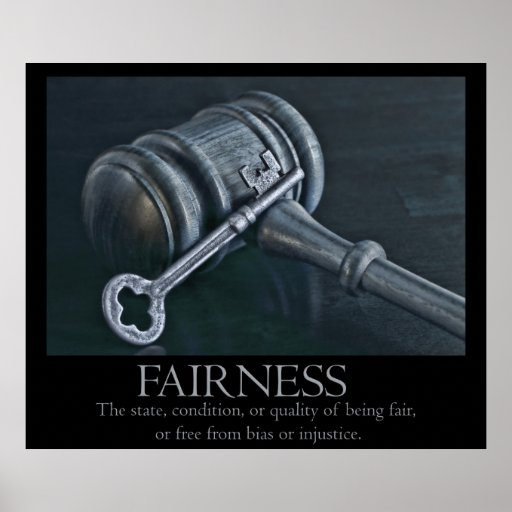 “The natural distribution is neither just nor unjust; nor is it unjust that persons are born into society at some particular position. These are simply natural facts. What is just and unjust is the way that institutions deal with these facts.” ― John Rawls, A Theory of Justice
Recent events in my own life have forced me to re-examine some of my most deeply held convictions. During the time I’ve been absent from this blog (wait – you didn’t notice???), four events in particular gave rise to self-reflection:
- Crohn’s Disease, with which I’ve done battle for 22 years, once again reared up and forced me to the sidelines
- My eldest son, who was born with a developmental disability, is now caught up in the nightmare that is the state mental health system
- I’ve rented a room to a family that is emblematic of all that is wrong with the way government abuses good people
- Another of my tenants passed away during the night
You’re probably wondering why I would spend the time to ponder what one prominent politician describes as “esoteric debates” when life brings such immediacy. You’re probably wondering further why I would take the time to write about that internal debate. The answer is that such internal debates are neither esoteric nor a thriftlessness exercise. It is by determining if our views are malleable to the events in our lives that we discover if our core values are the result of dogma or the sound exercise of judgement.
The overarching theme of President Obama’s tenure is that of “fairness.” Only, in Mr. Obama’s world, the fairness is defined by outcome; one in which those aggrieved receive what they deem to be their just share. This doctrine is exemplified in the policy objectives of his administration. Be it the underlying argument for Obamacare (that the only fair medical system is one in which everyone has health insurance), economic policy, the tacit embrace of the Occupy Wall Street movement, the management of foreign policy (attempting the equal embrace of islamist and democratic ideologies abroad) or dozens of other initiatives pursued, Mr. Obama is clear in how he defines “fair.” Further, his actions (including his insistence on defending the possibly unconstitutional and certainly intrusive domestic spying program) demonstrate a certainty that governmental institutions are the best method of obtaining this measure of fairness while denigrating the roles of other, traditional venues.
Unlike many of the President’s critics, I do not think he is an uncaring ogre bent on instituting a draconian new way of life on the American people. Although we disagree on most issues, I certainly applaud his efforts to afford all people equal protections under the law. I think it is indicative of his nature, in that he actually cares about the quality of life afforded ordinary Americans. I think most of my fellow countrymen have that same feeling and that underlying belief in his nature is the ultimate reason he won re-election – even though most of us remain opposed to his specific action plan.
I also think that more than a difference in political philosophy, we have divergent views on reality and possibility that slice to the core of our differences. The President is what might best be termed a government interventionist. Government Interventionism infects both the modern liberal and conservative movements. It is characterized by a belief that not only can the government positively effect outcomes, but that it should. While conservatives and liberals often have different goals in mind, they agree with the principle of a results-based system. As anyone who follows me on Facebook or Twitter is well aware, I have never subscribed to this view of governance.
My introspection of the past weeks has called me to wonder if, perhaps, this approach is best. One of the criticisms of Libertarians is that we are a callous bunch, uncaring about how life’s travails affect our fellow men. Those who know me personally know this isn’t the case. Of the root causes for my self-reflective journey, two involved people that I know cursorily. Yet, they are people who strike me as somehow getting less from life than their character would indicate they deserve.
Allow me to begin with the woman who died in her room last Wednesday. Although I knew her only a few months, what I did know belied her situation. She worked full-time (a rarity in today’s economy) and was well-respected by both her coworkers and employer, she had a large and close-knit family and she was outgoing, gregarious even. Yet, she died alone in rented room, the victim of a long battle with a chronic illness; in her case, diabetes. From what I could see, it was not a pleasant or painless death. She must have known she was in desperate trouble – I found her collapsed at the foot of her bed, in a position indicating she struggled to get to her door, with her phone fallen from her outstretched hand and smashed into bits. If we live in a results based society, why did she die in this manner? What could society have done differently that would have ensured that at the very least, one of her family would have been with her in her time of greatest need? At her funeral on Saturday, meeting her family and friends and seeing the outpouring of grief that overcame them all, I wondered why a woman so beloved by so many, who had done all society asked of her, should have been subjected to such a terrible death?
The week prior to her passing, I rented a room to a family of four. One room, four people, sharing a kitchen and bath with three other tenants. These are decent people, again doing all society says they should do. Both parents work and the mother attends nursing school; the children are incredibly well behaved (I wish mine had been so well behaved!). But they are victims of governmental bureaucracy as much as anything. The father openly admits to making mistakes when he was younger, which resulted in a felony conviction two decades ago. Since then, he’s done the things we tell him he should do: work to support his family, avoid the drama of street life, return to school and complete his GED. He would like to continue his education, but supports his wife as she works towards getting her degree. This is a family, in short, that is playing by all the rules our society dictates – yet they are reduced to living four to a single room, because it is all they can afford. The welfare system, the one that liberals tell us prevents this type of thing from happening and conservatives insist is too generous, is unavailable to them unless the father abandons his family. It is his decades old prior conviction that denies them access to it. Somehow, this result doesn’t seem fair to me.
Along the same lines, my personal struggle with chronic illness – in particular, a 22 year battle with Crohn’s Disease – has become much more difficult over the past two years. Over that time, I’ve had to shutter a business, spent nearly 8 months (cumulative) hospitalized and watched my family’s wealth get drained until we were destitute. I’ve rebounded some financially, but am in no way near the same fiscal position I was in 2011. Most of those around me think it unfair that my life has taken such a drastic turn, or that my reality is I’m likely wheelchair bound within the next two years and probably blind in less time than that. Certainly I wish there were a better prognosis.
Finally, there is my oldest son, Dennis. Some of my long-time readers are aware that he is what society euphemistically calls “developmentally disabled.” His reality is that he will never comprehend things the way you or I do. His IQ is 54; intellectually his development is equivalent to a second grader, emotionally he is at roughly the same stage as most 13- or 14-year olds. So while physically he’s a strapping 25 year old young man, his mind has yet to catch up to his body. Odds are that the two will never be in sync. This is the crux of his current problem. Because of his condition, he finds it difficult to express his feelings, except to occasionally blow up the way most 14 year old boys will. About 6 weeks ago, he found himself in a situation where he was being teased (not an uncommon situation, unfortunately) and lost his temper. The police were called; they followed protocol and brought him to the emergency room for observation. Which is where the nightmare began. Rather than checking his medical records, the hospital diagnosed Dennis as a violent schizophrenic and packed him off to the closest mental hospital. The doctor (I use the term in deference to his degree, not his competence) there confirmed the diagnosis, again ignoring his medical condition. A competency hearing was held, in which the doctor amplified his diagnosis to include the term “homicidal.” And so my son sits in a mental hospital, not understanding what’s happening or why as we fight to have him moved to another facility and have a new diagnosis issued that accounts for his disability. I’m not sure who would consider this outcome “fair.” If the President thought the justice system was ultimately unfair to the family of Trayvon Martin, I can’t see how he could consider this fair.
In reflecting on these incidents, each with an outcome which seems disproportionate in outcome to circumstance, I wondered if the results would be different were the fairness doctrine imposed by society replaced by libertarian values. Chances are that in three cases, the results would be the same but the perception would be different.
- In a Libertarian society, we would acknowledge that the young lady who died chose to live her final days alone. While there still would be sadness accompanying her death, it wouldn’t be considered unfair that she had neither friends nor family with her in her final hours.
- For the family renting the single room, society wouldn’t consider it unfair that a hard working mother and father would resort to housing their family in these conditions. In a Libertarian society, they would be celebrated as examples of how to face adversity.
- As for my health, nobody would consider it unfair that I’m sick and fated to becoming sicker. Unfortunate? Unlucky? Sure, those sentiments would be common. But the choices my family made in previous years were our own and left us in the financial position we find ourselves. I knew my health was precarious before launching my last business; it was our choice to take that route as opposed to my taking a job in what is a poor economy. Using Libertarian values, we took a calculated risk that proved unwise. But in the interventionist society we live in, we demonstrated incredible recklessness and need to be saved from ourselves.
Libertarians believe that fairness in opportunity is far more important than fairness of outcome. After all, if everyone is free to pursue their life’s goals – if they are truly at liberty – then the outcomes are inherently fair. Differences in outcome will have more to do with natural ability and desire than anything a government can do. While the odds are that the above situations would not be dramatically different than in a Libertarian society, there is one important way in which one of those situations would be better. The people above would be less constrained by a restrictive society. The family in one room may well be much better off, since Libertarians tend to look at most drug laws as counter-productive – meaning no felony record for the father. He would certainly have better employment opportunities without that black mark.
As for my son, a Libertarian society would probably mean all the difference in the world for him right now. Without the modern police state in which presumed innocence is nothing more than a tired cliche, it’s doubtful he would be where he is now.
So, yes, I’ve reflected and pondered. You’ve read my conclusions. You may not agree with them, but I end this period of introspection confident in my core belief that the equitable outcomes can only be guaranteed by the one truly fair system ever known to humankind. That is, that by believing in the individual and providing them with the liberty to achieve to their individual potential, a government does its best service to the governed.
The Real Culprit in the Martin-Zimmerman Case

Unless you live under a rock, in a cave on a deserted island, by now you’re certainly aware that George Zimmerman was acquitted of all charges in the death of Trayvon Martin. There are no heroes in this case. From what I’ve read about both of the principals, I can’t honestly see how anyone would want to emulate their behavior. George Zimmerman comes across as a power hungry hothead with more ego than common sense. Trayvon Martin was a wannabe gang-banger, sent to Sanford from Little Haiti by his mother because he had spent the past year in continuous trouble with authority.
Their chance encounter was a recipe for disaster. That it ended in one was predictable – and preventable. The real culprit is neither George Zimmerman nor Trayvon Martin, regardless of their latent anti-social tendencies. It is not the prosecutor, a woman with political aspirations who went forward with a prosecution despite lacking any evidence. It is not the original investigators, who concluded (correctly, in hindsight) that there was insufficient evidence to charge Zimmerman. It is not the jury, who reached the only conclusion feasible with the evidence presented.
The real culprits are those the residents of Sanford, FL pay to prevent these types of tragedies from happening: their police.
The Sanford police are not culprits because they let Zimmerman walk after the initial investigation. As shown during the trial there wasn’t enough evidence to warrant an arrest, much less charge with a crime. Instead, they deserve goat’s horns because their initial response was horrifically slow. Drive time from the nearest police substation to where the shooting occurred is less than 6 minutes; it took the police more than 8 to arrive after the initial call by Zimmerman to arrive. The responding officer arrived 5 seconds after the fatal shot was fired. Think about that for a moment: had the police simply driven the speed limit, the physical confrontation between the two men would have been averted. Further, the reason Zimmerman took it upon himself to patrol his neighborhood was due to a rash of robberies. There had been three in the previous five days; the description of the suspects were of “young, african-american males wearing hooded sweatshirts” (those robberies have yet to be solved).
Additionally, the management of the law enforcement in Sanford is a case study in how not to run a small city police force. The crime rate is comparable to that of notoriously crime laden large cities like New York, Newark and Miami. In the five years prior to the Martin-Zimmerman altercation, the Sanford police had been implicated in cases involving police cover-ups and racially motivated shootings. Because of the police department’s history, they left themselves open to charges of misconduct and negligence by those who looked to politically profit from the incident.
So, there’s the reality of the situation. The vast majority of us would never have heard of Trayvon Martin or George Zimmerman had the Sanford PD simply been competent.
An Open Love Letter to my Wife

My Wife Linda with some bald guy
Some years ago I decided to walk up to Pacific Avenue in Wildwood, with the sole purpose of watching the parade of classic cars. Little did I know when I began walking down Wildwood Avenue that within minutes, my life would forever be changed.
It was the night I met you. Never a more fortuitous moment came across any man’s life.
You were standing there, in front of my friend Steve’s bicycle rental stand, where I always went to watch the parade. I had never seen a more beautiful vision in my life. You had just come from work, your hair somewhat mussed, and still…I was drawn to you, the way a moth is drawn to a bug zapper. You slew my playboy ways without even looking in my direction, much less saying anything to me. They say love at first sight doesn’t exist. You and I know better; that when you find the person God decided is the one for you, everything else fades away.
In all my life, I had never been so anxious and nervous to strike up a conversation with another person. Thankfully, that ’67 GTO rolled by and gave me my chance:
“Sweet car,” I said.
“Yes, it is” you answered.
And then you walked away. I thought I had blown it, although I didn’t know why. But I was certain that I had just missed on something spectacular. But God, in his wisdom, never lets the folly of men get in his way – and it was to my immense joy that I found you at my hotel pool later that evening. Little did I know then that the same things I felt in front of that bicycle stand were shared by you.
That summer bore fruit to a whirlwind romance between Raymond Rothfeldt and Linda Shelly. It was a fantastic time and ended one night at Neil’s Steak House. It ended with me on one knee, asking your hand in marriage. Of course, I never expected to shock you with the proposal – and I never expected to spend an eternity on one balky knee waiting for an answer. But I did; I would again.
13 years ago today we married. It proved to become the perfect metaphor for our lives together. From the JP disappearing less than an hour before the wedding (leading to our being married by Fred Wager, in his Hawaiian shirt) to the mis-sized wedding bands, our life hasn’t been one of ease or plans coming to fruition. But you’ve figured out a way laugh through the worst life can toss at us and made me laugh at myself in the process.
Over time, my love for you has only grown stronger. Where once I couldn’t imagine life without you by my side, now I cannot picture what my life was like before you came into it. Your beauty, your grace under pressure, the way you enliven a room: all this and more constantly amazes me. It is your strength that has guided this little family over the years, your wisdom that has saved us from catastrophe, your resilience that enabled us to bounce back every time things went astray. You’ve always known when I needed a laugh to get me past a difficult situation, a poke to get me moving in the right direction and a roadblock to keep me from going off on wild tangents.
And after all these years, there still isn’t another woman who can thrill me with just a smile, who has the ability with just a look to set my pulse racing and get my palms sweating. I may be well into middle age, but you can still make me feel like a teenager going on his first date; that odd combination of anticipation and nervousness.
For all of this and more, things I cannot write here or that are beyond my ability to write about, I love you. I love you for being you – and I love you for loving me. Your marrying me was the greatest gift I’ve ever received, one that I’ve treasured for the past 13 years and the one I’ll cherish above all others for the rest of my life.
Happy Anniversary, Sweetheart! I hope you don’t mind my sharing this with the rest of the world (although I don’t think you will) – but I think everyone, everywhere should know what a wonderful, wonderful woman you are. ♥
THE WISDOM OF JUNIUS P. LONG
It is not “politcally correct.” But then again, the people who are have never stood for anything in their lives, so there’s that…
“If we concentrated on the really important things in life
 there’d be a shortage of fishing poles.”

Brownwater Jimster sends me this to share with you. As most know, I tread lightly on political subjects because they are, like religion, fraught with chuckholes. However, when someone like Mr. J.P. Long emerges and points out the sky is indeed falling (and he’s right), I feel obligated to second the sentiment.
Here are Mr. Long’s well-reasoned observations on the state of the Union.
If you can get arrested for hunting or fishing without
a license, but not for being in the country illegally …
you might live in a country run by idiots.
If you have to get your parents’ permission to go on
a field trip or take an aspirin in school, but not to get
an abortion …
You might live in a country run by idiots.
If you have…
View original post 524 more words
The End of the Beginning
Some of you may recognize the title of this post as part of a quote from Winston Churchill:
“Now this is not the end. It is not even the beginning of the end. But it is, perhaps, the end of the beginning.”
Although Sir Winston was talking about the Battle of Egypt, the same could be said of Obamacare today. Since this is a holiday week, there is a good chance that you missed the announcement from the Treasury department on Tuesday afternoon. The Obama administration unilaterally decided to delay implementation of the employer mandate part of the law until 2015. Never mind that this is another example of a President who repeatedly decides which laws he’ll enforce (in direct contravention to the Constitution). That’s a another post for another day. No, this is yet another example of what was supposed to be the greatest thing since sliced bread is actually what a whole bunch of us realized it was from the beginning: in military parlance, a BOHICA SNAFU. (For those of you unfamiliar with military terms, this is a family blog. Feel free to use a certain search engine to look it up).
 How bad has this been? There are bad laws and there are poorly executed laws. But this law was less about the stated intention (revamping the American healthcare system to provide easier access, with lower costs, for all Americans) than it was about a political power play between the two major parties. The result was a poorly conceived law, rammed through an indifferent Congress by a power-hungry administration, crammed full of pork and incapable of actually working. Every day seems to bear out the fact that nobody read the ACA before the final vote (even if they had, it would have taken a year more just to figure out the details).
To date, there have been 10 instances where the Obama administration has been forced to admit defeat on a particular program in the ACA. The reversal on the employer mandate is the latest, and one of the most critical. The reason they gave, that businesses needed more time to figure out the paperwork, is as believable as the tooth fairy. The real reason is that businesses already figured out how to avoid the paperwork completely: keep workers under the 30 hour limit which would trigger the mandate. Friday’s jobs report, which showed that more part-time jobs were created than full-time jobs, underscored this.
Score one for those of us who warned that Obamacare was an economy killer.
Unfortunately for the American worker, the individual mandate is still in place. The removal of the employer mandate means that some 36% of Americans are now going to be forced into purchasing private medical insurance. The employer mandate proved politically unworkable in practice, I suspect that by October (when everyone needs to start shopping) the individual mandate will prove even more politically impractical.
By the way, here are the 9 previous ACA failures:
- The CLASS Act: a long-term care insurance program that died last year. The reason? The law, as written, couldn’t be funded. The supposed budget savings amounted to 40% of the total deficit reduction attributed to the ACA.
- Federally mandated insurance exchanges: States were given literally unlimited funds to set up insurance exchanges that would allow uninsured folks to shop for coverage. The problem is that only 17 states have bothered with setting up the exchanges and the law requires HHS to set up exchanges for any state that doesn’t. But the ACA failed to foresee that states might not want to bother with the regulatory and administrative nightmares in trying to create a health care exchange and provided zero funds. HHS estimates it will cost at least $1.5 billion dollars to get the exchanges up and running. Good luck with that.
- Small business exchanges: along the lines of the individual exchanges, these were intended to allow small business employees to access the same rates enjoyed by employees at major corporations. They aren’t dead yet – but like the employer mandate, they have been delayed until 2015. The problem isn’t political here, though – it’s a real-world issue. Namely, how do you get the same actuarial certainty for an employee at a company with 10 employees as one who works with 1,000 other people? (Trick question: you can’t do it. But remember, the math geniuses in Congress who dreamed this up also raise government spending, then call it a “budget cut.”)
- 1099 reporting: This was a major funding tool for the ACA that was scuttled because it amounted to both a new tax and a reporting headache for every employer in the country.
- The Great Waiver Debacle: a provision in the ACA allowed HHS to issue waivers to organizations that could prove they needed them. Lo and behold, the Political Patronage and Payback Machine kicked into high gear. Over 1200 waivers have been granted (nobody knows for sure, because HHS stopped reporting the numbers a few months back). But if you gave to the Obama campaign or the DSCC, it looks as if you got a waiver. Funny how a law that was supposed to benefit everyone has proven so incredibly unpopular in core Democratic Party constituencies.
- The Pre-Existing Plans: great idea, on paper. Anyone who has a preexisting condition knows how difficult it is to find medical insurance. But once again those Congressional mathematicians didn’t realize how much it would cost to insure everyone – and the program has already run out of money. No more people are being accepted, even though HHS estimates that only 30% of those eligible are covered.
- Children Only Plans: under the ACA, if an insurance company sells child-only healthcare plans they need to offer coverage to kids with preexisting conditions. Somebody forgot to tell Congressional Dems the way the marketplace works (that companies do not willingly increase costs without some future benefit). The child only plans have virtually disappeared from the marketplace, a casualty of Obamacare.
- The “Basic Health Care Plan”: What’s that you say? You’re in perfect health, you’re young and you really don’t want to pay for full coverage that you can’t afford, even with the promised subsidies? Well, not to worry: the ACA mandated that states offer a basic plan – or essentially, catastrophic coverage-only. Except, as with the other mandates, it has proven unworkable and pushed back to 2015.
- “If you like it, you can keep it”: I saved the best for last! The greatest example of marketing hucksterism exhibited by the Obama administration was the President’s repeated assurances that if you liked you current health coverage, you would get to keep it after the ACA was passed. It’s pretty clear at this point that either the President is as dumb as rock when it comes to market economics or a bald-faced liar, because millions of Americans no longer have the health insurance options they had 4 years ago. Heck, HHS expects that some 126 million Americans will see a “significant” change to their health coverage as a result of the ACA.
The administration and Congressional Dems keep telling us that we’ll love Obamacare once it fully takes effect. They insist the law’s problems have more to do with poor marketing and Republican obstructionism than any basic flaws. But the record on implementation has more failures than successes and the law keeps proving to be more and more unpopular across all demographics.
Here’s a suggestion for the President. Admit that the latest reversal is, in fact, proof that the ACA is a disaster. Politically, it swept your party out of power in 2010 and is threatening to reinforce those losses in 2014. If you are truly interested in your legacy, which seems to be the general consensus among the DC elite, then do something no President has done.
Declare that your “signature accomplishment” is failing to deliver on the promises it made. Ask Congress to repeal it, scrap it and consign it to the dust heap of history. Ask Congress to work together to craft a healthcare reform package that actually works to improve delivery and reduce costs. In short, take ownership and command the respect true leadership creates.
This is the beginning of the end. The only question at this point is whether the President can rewrite the script and create a happy ending. If the past 5 years are any indication, he is politically incapable and (more importantly) personally unable to do so – and the nation will suffer as a result.
The New Yankees: Just like the 1965 Yankees

Ok, so it’s the weekend. Time to take a break from the serious stuff. Time to kick back, relax, drink a cold adult beverage and do something just for fun.
For me, that’s always meant baseball. These days, decrepit knees and faltering eyesight have ended what was once an almost promising career in an over-35 league. (We won’t talk about my misadventures on the field before I turned 35, either). Suffice it to say while my play has never reminded anyone of a major leaguer, I always enjoyed the game. These days, part of my summer routine is to put my feet up and watch my favorite team: the New York Yankees.
I’ve been a fan since the original bad old days, when Ron Blomberg and Fred Stanley were mainstays. I cheered when the team was great, suffered again when they got really bad and jumped for joy when they returned to the pinnacle. These days, turning on a Yankees game is almost a rite of self-immolation. Has the circle turned yet again?
In a word, yes. Last year’s team won their division. This year’s squad will be lucky to finish with an even record. What happened? Sadly, nothing a seasoned fan hasn’t seen coming for a couple of years now. Age, injuries and a depleted farm system have resulted in the current roster of cast-offs, has-beens and never-weres.
Age: Baseball is a young man’s game. Players once were considered on the downside of his career by the time they turned 32. Then, steroids and amphetamines kept guys in their late 30’s playing better than their younger counterparts. Baseball has done a good job on getting the drugs out of the game and once again, players in their mid-30’s are not producing like they did 3 or 4 seasons prior. On the other hand, a rule of thumb is that (except for the occasional phenom) young players need 2 or 3 seasons to become solid contributors.
This is troubling for the Yankees. They field the majors oldest team, with an average age of 32. On most nights, they put 4 players on the field over 35. Three of the starting pitchers are 34 or older and the closer is 43. Toss in that three rookies are playing regularly, while another 4 are pitching regularly, and age is a big problem for the team.
Injuries: The Yankees have an all-star team on the disabled list. It includes players who have transcended the sport to become cultural icons in Derek Jeter and Alex Rodriguez, the starting first baseman, starting center fielder and starting catcher, and the starting DH who was also supposed to be the primary backup at first and third base. It’s forced journeymen to play first base, shortstop, third base, catcher, DH and two outfield positions. The result is about what you would expect: going into play last night, the Yankees were next to last in the league in batting average and slugging percentage, last in total hits and doubles and in the bottom third in runs scored. The trends haven’t been positive, either: the team was second in runs scored in April, but dead last in June.
Farm System: The last time the Yankee farm system produced a solid position player was Robinson Cano, in 2005. That’s eight seasons since any Yankee farm hand has proven to be even a league average player. Necessity has forced the Yankees to play one rookie at third base, another about 30% of the time at catcher and they recently called up another to play left field. The combined batting average of those three is .211. Sadly, there isn’t a player in AAA or even AA that looks like a sure-fire major leaguer, either. There are hopes for three AA outfielders and a catcher in A ball, but those players are at least a year (and probably two) before being able to help the major league roster.
At least the pitching has fared better. The Yankees have had a pretty good crop of decent pitchers come up through the system, including mainstays Phil Hughes, Joba Chamberlain, Ivan Nova, David Robertson, Adam Warren, David Phelps and Preston Claiborne.
So how does all of this translate into the future? Not very well. Jeter is trying to come back from breaking the same ankle twice at age 39. He is a certain Hall-of-Famer once he retires, but few men have played shortstop at his age. Whether Jeter can remains to be seen; at this point he still hasn’t demonstrated the ability to even get through one game physically. Rodriguez, at 38, is trying to come back from a twice-repaired hip – the type of injury that ends most careers. Mark Teixeira and Kevin Youkilis’s seasons are officially over. Of all the injured starters, only Curtis Granderson has a reasonable shot at coming back at anywhere close to the type of player he was before breaking his wrist. Now toss in the fact that the Yankees management has committed to shed about $50 million in payroll next season, nearly 20% of the team’s current budget. It means the Yankees will likely be finding bargain basement players to man the left side of the infield, catcher, an outfield spot and three of the starting pitchers. Teixeira will be back, but nobody is expecting him to be anything like the player he was five seasons ago. It’s likely that Granderson will be let go in free agency – and there is uncertainty if Cano comes back. Everyone thinks he will be, but his current asking price is actually too rich for this version of Yankee brass.
No, this is looking like the start of another run of futility in the South Bronx. The only question is, how long will this one last?
Cops vs. Civil Liberties? It shouldn’t be.
With everything that’s been making headlines this week, there certainly isn’t a shortage of things to write about. Heck, it takes me almost three hours each morning just to get through the barrage of news articles that find their way into my email and the topics cover everything from government malfeasance to the hyper-partisan Congressional environment through miscellaneous popular interest items. But there was one headline of which I’m betting the vast majority of you are unaware.
The other night, the city council in New York City voted to effectively end the NYPD’s “stop-and-frisk” program. They took this action for three reasons, two of which are political (the Council Speaker, once considered a shoo-in in the upcoming Mayoral election, is suddenly trailing human joke Anthony Weiner and the Justice Department is opening a probe on the practice) and one fiscal (the city just lost a lawsuit from the NYCLU). Current mayor, Michael “Mao” Bloomberg has already threatened to veto the new legislation – but in NYC, the Council can override a mayor’s veto and they have the votes to do so.
The stop-and-frisk program is a wonderful example of what happens when what seems like a reasonable idea at one time can later morph into a heinous overreach of government authority. The roots of the program are found in former Mayor David Dinkins’ “Clean Halls” program. That program aimed to reduce crime in NYC’s infamous public housing projects by giving police expanded to authority to stop anyone found in the buildings or grounds and ask for ID; if the person stopped couldn’t prove they lived there, they were arrested for trespassing and escorted away. It was an admirable effort that worked reasonably well in removing trespassers and also found more than a few fugitives.
 It was so successful that Mayor Mike expanded it to all public spaces. That led to the idea that the police could catch even more bad guys and maybe even prevent crimes by allowing the police to not only randomly stop people, but check them for contraband. This was all premised on the idea that the police would have reasonable cause before accosting ordinary folks and searching them.
Has the program actually reduced street crime? The NYPD attest that it has, pointing to the reduction in violent crimes since 2002, when the program began (from about one violent crime per 44 residents) to the present day one per 76. But nationally, there has also been a marked reduction in violent crime during the same period: from one per 320 Americans to one per 480. It’s just a cursory examination of the numbers, but it may be that the national reduction in violence is as much responsible for New York’s drop in crime rate as the stop-and-frisk program.
To further damn the program, the NYPD’s statistics show that the program may have been more trouble than it was worth. It was found during the NYCLU case that the stop-and-frisk policy is a violation of the Fourth Amendment, despite the city’s claim that officers were only allowed to stop people who presented with a reasonable expectation that they were involved in some type of crime. Yet, the city’s own data show that although some 4.4 million stops were made, only 6.26% resulted in an arrest and another 6.25% resulted in a summons issued. Those are pretty pitiful results, especially when compared with the fact that over 28% of the incidents resulted in police using force to effect the stop.
So why put the program in effect in the first place – and why keep it going for more than a decade, when there is no discernible proof that it served it’s intended purpose? The answer to the first part is simple enough; New Yorker’s love their city – but they hate the high crime rate. To turn on the evening news or pick up a copy of the New York Post is to be bombarded with lurid tales of rape, murder, muggings and general mayhem. Although they’ll never admit it, most live in constant fear of being assaulted and with a reason. Those crime statistics still paint a pretty grim picture; a picture of a city whose crime rate is nearly 6 times worse than the national average. And as I’ve discussed before, where people are afraid, they’re also willing to cede to the government their rights. New Yorkers are especially axiomatic of this “nanny state” mentality. When they feel threatened they demand the government do something, anything, regardless if rights get trampled in the process – because, after all, it’s the other guy’s rights being trampled. It is, in short, the same mentality that allowed dictators like Adolph Hitler and Josef Stalin to ruthlessly pursue their bloodthirsty agendas.
As to why it took a class action lawsuit and the threat of federal intervention to bring it to an end, one only has to look at the cottage industries that grew and depend on stop-and-frisk. The mayor, who at one time harbored Presidential aspirations, became synonymous with both this civil rights violation and by crusading against the Second Amendment rights of his subjects (as well as the evils of tobacco, carbonated beverages and trans-fats). He routinely uses the number of weapons seized during the stops-and-frisk as evidence that his anti-gun crusade would work, if only the rest of the country would follow his lead. There is NYPD commissioner Ray Kelly, whose career depends on keeping those crime stats dropping and can hardly walk away from the program he most credits for the decline in violent crime. There are the rank-and-file officers, who after decades of ridicule and abuse by the citizenry, have found themselves for the past 12 years in a position of absolute authority. After all, who’s going to argue with a NYC cop who has the ability to stop you, detain you and search you anytime he wants? There are surely others, as well; like all major operations that are rooted in skirting existing law, corruption certainly follows.
The lesson that I wish New Yorkers (and everyone else) would take away from this episode in their history is this: even trying to exchange their freedoms for their safety was an abysmal failure; their crime rate is still far higher than people who live elsewhere. It is proof that liberty is not a currency that can purchase safety.
Watch the Senate vote on Immigration Reform
Senate Invokes Cloture on Immigration Bill, Final Vote at 4pm | C-SPAN.
 Political Baseballs