As some may have noticed, I’ve been writing for Zell’s Pinstripe Blog. Feel free to read my baseball musings there, at http:zellspinstripeblog.wordpress.com.
You can still join me here for the latest in political conversation.

As some may have noticed, I’ve been writing for Zell’s Pinstripe Blog. Feel free to read my baseball musings there, at http:zellspinstripeblog.wordpress.com.
You can still join me here for the latest in political conversation.

In case you’ve been under a rock this morning, George M. Steinbrenner III, owner of the greatest sports franchise in history for the past 38 years, passed away around 9:45am after a massive heart attack.He had just celebrated his 80thbirthday on July 4.
George was bombastic, argumentative and at times a bit crazy. But like your slightly off-kilter uncle, George was part of our family – and because he was always a fan first and owner second, we understood and accepted him, even when the rest of the world tried to shun him. We always knew we were part of the Yankees Family, as long as George was around. Yes, he made a ton of money, but unlike other owners in any sport, he put that money back into the team. Ask a fan in Kansas City or Pittsburgh if they would rather have their current ownership or a George Steinbrenner, and the answer is always “George.” As much as the rest of baseball cries foul every time the Yankees sign the best players on the free agent market to multi-million dollar contracts, MLB has never had to step in and force the Yankees to spend their revenue on improving the team (a la the Florida Marlins). Even when the media would hoist him on a petard of his own making, George remained the Boss: large and in charge.
And one thing remained constant throughout the years: winning. When he bought the team in 1973 from CBS, the Yankees had fallen to become a laughing stock. The great stadium was empty on most days and falling into disrepair, the team was terrible and without direction. From the start, the Boss was determined to restore the Yankee legacy. He convinced a broke New York City to repair the destitute field that had once seen immortals like Babe Ruth, Joe DiMaggio and Mickey Mantle. He imported new stars to roam a revitalized Yankee Stadium: Mickey Rivers. Willie Randolph. Graig Nettles. Lou Piniella. Bucky Dent. Chris Chambliss. Catfish Hunter. Reggie Jackson. Within three years, the Yankees had returned to the World Series. The next season, the team rewarded George with the first of his seven world championships. In 2009, the new Yankee Stadium was completed and while we were all saddened to see the original go, it truly is worthy of the name Yankee Stadium. George struck again, signing CC Sabathia, AJ Burnett and Mark Texeira. And once again, the team rewarded him with a world championship.
The public perception of George was of a man who didn’t care about those around him, but his legacy will be larger than the Bronx Bombers. Over the years, he created foundations that will continue to serve the needs of ordinary people throughout the Tampa and New York areas for years to come. As a veteran, the work George did for our servicemen and women, including sponsoring scholarships for the children of fallen heroes, will always hold a special place in my heart.
George Steinbrenner was not always a beloved figure in New York sports, but nobody ever doubted his commitment to winning. For that, Yankees fans everywhere will always love him. RIP, Boss – you earned it.
Yesterday, I posted the Declaration of Independence, in its entirety. I hope you have had a chance to read it. If not, please do – it is our republics founding document. The principles laid out by Thomas Jefferson and agreed to by the other founding fathers represent more than why the United States came into existence. Those principles are the very lifeblood of our nation and the primary reason that for the past 234 years, millions of people have risked everything to call the USA “home.”
What are those principles, those core beliefs that identify what it means to be an “American?”
I’ve decided to write a series to cover what are best called “The American Principles.” Today begins the lesson.
First and foremost, an American believes the core phrase from the Declaration: “All men are created equal, that they are endowed by their Creator with certain inalienable rights; that among these are Life, Liberty and the pursuit of Happiness.” That is a heck of phrase, outlining the four tenets of Americanism in only 27 words. Yet, those 27 words are the key to understanding every vital document that came before and after. Let’s break them down and truly understand the meaning.
The first thing to understand is that while the Founders were deeply spiritual men, they did not all conform to the same religion. While most were Protestant, at least two were Catholic and two were Jewish. Additionally, there were deep divisions in terms of what types of Protestantism were observed by the rest. There were Quakers, Shakers, Baptists, Calvinists and Anglicans. So, while all of these men agreed in principle that there is a God, not all were comfortable with using the word. (It is sacrilegious for some to mention the name of God). Additionally, none felt comfortable in obligating the rest to a specific observance, since one of the major impetuses leading to settlement of the colonies was the pursuit of religious freedom and tolerance. And so, in our founding document we see the result of the tension between government and religion (or more precisely, government and multiple religions): the idea that the government should not endorse a particular religion. This creed was later adopted and formalized in the First Amendment to the US Constitution (Congress shall make no law respecting an establishment of religion, or prohibiting the free exercise thereof…). However, it should be pointed out that while the Founders did not believe the government should formally recognize any particular religion for fear of giving it privileged status (in effect, creating a state religion), they also did not believe that government should be devoid of any spiritual context. As a result, the founders inserted the generic “Creator” into the Declaration, although each member of Congress interpreted that to mean God as understood in the typical Judeo-Christian ethos.
This is crucial to understanding this phrase. Men are created and given rights by that which created them; therefore, their rights are divinely formed. It follows that governments, which are institutions of men, cannot supersede a divinely given right. So, therefore, the rights that are expressly enumerated – Life, Liberty and the pursuit of happiness – are divine rights, granted to men by God and inviolable. No legal government can usurp those rights and if it attempts to, then it is the right of the people to overthrow the government.
Where do the people derive the right to overthrow an unjust government? We’ll cover that in the next part…
In Congress, July 4, 1776
The unanimous Declaration of the thirteen united States of America
When
in the Course of human events, it becomes necessary for one people to dissolve the political bonds which have connected them with another, and to assume among the powers of the earth, the separate and equal station to which the Laws of Nature and of Nature’s God entitle them, a decent respect to the opinions of mankind requires that they should declare the causes which impel them to the separation.
We hold these truths to be self-evident, that all men are created equal, that they are endowed by their Creator with certain inalienable Rights, that among these are Life, Liberty and the pursuit of Happiness. That to secure these rights, Governments are instituted among Men, deriving their just Powers from the consent of the governed, -That whenever any Form of Government becomes destructive to these ends, it is the Right of the People to alter or to abolish it, and to institute new Government, laying its foundation on such principles and organizing powers in such form, as to them shall seem most likely to effect their Safety and Happiness. Prudence, indeed, will dictate that Governments long established should not be changed for light and transient causes; and accordingly all experience hath shewn, that mankind are more disposed to suffer, while evils are sufferable, than to right themselves by abolishing the forms to which they are accustomed. But when a long train of abuses and usurpations, pursuing invariably the same Object evinces a design to reduce them under absolute Despotism, it is their right; it is their Duty, to throw off the such Government, and to provide new guards for their future security – Such has been the patient sufferance of these Colonies; and such is now the necessity of which constrains them to alter their former Systems of Government. –The history of the present King of Great Britain is a history of repeated injuries and usurpations, all having in direct object the establishment of an absolute Tyranny over these States. To prove this, let facts be submitted to a candid world.
He has refused his Assent to laws, the most wholesome and necessary for the public good.
He has forbidden his Governors to pass Laws of immediate and pressing importance, unless suspended in their operation till his Assent should be obtained; and when so suspended, he has utterly neglected to attend to them.
He has refused to pass other Laws for the accommodation of large districts of people, unless those people would relinquish the right of Representation in the Legislature, a right inestimable to them and formidable to tyrants only.
He has called together legislative bodies at places unusual, uncomfortable, and distant from the depository of their Public Records, for the sole purpose of fatiguing them into compliance with his measures.
He has dissolved Representative House repeatedly, for opposing with manly firmness his invasions on the rights of the people.
He has refused for a long time, after such dissolutions, to cause others to be elected; whereby the Legislative Powers, incapable of Annihilation, have returned to the People at large for their exercise; the State remaining in the mean time exposed to all the dangers of invasion from without, and convulsions within.
He has endeavoured to prevent the population of these States; for that purpose obstructing the Laws of Naturalization of Foreigners; refusing to pass others to encourage their migrations hither, and raising the conditions of new Appropriation of Lands.
He has obstructed the administration of justice, by refusing his Assent to Laws for establishing Judiciary Powers.
He has made judges dependent on his Will alone, for the tenure of their offices, and the amount and payment of their salaries.
He has evinced a multitude of New Offices, and sent hither swarms of Officers to harass our People, and eat out their substance.
He has kept among us, in times of peace, Standing Armies without the Consent of our Legislatures.
He has effected to render the Military independent of and superior to the Civil Power.
He has combined with others to subject us to a jurisdiction foreign to our constitution; and unacknowledged by our laws; giving his assent their Acts of pretended Legislation.
For Quartering large bodies of armed troops among us:
For protecting them, by a mock Trial, from punishment for any Murders they should commit on the inhabitants of these States:
For cutting off our trade with all parts of the world:
For imposing Taxes on us without our Consent:
For depriving us in many cases, of the benefits of Trial by Jury:
For transporting us beyond seas to be tried for pretended offenses:
For abolishing the free system of English Laws in a neighbouring Province, establishing therein an Arbitrary government, and enlarging its Boundaries so as to render it at once an example and fit instrument for introducing the same absolute rule into these Colonies:
For taking away our Charters, abolishing our most valuable Laws, and altering fundamentally the forms of our Governments:
For suspending our own Legislature, and declaring themselves invested with the power to legislate for us in cases whatsoever.
He has abdicated Government here, by declaring us out of his protection and waging War against us.
He has plundered our seas, ravaged our Coasts, burnt out towns, and destroyed the lives of our people.
He is at this time transporting large Armies of foreign Mercenaries to compleat the works of death, desolation and tyranny, already begun with circumstances of Cruelty and perfidy scarcely paralleled in the most barbarous ages, and totally unworthy the Head of a civilized nation.
He has constrained our fellow Citizens taken captive on the High Seas to bear arms against their Country, to become the executioners of their friends and Brethren, or to fall themselves by their Hands.
He has excited domestic insurrections amongst us, and has endeavoured to bring on the inhabitants of our frontiers, the merciless Indian Savages, whose known rule of warfare, is an undistinguished destruction of all ages, sexes and conditions.
In every stage of these Oppressions we have Petitioned for Redress in the most humble terms: Our repeated Petitions have been answered only by repeated injury. A Prince, whose character is thus marked by every act which may define a Tyrant, is unfit to be the ruler of a free people.
Nor have we been wanting in attention to our British brethren. We have warned them from time to time of attempts by their legislature to extend an unwarrantable jurisdiction over us. We have reminded them of the circumstances of our emigration and settlement here. We have appealed to their native justice and magnanimity, and we have conjured them by the ties of our common kindred to disavow these usurpations, which, would inevitably interrupt our connections and correspondence. They too have been deaf to the voice of justice and of consanguity. We must, therefore, acquiesce in the necessity, which denounces our Separation, and hold them, as we hold the rest of Mankind, Enemies in War, in Peace Friends.
We, therefore, the Representatives of the united States of America, in General Congress, Assembled, appealing to the Supreme judge of the world for the rectitude of our intentions, do, in the Name, and by the Authority of the good People of these Colonies, solemnly publish and declare, That these United Colonies are, and of Right ought to be Free and Independent States; that they are absolved from all Allegiance to the British Crown, and that all political connection between them and the State of Great Britain, is and ought to be totally dissolved; and that as Free and Independent States, they have full Power to levy War, conclude Peace, contract Alliances, establish Commerce, and do all other Acts and Things which Independent State of right do.
And for support of this Declaration, with a firm reliance on protection of Divine Providence, we mutually pledge to each other our lives, our Fortunes and our Sacred Honor.
What a Week!
June 28, 2010
The Yankees are now home after completing a tour of the NL West. Well, a half-tour, anyway – and considering the way the games against the Diamondbacks and Dodgers went, I don’t think anyone in the Bronx is exactly sorry to have missed out on seeing the Giants and Padres. So, what did we learn about the Bombers this past week?
Finally, what are the Yanks to do with Chan-Ho Park? In two appearances, Chan Oh-No proved to be more arsonist than fireman. It’s hard to imagine the team cutting bait on this guy. Brian Cashman hates admitting mistakes and after having to DFA Randy Winn earlier this year, dumping Park would be another admittance of failure. But at this point, the manager has expressed reservations about using him in anything other than a mop-up role. My bet is once either Alfredo Aceves or Sergio Mitre comes off the DL, Park should pack his bags in anticipation of a one-way ticket out of New York.
I’m certain by now you’ve heard that Rolling Stone published a pretty scathing article about Gen. Stanley McCrystal. For all the hoo-ha about comments made about the current administration, the article is about much more than that: it tears the administration a new one on the current war policy and strategy. It also highlights a a problem I blogged about last week; the administration’s inability to make a command decision.
I really could care less about the parts of the story that have gained the most media airtime. In case you were under a rock, the press has been having fun with the fact Gen. McCrystal doesn’t have much respect for the President, Vice-President or US Ambassador to Afghanistan? To which I say, So What? Most people in the military have little respect and less regard for any of them. That’s not news; it’s simply a wake-up call to those who have never served that the military mindset prefers direct action over consensus building. Even though the article paints an unflattering picture of McCrystal as a Col. Kurtz type character (the narcissistic commander in “Apocalypse Now” played by Marlon Brando), it’s pretty clear throughout the article that none of the rank-and-file have much use for the President’s strategy in Afghanistan. As one soldier complains to Gen. McCrystal,
“You say we’ve stopped the momentum of the insurgency. I don’t believe that’s true in this area. The more we pull back, the more we restrain ourselves, the stronger it’s getting.”
This, to me, pretty much sums up the principle issue of Obama’s Presidency: an inability to come to quick, astute decisions.
I’m not the only one is lamenting the President’s obvious inability to lead. As Richard Cohen writes in “President Obama’s Enigmatic Intellectualism,”
“What these people were seeking was not an eruption of anger, not a tantrum and not a full-scale denunciation of an oil company. What they wanted instead was a sign that this catastrophe meant something to Obama, that it was not merely another problem that had crossed his desk…”
In other words, we have a President who actually seems afraid that any decision he makes will end up being wrong. Which, of course, seems pretty strange for a guy who was supposedly elected because his intellect gave him a sense of invincibility.
Mr President, I’m restating the plea I made a week ago: please, please stop triangulating and start leading. Even though I’m on definitely on the political right, the last thing the nation needs is a Presidency whose authority is compromised by a lack of cajones. We’ve experienced that before – the feckless Carter years being the most recent. It was the most dismal four years in our nation’s recent history – but so far, this President seems intent on recreating that era. Consider:
As everyone is well aware by now, the President gave his first Oval Office address the other night. Plenty has been said and written about what was in the speech – Howard Kurtz has a terrific summary in the Washington Post – but what nobody wrote about is, what wasn’t in the speech. And what was missing is more illuminating about why the spill in the Gulf of Mexico has careened out of control than anything the President said.
As most of the readers of this blog are aware, my political tendencies are toward the conservative. However, while I am opposed to most of the administration’s policies, I still do not wish the President ill when dealing with all matter of crises that every President faces. The best hope for our survival as a nation is to have people in the Oval Office and West Wing who are competent. Unfortunately, the USA once again has a President who is neither in charge nor, it seems, knows how to take charge.
The Gulf Oil Spill is only the latest crisis to illustrate this problem. Iran, North Korea, Afghanistan and the economy are all crises that have been mangled by an endless set of blunders, bloopers and missteps. But for many Americans, this particular crisis is the final straw. Of course, there is nothing like being witness to millions of gallons of oil pouring out of the ocean floor and making its way to our shores to crystallize the idea that this administration is – incompetent.
The level of incompetence is stupefying. After all, this was supposed to be the cerebral presidency; a defining contrast to the predicate administration. This was supposed to be an administration of highly intelligent, outside-the-beltway , outside-the-box thinkers who could handle all the world’s woes and bring us safely to the future. But the common thread in all of the inaction, indecisiveness and ineffectiveness the world has witnessed over the past 18 months is that nobody in this Ivy educated klatch has a clue about crisis management.
This is not to say the administration is incapable of recognizing a crisis. Every member seems well aware of the critical situations around them. But instead of figuring out how to resolve them, the administration seems hell-bent on following Rahm Emmanuel’s “never let a good crisis go to waste” policy of using crises to forge political points. What President Obama and the rest of his policy wonks have failed to notice is that the country does not want a new political agenda – they want action that resolves the crisis. In fact, if the President focused more energy on solving those crises swirling around right now, odds are he could make more political hay by pointing to his administration’s competence.
It may be that with a West Wing full of political operatives (and not necessarily administrators and managers – see Elena Kagan) that none of them have any experience solving a crisis. This probably comes as a shock to most Americans, since it seems anyone who has ever had a leadership position in the private sector has had their share of crises to avert and overcome. Heck, I had my first taste of crisis management as a 19 year old Lance Corporal and section leader. But, the thing to remember is that none of President Obama’s top aides have any private industry experience, and neither does the President. In fact, they have come from either the legislative branch or are political apparatchiks, where crisis management primarily involves three steps: duck and run, blame the other guy and propose new rules to prevent future ducking and running. Anyone else see a correlation between that philosophy and the way the current crises are being handled?
So, Mr. President, here are the basic tenets of effective crisis management. You may want to feed them into your teleprompter.
There were two other ways in which the speech illuminated the President’s failure to grasp the principles of crisis management.
First, I am certain that Secretary Chu is a fine person and wonderful human being. However, having a Nobel Prize does not necessarily make him qualified to lead the charge on this particular crisis. 30 years ago I had a different opinion, but the recent Nobel Prizes awarded to such luminaries as Yasser Arafat, Mohamed El Baradei, Al Gore and even Barack Obama have pretty much tarnished a once prestigious award. And Dr. Chu’s work has been in research, not implementation. This does not inspire confidence.
Secondly, back to the new taxes thing. The President ended his speech by devoting better than a third of it to asking Congress to pass the Cap-and-Trade legislation – a bill that would add around $1800 to every American’s tax burden. I really don’t see how new taxes will solve the mess in the gulf, but maybe I’m missing something. But I suspect that this is merely a knee-jerk reaction from an administration that truly believes in not letting a good crisis go to waste in promoting their policies.
Today is Sunday, June 6th, 2010. For those of you forgot, 66 years ago it was June 6, 1944.
66 years ago, tens of thousands of young men stormed the beaches at Normandy in the greatest amphibian invasion the world has ever seen. It is known as D-Day.
Many of those young men knew they wouldn’t live to see June 7. But they stormed off their ships anyway, into all the hell that the Nazi’s could muster. Amongst shrapnel and bullets; mortars and bombs they came. Wading towards those beaches through the blood of their comrades, they came. As their buddies fell all around them, they came. And they kept on coming. All day, those brave young men from small towns and big cities, many of whom would never have seen an ocean of not for the war, dove into chest-high water and waded through all that and more towards the beach. Nothing could stop them, for they were fighting for the very freedom of the world. Fighting to rid the world of the greatest menace it has ever known, National Socialism; Nazi Germany.
Those men won that day and slogged their way across Europe, liberating small towns and big cities that were both similar yet so very different from the ones they had left a world away. But they fought on, to liberate people who did not speak their languages or know their customs. But they shared one thing in common, the one thing that people everywhere share: a desire to be free, to determine their own destiny. That they succeeded was not a forgone conclusion at the time. Those brave young men who endured the tortures of Normandy and 10 months of fighting across Europe accomplished what no army had done before them.
There are so very few of these remarkable men left with us today. If you know one, please stop and say “Thank You” on this anniversary. If you don’t know one, visit the local VA Nursing Home – you can find one there.
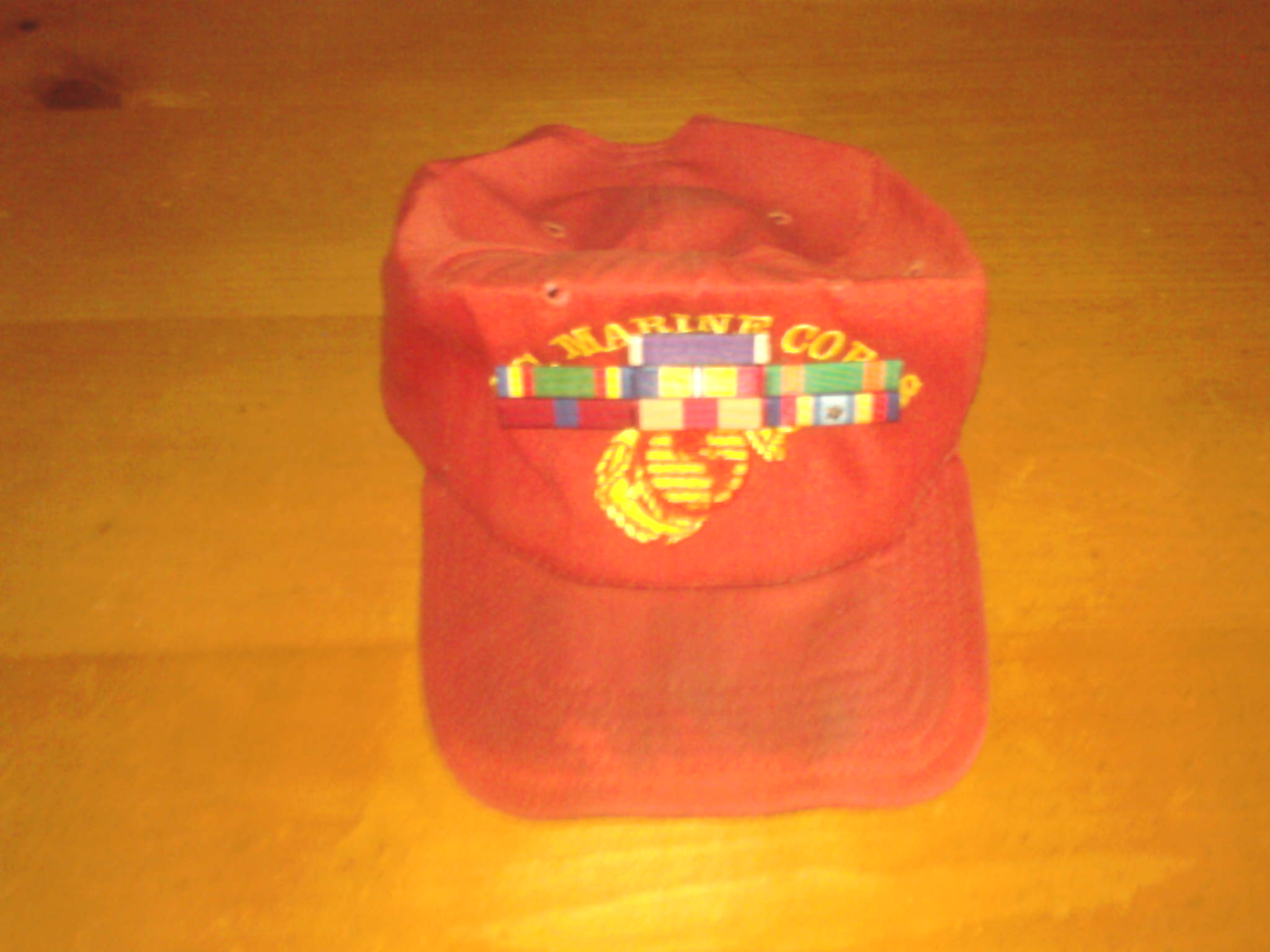
The Pride Hat
I awoke this morning to thoughts of old friends who left us too soon. It’s not an unusual occurrence; most mornings I wake thinking of the same men. When they died, they did not give in to fear; cowardice was not these men’s forte. Some died in battle, some preparing for battle. Two very good friends of mine died not in battle but the wounds they sustained in defense of liberty hastened their untimely departure from our world. One man was known simply as Tank. He was a large man, but in his later years his body had been ravaged by the effects of two bullet wounds and prolonged exposure to Agent Orange during two tours of duty in Vietnam. Today, I celebrate not only Memorial Day but the tenth anniversary of his passing. Although Tank never spoke of it, he was awarded a Bronze Star during his second tour. It wasn’t until his funeral that I learned how as a 23 year old platoon sergeant he ran back onto a hot LZ, taking a bullet in the back and one in the shoulder, in order to pull one of his men to the relative safety of a tree line. But anyone who knew the man wasn’t surprised to hear of his courage under fire.
This morning, as I thought of him, I shed a tear.
The other day, I watched my town’s annual Memorial Day parade. In addition to the Korean War and Vietnam vets, a detachment from the local Marine Corps reserve unit marched. As I looked at their eager young faces, I realized that most of those kids weren’t born when I earned my EGA in 1983. In fact, most of them hadn’t been born when I mustered out. Realizing that most of these young men will be shipped to Iraq or Afghanistan, I reflected on my own service. I joined to fight Communism, and like most of the world, I rejoiced when the Berlin War crashed to the ground. I truly thought my service had proven, in some small way, invaluable to the defense of the American way of life. Yet here I was, watching a new generation of Marines preparing to fight a new enemy. Had my service not been as valuable as I once thought? Had the men I had known during my service, men who had fought and died in battles around the world – had they died in vain? I decided that no, our service – their service – had been as important in our time as these brave young men’s service is today. And then I realized that none of those young men will return from their combat tours the same. Even if not scarred on the outside, even if they survive to return home physically intact, they will carry the memories of what they see and feel and endure for the rest of their lives.
And as I watched, I shed a tear.
Last night I watched the National Memorial Day Concert, broadcast from the National Mall on PBS. I listened as Gary Sinise and Dennis Haysbert recounted the final moments of Charlie Johnson’s life. I watched as a new generation of war widows were celebrated. I enjoyed the stylings of Brad Paisley. Like plenty of others, I rose to attention and sang the Marine Corps hymn during the Salute to the Services, and I rose to attention and sang again during “America the Beautiful.”
But many times during the concert, I stopped to shed a tear.
And I wondered, as prepared to try and sleep, will anyone awake on Tuesday and remember the sacrifices of the men who have fought and died to preserve the United States? It’s terrific that we have a day set aside to pay tribute to those men. And I don’t mind that we celebrate by doing uniquely American things – backyard barbecues, trips to the beach, baseball games. But I wondered, when Tuesday comes will my fellow countrymen remember those who ensured that the backyard barbecues could continue?
A little earlier today, I went to the neighborhood bodega. It was a routine trip to pick up a few items needed for my own backyard barbecue. Like many veterans, I have a “Pride Hat.” You may have seen one perched on a veteran’s head – a baseball cap on which are pinned his campaign ribbons. Mine is nearing retirement. It’s 14 years of service are evidenced by its faded color and the only thing keeping it together are years of starch used to block it. As a result, I only wear it on special occasions. Today being one of those occasions, I wore it on my walk to the bodega. On my return trip, a neighborhood kid – maybe 6 or 7 years old – stopped me and said, “Were you really in the Army?” I smiled and said, no, I am a Marine and we’re better than the Army. The little boy sat on his bike for a minute, seeming to take in this bit of information. The he stood, and said “Thank you” before pedaling off down the street.
I shed a tear. In fact, I’m still shedding a few as write this. Because I have my answer. For as long as children like this can find my service honorable, they will keep the flame of liberty alive. In so doing, the most important thing we can do as Americans to remember and honor the sacrifices of so many brave men will endure. We will continue to live as Americans, preserving our republic as the beacon of freedom and liberty for the rest of the world.
So, much to many a liberal journalist’s and blogger’s chagrin, it turns out that the Times Square bomb attack this past weekend was the work of an Al-Queda operative. Chuck Schumer and Mike Bloomberg both are probably trying to figure out how to erase their misguided – and potentially inflammatory – left-wing rhetoric about the bomber being a “home grown nut job who’s upset about the health care bill.”
Of course, typical Americans are not surprised to hear the Faisal Shahzad is a Pakastani who somehow obtained US citizenship; that he spent more than 5 months in his native country, and that he returned home specifically to get terror training. No matter how the media or President tries to spin this, Shahzad is exactly what most Americans think of when they hear about a terror attack: a seemingly educated Muslim man in his late 20’s or early 30’s with a serious mental defect. And lots of explosives at his disposal.
Which brings me to my main point. The Obama administration, and most of our neo-socialist leadership, is adverse to calling Islamic fundamentalism what it is: the root source of terrorsit attacks on the United and our allies. In their forthcoming NSS, the administration refuses to call out Islamic fundamentalism as a threat to domestic peace. They blatantly refuse to recognize this is a war – most likely in a misguided attempt at fostering relationships with the oil-rich Middle East nations where most terrorists are funded. Indeed, on April 7 (less than one month ago) the President banned all administration officials from uttering the phrases, “radical Muslim,” “radical Islam” and “Islamic fundamentalist” when describing terrorists or terrorist organizations.
Apparently, the President is living in dream world, where there is no War on Terror and all terrorists are merely criminals. There is no fundamental clash of cultures or ideologies in play. Islam is religion of peace and sorely misunderstood by Americans, and American culture is sorely misunderstood in the Middle East. If we can only foster a dialog, they won’t bomb us anymore nad we can all get together on the mountaintop to sing Kumbaya. If this attitude weren’t so rife with the potential to kill a whole lot of Americans, it would be laughable. After all, liberals have been promoting appeasement since – well, since Neville Chamberlain. I think we all know how that turned out.
The simple fact is this: we’ve been fighting Islamic fundamentalists since April 30, 1979. For those of you not too familiar with history, that’s the date that the US Embassy in Iran was overrun by radical Islamic Fundamentalists. 4 1/2 years later, a radical Muslim backed by Iran drove a car bomb into the US Embassy in Beirut, killing 299 Marines. The carnage hasn’t stopped since then. Of course, for most Americans this war began on September 11, 2001. And what has the current appeasement rapprochement gained us? A radical Muslim went on a shooting spree at Fort Hood. A radical Muslim boarded a plane bound for Detroit and tried to blow up his underwear. And now the Times Square fiasco. What most Americans have failed to realize is that we’ve been lucky with the past few attempts: had those attacks not been carried out by incompetent boobs, there would be a whole bunch of us dead right now.
So, what’s to be done? Already new restrictions on our liberties are being recommended. The same Senator Schumer who swore the Times Square attack was the work of Tea Partier has already floated the idea of cordoning off New York City. After the shoe bomber, we were all told to take off out shoes before boarding our flights. After the underwear bomber, the TSA began implementing a plan for full-body scans. After the Ft. Hood attack, numerous calls went out to further restrict Second Amendment rights. I’m sorry, but I fail to see how any of this attacks the root cause of the problem. In fact, it seems counter-intuitive to the whole concept of “Engagement.” If we’re supposed to be exporting the ideals of a free society, then why would try to turn ourselves into a continental police state?
No, President Obama, the way to end terrorists threats to the US is to recognize it for what it is and devote your energies to defeating it. Here’s my plan. It is remarkably simple, easy enough for even you to understand and implement:
Somehow, I doubt this plan will ever be put into action by this administration. But I for one would love to see an administration with enough backbone to do so.
 Political Baseballs