
The Supremes vs… Everyone Else?
I hear that EVERYONE is up in arms over the way the Supreme Court has ruled on this term’s cases. Conservatives are mad about the rulings on gay rights, liberals feel savaged by the ruling on the 1965 Voting Rights Act. Both are upset about the not ruling in the affirmative or negative on Affirmative Action. Indians are crying foul over an adoption case. All over the country, municipalities are wrinkling their noses over “new” limits on eminent domain laws. Governors had a large part of their executive authority executed, thanks to an overlooked ruling. Felons woke up with a hangover, realizing that they’re never going to be free of the Department of Justice. And in what may be a first, the Court managed to upset both liberals and conservatives with a pair of anti-discrimination decisions.

(h/t CNN)
Yes, there was something in this term to make EVERYONE upset with the 9 Justices. Everyone, that is, except libertarians. We’re actually smiling at the end of this term. Essentially, the Supremes ruled that trying to regulate all of these social wedge issues are nothing more than a waste of EVERYONE’s time and effort.
The reason for this is actually easy to understand, if you look at the Court’s makeup. There are four staunch liberals, three staunch conservatives, one constitutional conservative and one originalist. If you’re unfamiliar with the terms, here’s a layman’s way of defining it:
- Justices Thomas, Alito and Scalia are the staunch conservatives. They generally rule for limiting government authority, except on social issues – where expansive government is perfectly acceptable in promoting socially conservative values.
- Justices Ginsburg, Breyer, Sotomayor and Kagan are staunch liberals. They generally rule for expansive government, period. Unless the expansive government happens to directly threaten a liberal social value.
- Justice Kennedy is the constitutional conservative. He actually reads the text of the Constitution and tries to see where the issue lies within the document. Once upon a time, this is what social conservatives swore they wanted (remember the arguing over “strict constructionalism” in the late ’90s?). Then Kennedy started making decisions that weren’t socially conservative. That narrative is almost never heard anymore.
- Chief Justice Roberts is the originalist. He weighs precedent to see how past Justices have interpreted the Constitution and apply that to modern cases.
So, how does this wind up with a more or less libertarian court? In almost any case involving a socially divisive issue, there will be four votes for the liberal position and three for the conservative, even before oral arguments. This leaves Chief Justice Roberts and Justice Kennedy as the deciding votes on these cases. Justice Roberts tendency to avoid making new law from the bench means he generally votes with the conservative justices. That leaves Justice Kennedy, who is more concerned with actually applying Constitutional principles to the case being decided.
This dynamic gave us what we’ve seen this term. Kennedy voted with the majority in every decision, except for Hollingsworth v. Perry. In that case (the punt on Prop 8), there was a rare majority of conservative and liberal justices who voted 6-3 that the plaintiffs didn’t have standing to bring the case. Kennedy, in his dissenting opinion, wrote that he believed the court had standing to decide the case regardless of the plaintiffs and that remanding it to lower courts only ensured the case would return later (he’s probably right, too).
Most commentators like to portray Justice Kennedy as a Reagan conservative who has surprised conservative lawmakers by often voting with the Court’s liberal bloc. I often wonder where these people have been for the past 30 years. While it is true that he was nominated by President Reagan in 1987, anyone who has cursorily reviewed his prior rulings would understand that his primary concern has been in determining the limits of government power. Among his 9th Circuit rulings can be found ideas like “indifference to personal liberty is but the precursor of the state’s hostility to it” and “a zone of liberty, a zone of protection, a line that’s drawn where the individual can tell the Government, ‘Beyond this line you may not go.’” These are the same principles that define the libertarian cause. Given that the “swing vote” of the Supreme Court espouses libertarian views, why is anyone shocked when the courts decisions follow the same?
For all practical purposes, the political result is that neither liberals nor conservatives are going to be terribly happy with this court. Which is how the Court’s decisions should affect popular opinion. After all, is the Supreme Court is supposed to be an independent arbiter on the Constitutionality of the laws passed by the Legislative branch and the regulations created by the Executive. It isn’t supposed to stick a collective finger in the air to determine which way the political winds are blowing.
Immigration Reform? Not Really.
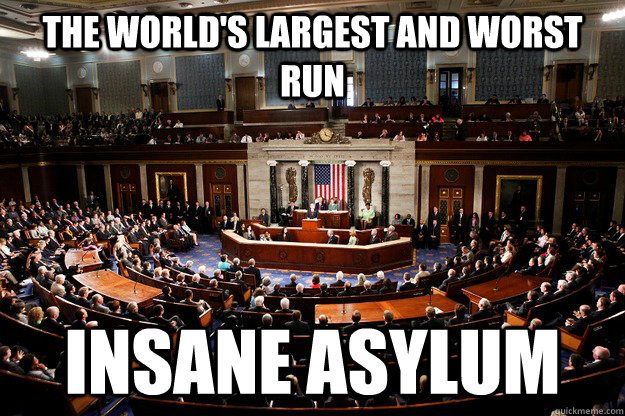
ONLY IN THE CONGRESS would as daft a piece of legislation as S.770 be called immigration reform.
This is not to say that our current immigration system isn’t in dire need of reform. Anyone who knows anyone who has tried to legally enter the country is well aware that our current system tends to be discriminatory and slow. It is full of arbitrary limits with neither rhyme nor reason. Capricious rulings from faceless bureaucrats rule the day.
Unrelated to the immigration system is the issue of border security. Everyone seems to recognize that our borders are as porous as cheesecloth. The Mexican border, in particular, has become a dangerous and unruly place. Mexican drug cartels have more control over the expanse of desert than our government, with numerous deaths to both US and Mexican citizens resulting from the insecurity. In the meantime, millions of Mexican citizens routinely cross over to the US without permission. Some return. Most do not.
These are not new problems. In 1986, we had our first go-round with “comprehensive immigration reform.” We granted immunity from prosecution or deportation to some 3 million illegal immigrants and we changed the criteria for obtaining visas, green cards and eventual citizenship for future immigrants. Included in the “comprehensive” solution was supposedly upgraded border security. I supported that effort, partly because I couldn’t see anyway to round up and deport 3 million people, partly because the border would be secured and partly because the path to legal immigration was made simpler for future immigrants. I felt it better to have those illegals legalized and paying taxes than using government services from governments they had no real stake in.
Yet, here we are some 27 years later and the same problems that existed before the 1986 legislation not only still exist, but are worse than before. We now have somewhere around 11 million illegal immigrants living in the US, the border is hardly secure, and the path for legal immigration is more cumbersome and frustrating than ever. The legislative response this time? A repeat of the 1986 legislative failure. For the life of me, I can’t see how anyone with more than three working brain cells can think this is appropriate.
And since the colloquial definition of insanity is doing the same thing over again and expecting a different result, I can’t see how anyone could look at the current legislation and not come away convinced that our Senators are insane.
As I mentioned at the top, I still believe our immigration system is in need of a serious overhaul. Not just a reform of the current immigration laws, but an all-out overhaul. If the Congress wants to strip down the current system and start from scratch, I’m fine with that. Heck, I would be really, really happy if they did that.
We also need border security. It should be a top priority and it shouldn’t be something that takes Congressional action to accomplish. After all, the Executive branch is responsible for maintaining border security. Yesterday, Sen. Lindsey Graham (a man quickly approaching Sen. John McCain for the “Most Senile Senator” award) told Chris Wallace that the border is “virtually militarized.” Well, that approach obviously isn’t working. I’m certain if the administration actually did militarize the border, there would be howls from the left. But I’m also certain that an infantry division patrolling the Rio Grande and another patrolling the Desert Southwest would be far more effective in maintaining border security than anything else we’ve tried thus far.
And we need to decide what to do with the 11 million people here without visas. I don’t think we’re any more capable of rounding up 11 million criminals today than we were capable of rounding up 3 million criminals 27 years ago. I don’t think they should be allowed to stay, either. I do think there is a very simple and cost effective way to have them return to their country of origin, though: deny them the means to live here. Make it impossible for them to work. Deny them the ability to rent a house or apartment. Deny them government services of any type. Give local governments the ability to turn over those here illegally to federal officials, and make it mandatory that anyone here illegally be immediately sent back home. Not all will “self-deport,” but more than the vast majority will. Human nature is human nature – once deprived of the means to support themselves or their families, they’ll move on to greener pastures.
What is certain that a repeat of the 1986 “comprehensive reform” package will get us, well, a repeat of 1986. Which means in 2040 another bunch of Senators will be discussing what to do about the fact there are more Mexican citizens residing in the US than than in Mexico, why the borders have become deadlier than ever and why the US cannot find (and keep) highly qualified people to emigrate here.
What the Farm Bill Defeat Really Means

From the ICYMI file: on Thursday, the House failed to pass a Farm Bill. Why is this significant? Because ordinarily, the Farm Bill passes both chambers easily. For instance, the Senate passed it’s version of the Farm Bill by a 66-27 vote. The last Farm Bill, in 2008, passed 316-117.
So why could this version of what is normally as uncontroversial a piece of legislation as possible garner only 195 “ayes” – and only 24 votes from Democrats? To hear the Democrat House leadership, it was a failure of the Republican leadership to round up their caucus, pointing to the 62 Republicans who voted against the bill. The Republican leadership casts the vote as pure partisan politics by the Democrats, who had promised 40-60 votes for passage and then reneged. According to the political press, the bill failed because it was too draconian in the way it slashed subsidies for everything from direct payments to farmers to the food stamp program.
All of them are wrong.
The problem with all of this prattling is that nobody is paying attention to a new dynamic that is appearing in the legislative process. The legislative institutions are creatures of habit. The rules they play by are built on decades of two-party primacy in American politics. As such, they’ve become a sort of hodge-podge of American Constitutionalism and parliamentary rulings, with very clear delineations of authority. There are majority and minority party leaders, deputies and whips. These party leaders are expected to round up the overwhelming of their party members into voting blocs. In a strict two-party system, these rules have worked well. Both parties have made use of the “Hastert Rule,” even before it was declared by former Speaker Dennis Hastert. (For the politically uninitiated, that particular rule says no bill can come to the floor unless it has support from more than half of the majority party). Likewise, both parties have made use of patronage and privilege to obtain votes and threats of retaliation to punish wayward caucus members.
But the system breaks down and becomes ineffective when there are three or more parties involved in legislating. While there may be only two official parties recognized in Congress, there is a stark reality that isn’t being faced by any of the DC proletariat: when they weren’t looking, a de facto third party stormed the gates. This party is not beholden to established party dictums or the existing rules. In fact, most of these members consider it their sworn duty to upend the apple cart. While most carry the “Republican” label, they are really much more broad than that narrow definition. Moreover, their power may be felt primarily in the House right now, but there are a small number in the Senate who are making life difficult for their caucus leaders.
I’m speaking, of course, about the Tea Party.
It is a loose coalition of libertarians and social conservatives, who ordinarily could not agree on the time of day. But in the current political climate, they do agree on one important point: the federal government is too big, too bloated and too intrusive. They see the issue not as one in which government practices must be reformed, but completely eviscerated. The reason they voted against the Farm Bill was not that it didn’t cut enough (as opined virtually everywhere), but that it spent $940 billion over 5 years – a figure that wasn’t offset anywhere else. For them, it represented further government growth, which is the ultimate sin. Their nays were virtually assured.
So what is the Republican leadership to do? In the Senate, the establishment Republicans are being faced with fierce resistance by the likes of Rand Paul, Ted Cruz and Mike Lee. These members have already employed their own version of the nuclear option to gum up the works on legislation. In the house, Speaker John Boehner and Majority Leader Eric Cantor are faced with a large bloc (perhaps as much as 35% of their caucus) who simply cannot be cajoled or threatened into following them.
The answer is, the Republican establishment needs to understand that the “party line” no longer exists as they know it. If they really want to survive as a viable party, then they need to reclaim their party – and realize they cannot reclaim the Tea Party caucus. The two groups, currently defined as factions within the media, are in fact two separate parties, pursuing disparate goals.
Legislatively, the “loony birds” (as described establishment figure John McCain) are successful strictly because they can sow havoc within the Republican caucus. While they may not have the power to pursue their own legislative agenda, they do have enough clout to prevent bills they dislike from becoming law. It is the root of the “do-nothing” Congress.
Of course, expelling the Tea Party members from the Republican caucus would present two problems for the establishment part of the party. First, in a practical sense, it would mean losing their majority status in the House and being further diminished in the Senate. Second, while the establishment still represents the majority of the Republican brand, there is little doubt that the real energy in the party is coming from the Tea Party faction – and real fear among Republican leaders that crossing swords with Tea Party candidates would lead to decimating losses for establishment types.
For the Tea Party itself, such an expulsion would have immediate consequences, in that there isn’t a national Tea Party infrastructure. This would mean to survive, it would need to build one immediately. Fundraising (always critical in political campaigns), identifying candidates, getting on state ballots – all of these operations would need to get up-and-running within months, if not weeks. Undoubtedly, groups like FreedomWorks and Heritage would be willing to jump in on their behalf. And a skeletal effort could be gleaned from former Rep. Ron Paul’s presidential campaign organizations. It’s even likely the libertarian Koch brothers, much reviled by the political left, would be willing to switch allegiances.
In the short-term, however, the Republican party is facing a question over how to proceed. It seems likely that the compromises hammered out in the Senate stand virtually no chance of passing the House without significant buy-in from Democrats. On budget matters, the Republican Establishment is still more closely aligned with their Tea Party members than with liberal Democrats – meaning repeats of the Farm Bill fiasco are more likely unless the leadership crafts legislation that reduces overall spending. Think about it: the sequester, reviled publicly by liberals and privately by establishment conservatives, was never supposed to happen. The political calculus was nobody would want to see across the board spending cuts. But none of the main players counted on a strong Tea Party bloc that wanted exactly that outcome. And sequester-type bills are the only thing Tea Party members will approve on appropriations.
So, what happens now? Expelling the Tea Party from the Republican caucus would smooth the passage of legislation that bloc finds offensive. But it would cost the establishment Republicans their power and potentially their seats in 2014 or 2016, an unfathomable idea to the Washington mindset. Moving further to the right on budgetary matters would allow them to preserve their majority, but would likely lead to a legislative stalemate with the Senate. That’s also considered a political loser for the establishment. My bet is on the latter, though, if for no other reason that it leaves battle lines as drawn between Republicans and Democrats. It is a version of kabuki theater with which both parties are familiar.
But looming in the background will be the Tea Party. At the moment, it is much more prominent on the national stage than in local and state government. But if more Tea Party type candidates find themselves in elective office on those levels and the establishment Republicans are perceived to only pay lip-service to Tea Party ideals, then watch out. There may be a sudden explosion of legislators and governors, mayors and council members, displaying a T after their name to show party affiliation.
One Pissed Off Marine
And if you are not outraged after watching this, it might be time for you to seek asylum elsewhere. Trust me, the weather in North Korea is beautiful this time of year.
Lil Wayne – Steps on the US flag – God Bless America – HD – YouTube.
A Simple Question
(h/t TF Stern)
The lies that this government tells regarding the unconstitutional NSA surveillance programs are never ending. Just this past weekend we learned that contrary to administration and congressional assurances, analysts at the NSA routinely listen in on phone calls and read private emails without any warrant whatsoever. At this point, I’m not sure how anyone with a pulse can actually believe the drivel coming out of the DC establishment. (The Chief Liar, when the revelations about the scope of the NSA wiretapping were first being divulged: “Some of the hype we’ve been hearing over the past day or so — nobody has listened to the content of people’s phone calls.”)
The one thing that we’re constantly told by those same DC establishment types is that these programs are justified, Fourth Amendment be damned, because they’ve stopped “dozens” of terrorist attacks. The Nitwit-in-Chief said,
“I think it’s important to recognize that you can’t have 100 percent security and also then have 100 percent privacy and zero inconvenience. We’re going to have to make some choices as a society.“
This was his justification for abandoning his oath to uphold the Constitution, suggesting that in order to keep the nation safe we were going to have to “choose” to ignore pesky Constitutional limitations on executive authority. It’s a common theme from Herr Obama, who also raised the specter of doing away with the Second Amendment in the name of “public safety.”
In the name of fairness, I’ll play along with the little game the DC spinmeisters created. We’ve been told by all kinds of politicians that “dozens” of attacks have been stopped by their illegal spying on Americans, but to date they’ve only told us of two, including an attempted bombing of the NYC subway. Yet, a little digging on my part has turned up 28 terrorist attacks since the program began, including 7 on US soil since Obama was sworn in:
- June 1, 2009: Abdulhakim Muhammed shoots two soldiers at a Little Rock, AK recruiting station. Muhammed freely admits to being an Al-Qeada operative.
- Novermber 5, 2009: Maj. Nidal Hassan shoots up a dispensary at Fort Hood, killing 13 and wounding more than 30. The investigation discovers that he has been espousing a Jihadist philosophy in emails and message board postings. Last week, a military judge refused to allow Hassan to use his preferred defense – that he was defending Al-Qeada from American aggression.
- December 25, 2009: Umar Farouk Abdulmutallab attempts to explode a bomb concealed in his underwear while his international flight is on final approach into Detroit. The flight is spared only when the underwear bomber’s bomb fails to detonate and other passengers subdue the Al-Qeada agent.
- May 1, 2010: Faisal Shahzad plants a car bomb in NYC’s Times Square. Disaster is averted only when Shazad’s bomb fizzles instead of detonates. A broken wire in the detonator is later found to be the cause for the bomb’s failure.
- May 10, 2010: A pipe bomb detonates at a Jacksonville, FL mosque, wounding 60. Nobody has ever claimed responsibility and no arrests have ever been made
- January 17, 2011: A bomb is discovered along a parade route to honor Martin Luther King, Jr. Again, no one claims responsibility and the case remains open.
- April 15, 2013: Two brothers, Tamerlan and Dzhokhar Tsarnaev, explode a pair of backpack bombs at the Boston Marathon finish line. 3 are killed and over 170 wounded. In the resulting manhunt, it’s discovered that the elder brother “disappeared” in Chechnya for six months and that both brothers have “radicalized” in recent years.
I have 7 examples of terrorists that slipped through the warrantless dragnet first unleashed by Bush and expanded by Obama. There are 21 more where the terrorists either successfully killed their American targets overseas, or were only stopped by their incompetence. Quite frankly, the entire program looks absolutely ineffective.
Unless, of course, the intent of the program is simply to give the administration surveillance powers not even the Gestapo or NKVD dreamed of. In that case, it is the most successful program of it’s type in history.
A Patriotism Optional Nation
“In the beginning of a change the patriot is a scarce man, and brave, and hated and scorned. When his cause succeeds, the timid join him, for then it costs nothing to be a patriot.” -Mark Twain
This is going to be a long post, so I’ll beg forgiveness now. But what needs to be said is far too important to attempt to keep this brief, or under 750 words – for if it were that simple, then it wouldn’t need to be said.
Our nation is at a crossroads of our history. Down one path lay the glory and honor bestowed on us by the men whose names we learn to cherish as children: Washington, Jefferson, Franklin, Lincoln. Down the other lay one paved in darkness and guarded by men we’ve learned to revile: Stalin, Hitler, Napolean, Caesar. We haven’t arrived at this juncture by accident, but it wasn’t pre-ordained, either. We came to this point willingly and of our own accord.
How did we arrive here? Because when times call for the greatest fortitude, people clamor for illusory safety and willingly allow government to abscond with what we once described as inalienable liberties. While our nation followed this course during the 18th and 19th centuries, we never forgot – or allowed our elected representatives – to forget the meaning of the word “inalienable.” Even the most egregious violations of the Bill of Rights and examples of executive overreach were quickly repealed. Or failing that, the third leg of our government – the courts – would invalidate the law in question. During the Civil War, the government violated the Third Amendment (prohibiting quartering soldiers in private homes), the Eighth Amendment (prohibiting cruel and unusual punishment), and Article I, Section 8 of the Constitution (the nation’s first military draft was enacted by executive order, not an act of Congress). By the war’s end, troops were no longer quartered in private homes, the Army commanders who had inflicted the most horrible deprivations the mind can create were themselves jailed and the Supreme Court invalidated the draft.

By the time the Great Depression had plunged the world into chaos, the citizenry was panicked. Governments around the world responded by instituting varying levels of socialism. In nations with a history of repressive governments, the repression reached new levels of inhumanity. Germany, Russia, Italy, Japan and China all gave rise to governments that (as a matter of policy) established mass executions and detentions while squelching all opposition. Spain erupted into a civil war between two equally brutal and repressive regimes.
In the US we instituted the “New Deal,” a series of programs that increased the government’s role in the economic and business life of the nation to unprecedented levels. This intrusion into previously private affairs didn’t infringe on the basic freedoms enshrined in our Constitution, the Bill of Rights or the Declaration of Independence. But it did set an important milestone in the affairs of the nation. It marked the firs time the nation willingly exchanged freedom of action for the illusion of security. (Let’s face facts: the national economy in 1939 was only marginally better than in 1929).
However, with the outbreak of World War II, Americans accepted not only having their inalienable rights curtailed, but in several case outright removed. Japanese-Americans by the tens of thousands were jailed, their citizenship nullified by executive order, in violation of the Sixth, Seventh and Eighth Amendments. First Amendment protections were stripped away, as a compliant press and population acquiesced to censorship on a grandiose scale. Defendants were not allowed to exercise their Fifth Amendment right against self-incrimination in “national security” trials. J.Edgar Hoover’s FBI routinely searched homes and businesses for saboteurs – without warrants, in violation of the Fourth Amendment.
After the war ended, these Constitutional violations ended. But 44 months of war and deprivation, after 12 years of government intrusion during the Great Depression, had inoculated the American public from the idea that government needed to be guarded against. An entire generation had now grown up knowing only a federal bureaucracy that claimed it could solve the problems of mankind.
“If tyranny and oppression come to this land it will be in the guise of fighting a foreign enemy” -James Madison
Thanks to the relentless indoctrination our nation has endured for almost 80 years, both from popular culture and the way we teach (or more accurately, fail to teach) history and civics, the United States of America is no longer the home of the brave. This is not to say that there are not courageous individuals among us. Obviously there are, or else things like this wouldn’t happen. But our society no longer expects bravery as the norm, which is why we celebrate those willing to run into collapsing towers.
This transformation of the American from rugged individual to fearful member of the collective gave rise to egregious abuses of power over the last six decades. Some we still remember: McCarthyism, Watergate, Iran-Contra. Others have slipped the collective conscience and disappeared in to mists of time. The common thread between all, though, is an underlying belief that government should have more power than the people it serves – all in the name of safety. It’s how we’ve wound up with massive programs. It’s how lawmakers and executives of both major parties can say with a straight face programs like PRISM are necessary to keep Americans safe.
This brings us to the 21st century, a century that began with the downing of the World Trade Center. The American populace screamed for vengeance, yelled for justice – but more importantly, demanded the government make them safe. And the government responded to those demands; not with a measured voice reassuring the populace that the terrorists would be caught and punished. Instead, two major wars were launched by executive fiat. Yes, the Congress technically voted to invade those foreign countries, but the vote was actually to cede the power vested in them by the Constitution to the Executive branch. Seemingly overnight, we were a nation at war.
“We cannot defend freedom abroad by deserting it at home.” -Edward R. Murrow
In the same way the United States has ceased being collectively valorous, we have sullied the definition of patriotism. Being a patriot requires more than waving a flag on Independence Day, singing “God Bless America” during a baseball game; it is more than putting a lapel pin on your suit jacket or cheering returning soldiers. These are nothing more than outward displays of nationalism. Regardless of a nation’s ideals, such actions are performed by supposed patriots of every nation. Britons stand when a band strikes up “God Save the Queen,” Saudi’s bow when the King’s limo passes by.
On the other hand, the patriot understands and defends the ideals which separate his nation from all others. The original American patriots pledged “our Lives, our Fortunes and our sacred Honor.” Many gave their lives, more sacrificed their fortunes. None, however, were forced to give up their honor. Rather, their honor was restored by fighting for the ideals in the document they signed in 1776. In our modern era, the rights they enshrined as being inalienable, rights that laid the foundation for our nation, are being eroded by the misnamed Patriot Act, by secret courts and warrants, by an executive branch that sees little value in life or liberty. Where are the modern patriots?
 The reality is patriotism is a vanishing character from our nation. More than half of our citizens are perfectly happy to be spied on by their government, not caring this can only occur as an abrogation of the Fourth Amendment. Over the past week, I continuously hear statements like “If the government wants to watch me watch porn, I don’t care.” Nobody much cares if the Nazi’s can’t march in Washington, so long as they can watch Honey Boo-Boo. After all, freedom of speech isn’t for people who might have offensive views but only those with whom we can commiserate. Abridging the Second Amendment, redefining it if necessary, is fine. The public doesn’t care, so long as it can be made to feel safer. Seventh and Eighth Amendment protections for suspected terrorists need not apply – especially if the hapless citizen accused of terrorism is overseas. Why bother with a trial, when a missile tipped robot can eliminate the problem? If a bunch of kids in Brooklyn get stopped and frisked by the NYPD for the awful crime of walking around, who cares about their rights to due process? The cops might find a gun on one of them.
All of this is now acceptable to an American people conditioned towards cowardice. Our forefathers abandoned personal safety and financial security in the pursuit of liberty. They did this at the founding of the nation and as they expanded the national boundaries westward. They did this as they boarded creaky ships to cross the Atlantic in the 18th, 19th and early 20th Centuries. These people were patriots. They did not fear their government, they stood for their rights and took it to task when government dared infringe upon them.
“When the people fear the government there is tyranny, when the government fears the people there is liberty.”― Thomas Jefferson
Despite the platitudes from the elected, our modern government is no longer “of the people, by the people and for the people.” The modern American constantly lives in fear of what the government may do to them, rather than holding government to account for its actions. They often don’t even realize how afraid of government they’ve become. They live in fear of being audited by the IRS, of having their driving privileges revoked, of having their property seized by “eminent domain.” They live in fear that their employer will lose a government contract, of being denied a government loan, of being denied admission to college.
So, my question to you is: what are you willing to give up for liberty, those of you who call yourselves patriots? Are you willing to sacrifice your life? Your house? Your bank account? Your Social Security check? How about the big screen television or cell phone? Because our reality is that very few are willing to sacrifice anything. It’s why we’ve become a nation of nationalists, not patriots. We cower when we should fight. If you want to know why you are no longer safe in your cities, America, look no further than the rot that infects your citizenry’s soul. Your complacency as the nation’s values were stolen is the reason our foreign enemies are emboldened.
“Great occasions do not make heroes or cowards; they simply unveil them to the eyes of men. Silently and perceptibly, as we wake or sleep, we grow strong or weak; and last some crisis shows what we have become. ” ― Brooke Foss Westcott
America is now the nation of cowards. As such, we’ve become the patriotism optional society.
May God help us all.
Trust Me – I’m from the Government!
“Trust me government asks that we concentrate our hopes and dreams on one man; that we trust him to do what’s best for us. My view of government places trust not in one person or one party, but in those values that transcend persons and parties. The trust is where it belongs–in the people. The responsibility to live up to that trust is where it belongs, in their elected leaders. That kind of relationship, between the people and their elected leaders, is a special kind of compact. Three hundred and sixty years ago, in 1620, a group of families dared to cross a mighty ocean to build a future for themselves in a new world. When they arrived at Plymouth, Massachusetts, they formed what they called a “compact”; an agreement among themselves to build a community and abide by its laws. The single act–the voluntary binding together of free people to live under the law–set the pattern for what was to come. A century and a half later, the descendants of those people pledged their lives, their fortunes and their sacred honor to found this nation. Some forfeited their fortunes and their lives; none sacrificed honor. Four score and seven years later, Abraham Lincoln called upon the people of all America to renew their dedication and their commitment to a government of, for and by the people. Isn’t it once again time to renew our compact of freedom; to pledge to each other all that is best in our lives; all that gives meaning to them–for the sake of this, our beloved and blessed land?”
 The words above were spoken by Ronald Reagan, during his acceptance of the Republican nomination for President in 1980. He was not prescient regarding today’s headlines – he was very much speaking about how the triple whammy of Vietnam, Watergate and Carter had ruined American trust in government.
You have to wonder what he would say about events 9 years after his death.
The scandals rolling out of the White House over the past month seem to cascade, gaining in severity as each new revelation makes the headlines. First there was the attempted cover-up over what happened at the Benghazi consulate on September 11, 2012. That quickly was pushed aside by the revelations that the Department of Justice was wiretapping reporters, going so far as to name one a criminal co-conspirator, and using the secret FISA courts to obtain the warrants. A few days after that came news the IRS was targeting conservative, religious and civil libertarian groups – which despite repeated administration attempts to at turns sweep the investigations away or stonewall them, continue to amaze in their revelations of government run amok. Then last week, we learned that the National Security Agency (perhaps better called the National Paranoia Agency) is actively spying on, well, on EVERYONE.
Of course, to hear the usual suspects, the spying is neither intrusive (hey, it’s only every piece of communication you’ve taken part in over the past 6 years) nor targeted at people who’ve done nothing wrong. But for that argument to have any merit, you need to believe that the government can be trusted. And since late April, the only thing the government has successfully demonstrated is that it cannot be trusted to make a ham sandwich, much less not abuse power.
As I wrote about earlier, there is a common thread that binds all of these revealed actions together: the belief that government knows best. While I welcome that traditional liberals have joined with conservatives in decrying over all of this (you can read some excellent opinion articles here, here and here), the fact is that those traditional liberals are primarily responsible for the way this administration continues to circumvent the Constitution. They have spent 70 years pushing an agenda that calls for greater and farther reaching government “solutions.” It is the progressive tradition that claims the Constitution is an outdated document. It is their current tribune and the man currently occupying the Oval Office, who has publicly lamented that the supreme law of the land fails to define what the “government can do for you” and that he is “constrained by the system the Founders put in place.”
The abuses of power we’re now witness to, are the direct results of that philosophy. After all, were the government limited in authority and power as originally planned by the Founding Fathers, then such things could not have come to pass. Hopefully, America is starting to awaken to this reality. If Barack Obama is the last President to wield such immense power, if this is the last Congress to pass sweeping laws that (at best) skirt Constitutional limitations, then this period of our history will serve to have forever discredited liberalism as a political theory.
We can only hope.
A Generational Divide
 Yesterday, Senator Frank Lautenberg died. While I doubt there was anything politically speaking we agreed on, I still respected the man’s commitment to our home state (New Jersey) and country. When I posted those thoughts on Facebook, I was blasted by a sizable number of my friends for memorializing a liberal Democrat. The commentators disparaged him for everything from “spitting on his oath of office” and “attempting to overturn the Constitution” to being an “outright fraud” or “typically corrupt NJ politician.”
Those last two made me stop and think for a moment. Had Lautenberg ever been associated with any sort of corruption or abuse of of his office? The answer is no, and that is saying something for a New Jersey politician. The only association with scandal in his 30+ years of public service is that he replaced a Senator who was convicted for his role in Abscam. Was he a classic liberal? Yes. Corrupt. No.
But why the vilification of a man whose biography is the epitome of the classic American success story? Within the answer to that question lies the answer to much of what ails our political system today. And the answer is not a matter of liberal or conservative principles, but rather what defines those principles in the 2010’s. Undergirding those definitions is not racism (though it is always an undercurrent) or sexism, but ageism.
A little relevant history is probably in order here. I was born in 1965. This makes me either an old Gen X’er or young Baby Boomer, according to demographers. Frank Lautenberg was born in 1924, making him a member of the “Greatest Generation.” Now stop to consider what those demographic distinctions mean, politically speaking. Senator Lautenberg would have been in kindergarten at the start of the Great Depression. By the time he was entering his junior year in high school, Germany was invading Poland and World War II was underway. After a youth of watching New Deal programs like the WPA and CCC save his hometown from disappearing from the map, his young adulthood would be spent fighting the Nazi’s. He would spend the rest of his twenties attending college under the GI Bill. In his 30’s, government programs helped him found ADP – and government contracts helped him grow ADP into the world’s largest payroll processing company.
In contrast, my youth was dominated by the debacle of the Vietnam War and shame of Watergate. The economic stagflation of the Carter years ended with the ignominy of the Iranian Embassy. After my time in the Marines, there wasn’t a GI Bill – it had been replaced by the Veteran’s Education Assistance Program (VEAP), which paid for one semester of college. My first business wasn’t assisted by the government; rather I spent more time than I really had ensuring I wasn’t running afoul of some obscure regulation or another (something that still plagues entrepreneurs to this day.
In short, Frank Lautenberg witnessed an activist government that worked to improve lives, that won the most critical war of the pre-nuclear age and that literally saved the world. As Robert Samuelson points out in this op-ed, I grew up witnessing an activist government with rampant corruption, rife with incompetence, incapable of managing even a comparatively small crisis. Lautenberg’s political views were largely shaped by watching a government managed economy, that while imperfect, at least managed to make poverty tolerable. Mine are the result of watching a government managed economy that has eroded the earning and savings power of it’s citizens and thrown millions into poverty (see chart below).

Click on the image to read the original article
This clash on the views of the efficacy of Big Government is at the heart of the the turmoil within the Republican party. Baby Boomers, such as John McCain, Mitch McConnell and John Boehner share the view that Big Government isn’t inherently bad – just that our current government is poorly managed. The Gen X’ers (Rand Paul, Ted Cruz, Mike Lee, Marco Rubio, etc) simply believe that government has grown too large and unwieldy – or as Samuelson put it, government has “bitten off more than it can chew.” Democrats have largely staved off this demographic upheaval because (a) the vast majority of their Congressional Leadership is comprised of people over 70 and (b) the current President is also an unabashed liberal. The clash of identities that marked the Clinton presidency (Clinton, while more liberal than his Republican counterparts, certainly isn’t as far to the left as the current president).
So how does this story end? It can only end one way, and that’s also a result of demographics. The old standard bearers will eventually die off, leaving the Gen X (and eventually, Millenials) in charge of the Republican brand. Although my friends on the left probably do not want to hear this, eventually the liberal wing of the Democrat party will also die off (liberals are a declining percentage of the population, as recently as last year’s elections only 24% of the electorate declared themselves as “liberal” or “progressive”). That will leave the more conservative DLC wing in command. Future arguments will focus entirely on what role is appropriate for the federal government in our republic, not the size or machinations of said government.
And that is a good thing.
The Hold On Investigation
Wait…I ALMOST remember!
Late last night, Eric Holder released the results of his investigation into possible abuse of power by Eric Holder. The investigation was sparked by public outrage over the Department of Justice’s harassment of reporters from the Associated Press and Fox News. To the surprise of everyone, his investigation completely absolved himself and the Department of Justice of any malfeasance.
“After a cursory examination of the evidence, I realized that most of it had been accidentally destroyed. What little evidence exists is protected by Executive Privilege and therefore inadmissible in court. Likewise, I exercised my 5th Amendment rights, making any testimony I might have given useless.”
Within the pages of the report are tucked away several interesting conclusions. One is that, like his boss, Eric Holder apparently is oblivious to anything he does, says or signs. “While the signatures on the affidavits affirming the need for wiretapping James Rosen’s personal communications are indeed mine, I do not remember signing them. I must have been too busy to read the memoranda and went solely on the advice of the prosecuting attorney. There is also the distinct possibility I signed them while at the 19th hole after playing a round with the President.” The Attorney General also notes that insinuating a reporter is a subversive agent under the Espionage Act “should only be done when the preliminary evidence overwhelmingly supports such allegations, or when the reporter is highly critical of the President, the Attorney General, the Democrat Congressional Leadership or George Soros.”
Eric Holder also specified internal policy changes going forward at the DoJ. Among them, requiring all prosecutors to ensure “that the Eric Holder is not three sheets to the wind” when requesting legal authorizations, requiring Eric Holder’s executive assistant to screen all calls, “especially from that asshole, Darrell Issa” and “sweeping Eric Holder’s telephones, offices, home and favorite golf shoes” for listening devices.
The Last Man Standing
President Biden? And next on the list would be President Boehner.
Once, we delivered great leaders to the leadership positions in government. Today, we deliver…mediocre politicians.
A Veteran’s Memorial Day
I originally posted this on Memorial Day, 2010, but the sentiment is the same. As you head out to the beach, the barbecue or the ballgame today, please take a moment to remember why you have this particular Monday off from school or work.
And although it’s been three years since I originally wrote this and the little boy at the end is now not quite so little, I still want to thank him and his parents. Whenever I need affirmation that this nation still has good and just people, I think of them.

I awoke this morning to thoughts of old friends who left us too soon. It’s not an unusual occurrence; most mornings I wake thinking of the same men. When they died, they did not give in to fear; cowardice was not these men’s forte. Some died in battle, some preparing for battle. Two very good friends of mine died not in battle, but the wounds they sustained in defense of liberty hastened their untimely departure from our world. One man was known simply as Tank. He was a large man, but in his later years his body had been ravaged by the effects of two bullet wounds and prolonged exposure to Agent Orange during his two tours of duty in Vietnam. Today, I celebrate not only Memorial Day but the tenth anniversary of his passing. Although Tank never spoke of it, he was awarded a Bronze Star during his second tour. It wasn’t until his funeral that I learned how as a 23 year old platoon sergeant he ran back onto a hot LZ, taking a bullet in the back and one in the shoulder, in order to pull one of his men to the relative safety of a tree line. But anyone who knew the man wasn’t surprised to hear of his courage under fire.
This morning, as I thought of him, I shed a tear.
The other day, I watched my town’s annual Memorial Day parade. In addition to the Korean War and Vietnam vets, a detachment from the local Marine Corps reserve unit marched. As I looked at their eager young faces, I realized that most of those kids weren’t born when I earned my EGA in 1983. In fact, most of them hadn’t been born when I mustered out. Realizing that most of these young men will be shipped to Iraq or Afghanistan, I reflected on my own service. I joined to fight Communism, and like most of the world, I rejoiced when the Berlin War crashed to the ground. I truly thought my service had proven, in some small way, invaluable to the defense of the American way of life. Yet here I was, watching a new generation of Marines preparing to fight a new enemy. Had my service not been as valuable as I once thought? Had the men I had known during my service, men who had fought and died in battles around the world – had they died in vain? I decided that no, our service – their service – had been as important in our time as these brave young men’s service is today. And then I realized that none of those young men will return from their combat tours the same. Even if not scarred on the outside, even if they survive to return home physically intact, they will carry the memories of what they see and feel and endure for the rest of their lives.
And as I watched, I shed a tear.
Last night I watched the National Memorial Day Concert, broadcast from the National Mall on PBS. I listened as Gary Sinise and Dennis Haysbert recounted the final moments of Charlie Johnson’s life. I watched as a new generation of war widows were celebrated. I enjoyed the stylings of Brad Paisley. Like plenty of others, I rose to attention and sang the Marine Corps hymn during the Salute to the Services, and I rose to attention and sang again during “America the Beautiful.”
But many times during the concert, I stopped to shed a tear.
And I wondered, as I prepared to try and sleep, will anyone awake on Tuesday and remember the sacrifices of the men who have fought and died to preserve the United States? It’s terrific that we have a day set aside to pay tribute to those men. And I don’t mind that we celebrate by doing uniquely American things – backyard barbecues, trips to the beach, baseball games. But I wondered, when Tuesday comes will my fellow countrymen remember those who ensured that the backyard barbecues could continue?
A little earlier today, I went to the neighborhood bodega. It was a routine trip to pick up a few items needed for my own backyard barbecue. Like many veterans, I have a “Pride Hat.” You may have seen one perched on a veteran’s head – a military baseball cap on which are pinned his campaign ribbons. Mine is nearing retirement. It’s 14 years of service are evidenced by its faded color and the only thing keeping it together are years of starch used to block it. As a result, I only wear it on special occasions. Today being one of those occasions, I wore it on my walk to the bodega. On my return trip, a neighborhood kid – maybe 6 or 7 years old – stopped me and said, “Were you really in the Army?” I smiled and said, no, I am a Marine and we’re better than the Army. The little boy sat on his bike for a minute, seeming to take in this bit of information. The he stood, and said “Thank you” before pedaling off down the street.
I shed a tear. In fact, I’m still shedding a few as write this. Because I have my answer. For as long as children like this can find my service honorable, they will keep the flame of liberty alive. In so doing, the most important thing we can do as Americans is to remember and honor the sacrifices that so many brave men have and will endure. We will continue to live as Americans, preserving our republic as the beacon of freedom and liberty for the rest of the world.
A Government of People

 One constant with the Obama administration has been the taint of scandal. Of course, the news media has been particularly exercised over the past ten days or so. Beginning with Benghazi, continuing through the IRS mess and right into the Justice Department’s spying on the AP, the folks at 1600 Pennsylvania Avenue have been deluged by the media feeding frenzy. But the reality is this: Team Obama has faced a seemingly endless run of scandals throughout this Presidency. There was the lack of “shovel-ready” jobs, the “green energy” debacles of Solyndra and Fiskar, the notoriously inept “Fast and Furious” gun running operation, the “recess appointments” of NRLB directors, the Corporation for National and Community Center misuse of funds. This is also the administration that sees no problem with killing Americans overseas, has pushed for expanding the Patriot Act to allow warrantless spying on virtually anyone (the root of the AP scandal), pushed hard for the authority to indefinitely detain anyone, appointed committed communist Van Jones to a federal post, created the “czar” positions and has overseen the overwhelming ammunition purchases by the Department of Homeland Security. There are plenty more, of course, but you get the idea – this is an administration that kicks up dirt with every step.
The current narrative is that all of this proves that the Obama administration has a bunch of rotten eggs, some who are outwardly corrupt and that the lack of managerial skill in the White House is the primary culprit for all this nonsense. Well, yes – but don’t get sucked into that storyline. The real scandal is not malfeasance by government officials, nor is it the nature of Washington politics. It is not the politicization of every detail (sorry, Mrs. Pelosi) or Republican complicity with a dastardly administration (sorry, Mr. Limbaugh).
The real scandal is that everything that has happened was going to happen under this President, regardless of Congressional oversight or public outcry. No matter how many times the administration stubs its big toe, it will continue on the path they set upon in January, 2009. This is not because the President or his chief lieutenants are corrupt by nature. Instead, it is because of the overriding belief that government can solve all problems, tackle every issue and bring peace and harmony throughout the land.
On its face, this isn’t a terrible idea. It would be wonderful if there were an entity that could wave a magic wand and make every problem disappear. It is the basic thought behind every liberal policy position. But it is scandalous, if only because it is an idea that has been tried many times before and never with any success. In some cases, the result of attempts at government interventions are humorous (such as the toilet paper shortage in Venezuela). But far more often, the results are disastrous. If you’re at a loss for why this is, all you need to do is look at the people around you.
The preamble to our Constitution established a “Government of the People, by the People and for the People.” What the Founding Fathers failed to verbalize is that as with all governments, it would also be a government OF people. That is to say, at all levels of government, there are people making decisions daily; decisions which affect their fellow citizens’ daily lives. What liberals (or progressives) fail, time and again to recognize is that people are not infallible. Quite the contrary, people make mistakes. And a person who believes in the infallibility of government is going to be far less vigilant in looking for the fallibilities in government employees than one who knows better. The Founders understood that bureaucrats generally lack common sense, which is why they spent more time writing into the Constitution the things government is not allowed to do than conferring powers to the bureaucracy. Not so sure on this point? Stop to ask yourself how many of those people around you would you trust with intimate details of your life. Then realize that one out of every ten Americans is currently receiving a paycheck from your taxes – and you’ll begin to understand why government is not the beneficent giant liberals want you to believe in.
This is not to say government is inherently evil. However, when the people employed by the government are in charge of the government, bad things tend to happen. It isn’t a lesson that Barack Obama seems to have learned – and it’s why he is not fit (and never was) to be the Chief Executive of the United States.
What a difference 48 hours can make
 So, despite an economy that’s in the toilet and a solid 40% of the nation never buying your policies, you’ve managed to ride your personal popularity to a slight lead in the polls. Just to make matters more scintillating, the opposition seems intent on NOT winning the upcoming election. After all, how else do you explain their choice for nominee, a man who epitomizes many of the things most Americans personally despise? On top of that, the nominee has all the personality of flat white paint and switches positions so often even he doesn’t know which side of the fence to sit on.
If you didn’t know better, though, you would swear that Barack Obama has looked aver these gifts and decided he just doesn’t want to be President next year. It’s the only thing that makes any sense at this point. Otherwise, why would he be doing his best Jimmy Carter routine with less than six weeks until election day?
I’ve been traveling quite a bit over the past 48 hours. In a way, it’s probably a good thing – otherwise this blog would’ve blown up form all the posts. But to recap the events (in case you were hiding under a rock)
- On the anniversary of the September 11 attacks, mobs attacked the US Embassy in Cairo and the US Consulate in Benghazi, Libya. As it turns out, the attacks now look like the work of al-Quaeda (what a surprise) and it also looks like the CIA and Homeland Security tried to alert the administration and the State Department of the threat 48 hours in advance. The response? The administration ordered the Marine guards in Cairo disarmed and State relied on local security forces in Benghazi. The Embassy in Cairo was stormed and the American flag burned. In Benghazi, the US ambassador and three of his employees were murdered.
- It’s also come to light that President Obama hasn’t sat in on any of his security briefings since September 5th. I guess between campaigning, raising money, golfing and shooting hoops, he doesn’t have any time left for mundane things like, oh – doing his job?
- Yesterday, the Federal Reserve announced that the economy is booming along so well that it’s now launching QE3. Unlike QE1 and 2, this time it’s open ended. The Federal Reserve will print upwards of $85 billion a month (that’s roughly 6% of the total economy) until unemployment reaches some magical number, now assumed to be 7.5%. Of course, Ben Bernanke could change his mind and decide on some different number later. Regardless of how you feel about this latest round of quantitative easing (I’ll probably write more on it later), it’s hardly a ringing endorsement of the President’s fiscal policies.
- Yesterday, before the ink was even dry on the court opinion that the NDAA is unconstitutional, the Justice Department had already filed an appeal. Apparently, although holding foreign nationals and countries accountable for their actions isn’t part of this administrations repertoire, detaining American citizens indefinitely without a writ of habeus corpus is perfectly acceptable.
- Since the original attacks in Cairo and Benghazi, US Embassies in Yemen, Morocco, Indonesia, Malaysia, Tunisia, Lebanon, India, Pakistan and even London have been scenes of mob violence, while riot police and demonstrators have had a running battle in Cairo.
- And today, the President’s spokesman said (I kid you not), “This is not a case of protests directed at the United States.”
That last bit was the final straw. The Obama administration is obviously intent on throwing in the towel (and to Hell if he throws in the American people along with it). The question is, is Mitt Romney enough of a candidate to pick it up and run with it? I’m still not convinced he is. Until then, I’ll continue to support the only candidate on the ballot I see supporting American principles, values and commitments: Gary Johnson
Mike Rowe: the First Four Years are the Hardest…

Mike Rowe, doing another Dirty Job
You may be familiar with Mike Rowe from his show on the Discovery Channel, Dirty Jobs. Even if you’ve never seen the show (in which case I suggest you catch an episode), you’ve probably seen him shilling cars and trucks for Ford or paper towels for Viva. And if you watch ABC’s World News then you hear his voice every night – he’s the announcer during the opening and commercial breaks.
What you may not realize is that he is also a serious advocate for vocational training. His foundation, mikeroweWORKS, is dedicated to making education in skilled trades something other than a remedial course of study. He understands a point I made several weeks back, that a four-year degree is not the best path for every student. Or for our nation’s future.
Before you say that of course our nation still values the skilled trades as highly as a college education, ask yourself how you would react if your son or daughter announced their intention of becoming a truck driver after high school. Or a plumber, electrician, farmer, or welder. Even thought they are among both the highest paying and most consistently sought after trades by employers, I doubt it would be greeted with the same enthusiasm as an announcement they wanted to become an astrophysicist or surgeon.
Therein lies a major problem, both for the current economy and the economy of the future. Already the news is full of accounts of college graduates queuing up for job applications in the unskilled trades (think retail worker), simply because there isn’t demand for their skill set. At the same time, there is a desperate need for mechanics, welders, riggers, electricians, plumbers, HVAC techs – all you need to do is pick up the help wanted section of any metro newspaper.
Mr. Rowe understands this problem is a problem. To that end, he’s written an open letter to Mitt Romney. He wrote a similar one to Barack Obama during the least election cycle, but based on the President’s education initiatives it fell on deaf ears. You can read the full letter here, but I wanted to lift one line that I thought exemplified the problem:
“I always thought there something ill-fated about the promise of three million “shovel ready jobs” made to a society that no longer encourages people to pick up a shovel.“
In a nutshell, THAT is the biggest problem with getting our nation back to work today. Many of my conservative friends are adamant about making welfare and unemployment recipients work for their benefit checks. I don’t necessarily disagree with that sentiment. But in a nation that no longer values physical or skilled labor, how likely is a program akin to Roosevelt’s CCC or WPA to succeed?
The Hangover
I’m pretty sure everyone reading this has experienced a bad hangover after a night of too much partying. You wake up with an oversized cotton ball in your mouth, your head is ringing like a fire bell, you have strange cravings for McDonald’s French fries and you can’t seem to move faster than a poorly fed snail. You want to kick yourself. Yeah, the party was awesome (and you still can’t find that missing lamp shade), but man, the hangover is more price than you wanted to pay.
I get the feeling many on the left are feeling something like that today. First, after the euphoria of Bill Clinton’s speech Wednesday night, they had to deal with a less than impressive performance from Barack Obama last night. Either Obama’s speechwriting team needs a shake-up or the President is out of ideas; most of what we heard last night is best summed up as “Hey, I want a do-over!” Most media outlets, including admittedly left-leaning publications like the NY Times and Politico, panned the speech as not one of his best efforts.
Then, along came this morning’s jobs report from the Bureau of Labor Statistics. No wonder the president wants a do-over.
By now, you probably read all of the doom-and-gloom reporting about it. Make no mistake, this was a pretty lousy report. But worse than the numbers themselves is what it all means when you actually dig into them a little.
First, the headline numbers: the economy only created 96,000 new positions in August, but the unemployment rate dropped to 8.1%. This should be good news for the President, right? The unemployment rate is dropping (if somewhat unsteadily) and may actually get under the magic 8% mark most pundits think is needed if Mr. Obama is to have a real shot at reelection. And 96,000 new positions is better than no new positions, right?
Well, yes, sort of. For a better picture of why the jobs report is foreshadowing a major problem, see figure 1. This is the raw BLS data for the past year. Before your eyes begin to glaze over, there are three numbers to pay particularly close attention to.
3,965,000
1,808,000
2,723,000
The first number is the increase in the working age population over the past year. The second is the number positions created in the past year. That last one? That’s the number of working age Americans who simply gave up looking for a job in the past year. To put it another way, more of your friends, relatives and neighbors gave up the hope of even finding a job than actually found one. Nearly a million more, in fact. That’s one million American’s who are now dependent on some outside source just for survival, be it a friend, relative or the handout machine that’s become the US government.

Most economists say we need between 110,000 and 175,000 new jobs each month just to keep up with population growth. But when you look at the actual increase in working age population, the average number actually needed is around 330,000. This is very bad news for team Obama, otherwise he could point to the average of 150,000 jobs created over the past year and claim that his policies are working, albeit slowly. But the reality is that his policies are, at best, creating jobs at only half the rate needed to bring the US back to full employment.
This is particularly troubling, given that every other indicator says we should have been creating jobs at a much faster pace over the past 24 months. If you look at hourly wages, those increased by an average of 3 cents per month between March 2010 and June 2012. Although not at the level of increase seen during the Reagan, Clinton or Bush recoveries, it is still stronger than historic wage growth. Worker productivity across all sectors is also nearing an all-time high and produced solid gains during the same period. Taken together, high wage growth and productivity gains always produced significant jumps in employment before – but not now. What could possibly be holding back the “jobs engine”?
The BLS publishes an “Employee Cost Index” on a quarterly basis, and a large part of the answer can be found there. While wages and productivity show considerable growth, the ECI is also growing – in fact, it’s grown by nearly 11% since March 2010. Of that, change only 18% is represented by increased wages and a 12% drop in non-cash benefits (things like health coverage and gym memberships) counterbalances that number. So, where is the additional 10.3% in employee cost coming from? The answer is a combination of regulatory costs and taxes, the results of 3 years of this administration’s ceaseless efforts to tie nearly every industry into a Gordian knot of inefficiency. New regulations and business taxes now exceed the productivity gains made by our nation’s workforce by a 4:1 ratio, effectively wiping out the need to hire. Indeed, those costs are probably now the single biggest impediment to real employment growth our nation faces. After all, if you owned a business, you would need to be looking at explosive growth potential, not just modest growth, before bringing that much excess on board.
Many of my friends on the left insist that breakneck pace of regulations passed by the Obama administration are not having a negative effect on the economy. I submit they’re not only negatively impacting the economy, but giving business owners throughout all 57 50 states a hangover of our own.
The Ryan Attack
 Regardless your personal feelings about Paul Ryan (R-WI), two things clearly came to the fore with his speech last night:
First, the man is a much more polished politician than his naysayers would have you believe.
Second, mainstream media analysts be damned, he’s perfectly comfortable being Mitt Romney’s pit bull.
The traditional roles for the Vice Presidential nominee are simple. They should deliver his home state’s electoral votes to the party’s nominee. And they should be able to attack the other party’s nominee, without seeming impossibly mean-spirited. Four years ago, Alaska Governor Sarah Palin got the nod in what was one of the most curious choices ever made by a Presidential candidate. Alaska is a solid Republican state, so Mrs. Palin wasn’t going to deliver an additional 3 electoral votes that John McCain likely didn’t already have. While she proved a willing attacker of all things Democrat (and that includes, to this day, Barack Obama), she always seemed…snarky is probably the best way to describe it.
Ryan, on the other hand, may prove to a much more capable VP pick. Even before his speech last night, his selection helped turn what has been a traditional bastion of Democrat electors into a battleground state. (Both CBS/NYT and PPP latest polling in Wisconsin has the Presidential race as statistical tie, where once the President had a commanding 11 point lead). But what may prove even more dire for Mr. Obama’s re-election chances is the way Mr. Ryan demonstrated that you can attack even a likable candidate on pure policy issues, and do so in a way that makes the target still seem likable – but hopelessly inept.
Time and again in his speech, Mr. Ryan pointed out the failures of the current administration in terms of policy: a ragged economy, a sense of hope lost and a looming fiscal crisis that has been worsened by profligate spending and partisanship. Yet at the same time, Mr. Ryan did not attack the President as person. Indeed, he praised Mr. Obama’s rhetoric and ability to connect with voters. In a line certain to get considerable airplay in a commercial near you, he said:
“College graduates should not have to live out their 20s in their childhood bedrooms, staring up at fading Obama posters and wondering when they can move out and get going with life.”
That one statement provides a stark contrast between Senator Barack Obama in 2008 and President Barack Obama in 2012. In 2008, those millions of college freshmen turned out in droves to vote for the senator. In 2012, they are now recent graduates – unable to put their degrees to work, living back home with their parents and thoroughly disillusioned with their former champion.
There were other great soundbites as well (imagine a political speech without a soundbite!). My personal favorite was this, just a few moments later in talking about his beginnings:
“When I was waiting tables, washing dishes, or mowing lawns for money, I never thought of myself as stuck in some station in life. I was on my own path, my own journey, an American journey where I could think for myself, decide for myself, define happiness for myself. That’s what we do in this country. That’s the American Dream. That’s freedom, and I’ll take it any day over the supervision and sanctimony of the central planners.”
For me, that statement IS what the subcontext of this election is about. What is the “American Dream?” Is it, as Mr. Ryan describes, the pursuit of one’s individual goals and the freedom to make them a reality? Or is it, as described by Mr. Obama, the assurance of an equal experience for all Americans, regardless of innate abilities, talents and desires?
If the Republicans succeed in framing the 2012 election in this context – and not Mr. Obama’s preferred context of blame the other guy, rich vs. poor – then I believe they will also win this election. In Mr. Ryan, they found a capable point man, one the Democrats should fear over the next 70 days.
Unlimited Data Plans: Are They Coming Back From the Dead?
Odds are, T-Mobile’s move back to offering unlimited data is a stop-gap measure aimed at generating some short-term subscriber gains. It isn’t a direct shot at AT&T and Verizon, since their typical subscriber is more concerned about QoS than price. Rather, it’s aimed at stealing some market share from the other low-cost post paid carrier, Sprint. The big problem is going to be paying for the 4G network build while subsidizing all-you-can-eat data plans, especially in light of parent company Deutsche Telekom’s reluctance to keep pumping cash into what has been a losing proposition for them.
“You Didn’t Build That”

Pres Obama campaigns in Roanoke, VA
July 13, 2012
Our President, it seems, is a socialist at heart. Or maybe a fascist. I used to joke about it, but never really believed our nation could elect anyone so far removed from American thought as that. But one thing is clear after his diatribe against business owners last week in Virginia: Barack Obama does not believe in the American Dream. He believes in the dreams of Karl Marx, instead.
“If you’ve been successful, you didn’t get there on your own. YOU DIDN’T GET THERE ON YOUR OWN… somebody along the way gave you some help…
If you’ve got a business, you didn’t build that. Somebody else made it happen.”
Look, I get it. So do the millions of other Americans – and people from around the world, for that matter. Humans are social creatures; we create and live in societies in which certain responsibilities are shared. The President’s speech highlighted the ones most of us recognize: police and fire protection, education, transportation. But here’s what the President and his acolytes fail to understand: while we do these things for the mutual benefit of everyone in the society, we also understand that differences in outcome depend far more on individual ability than any other factor. The President discounts that notion, and in so doing, insults anyone who has slaved at creating a business. Perhaps he thinks it an archaic anachronism from the 19th century, the same way he does religion or gun rights. I’m pretty sure that the men we celebrate because of the ability to turn their dreams into reality would disagree – from Thomas Edison through to the neighborhood butcher.
Regardless of his reasoning, the result is the same twisted, demented view of society – that all people should enjoy more or less equal outcomes, regardless of ability. That is, of course, the basis for socialist and communist thought. It is the responsibility of those more able to provide the means for the rest of us, and it is our right to expect they will. Of course, that isn’t the American Way – but it is the Obama Way, and it dovetails neatly with the change he promised in 2008.
The American Dream is tied to equal opportunity, not equal outcomes. Stop and consider your own lives. Are you more successful than some of the people from your own past? Less successful? Certainly, as I look back to my own high school graduating class, I’m more successful than some of my classmates and not quite as successful as a few others. Why is that? Did they have a different baseline than I? Of course not. We grew up in the same town, came from families that were more or less similar in economic and social status and attended the same schools with the same teachers. That the difference in our economic and social outcomes might derive from innate talent or desire or even how hard each of us worked throughout our lives is of no consequence to the socialist.
“I’m always struck by people who think, well, it must be because I was just so smart. There are a lot of smart people out there. It must be because I worked harder than everybody else. Let me tell you something – there are a whole bunch of hardworking people out there. If you were successful, somebody along the line gave you some help. There was a great teacher somewhere in your life. Somebody helped to create this unbelievable American system that we have that allowed you to thrive.”
Yes, Mr. President. We are all working from the achievements of those who came before. But there are also the failures who came before and who come along today, and we’re also working from them. Are some the result of bad luck or bad circumstance? Perhaps, but I’ve never believed in “luck” as we commonly refer to it. Besides, I’ve thrived despite what most people would consider horrible luck – being stricken at age 25 with Crohn’s Disease. Has that horrible illness held me back some? Yes, but it is what it is: and it simply means I have to work that much smarter and harder to ensure that I got a positive outcome. So, no, I don’t believe that “luck” plays a significant role in your outcome and your individual ability is far more important.
This is the point that the President fails to understand. Just as every person’s world view is shaped by the circumstances of their life first, I think the President’s is likewise informed. He can look back upon his own life and understand the concept of getting ahead by being pulled ahead far more easily than by working harder or smarter than anyone else. This is a man who, by his own admission, was a pothead in High School, a classic underachiever who wound up attending Harvard and Columbia not because of his academic achievement but because of affirmative action programs. He became Harvard Law Review editor not because of his journalistic or legal abilities, but because of campus connections (to this date, Barack Obama remains the only editor without a single byline). The pattern has repeated itself, time and again throughout his life until he rose to the pinnacle of success and assumed the Presidency. This is not to say the President is not intelligent; he certainly is, but undoubtedly he realizes he would not hold his office were he not the Chosen One from early on. But he believes it impossible to achieve success without some form of divine providence. He completely ignores that individual ability is a far greater indicator of success than any other factor.
Relegating individual ability to a mere production indicator, not success indicator: this has been the progressive dream for over a century, of course. Equality of outcome, not opportunity is the hallmark of the Liberal Dream. In Barack Obama, that dream has found the ultimate champion – and a man determined to foist it upon the United States, regardless of the consequences.
A User’s Guide to the US Constitution
What’s that you say? You didn’t know there was a user’s guide to the Constitution?
Well, obviously SOMEBODY wasn’t paying attention in Civics class. Either that, or you’re one of the unfortunate millions who never had the opportunity to study civics – but that’s a different post for a different day.
Let’s begin with a little history. Our Constitution didn’t just materialize out of thin air. Neither did it arrive at the National Archives in the same manner that Moses received the Ten Commandments. (I’m only half being tongue-in-cheek about that; one of my younger acquaintances honestly thought that God himself gave the Constitution to George Washington in a burning ring of fire. And we wonder why the country is heading off the rails?) In fact, our current Constitution wasn’t even the first one The United States used. That honor belongs to the Articles of Confederation. It’s in there that some of the quirkier aspects of our national government can be found: the idea of state representation, as opposed to popular representation for instance. It went into effect in 1781 and was quickly realized that it made the federal government too weak to be effective. The principle reason we scrapped it is as old as the fight for American Independence: taxes.
 The USA incurred serious debts while fighting off the British Empire, primarily owed to the French. After the Treaty of Ghent was signed and the US officially became an independent nation, the French – who were near broke themselves (this was the time of “Let them eat cake”, after all) – came looking for their money. The French King was quite accommodating: the new United States could pay up in gold and silver, or could hand over land from the former British Colonies. Not willing to give up the territory we had just fought over for the past 8 years, the Continental Congress passed excise duties in order to pay the debt. Great idea, except under the Articles of Confederation, any state could opt out – and 11 of them did. Just to compound matters, most of the states had individual liabilities resulting from the war, mostly due to the French crown as well. So, they passed taxes and tariffs on each other to pay off those debts. By 1787, the entire country was readying for civil war as each state asserted its rights under the Articles and a hapless Congress could only look on in despair.
Enter the Constitutional Convention. In February of 1787, rather than go to war with one another (thankfully), the states agreed to a redo on how the federal government should operate. Originally, 70 people were selected to attend. Only 55 actually did and of those, only 39 signed on to the new Constitution. It was understandable: most had shown up expecting a sort of massive peace negotiation, not a negotiation about scrapping the current government and replacing it with something entirely different. Rhode Island was so upset by the idea that they recalled all of their representatives. The new Constitution, even after weeks of negotiating, was hardly a hit: as mentioned, 16 representatives refused to sign, including some fairly big names of the day. Imagine if we decided to reboot under a new Constitution today and the current Speaker and Vice-President refused to lend their support to the document. That was the same effect that George Wythe (Virginia) and John Lansing (NY) not signing had in 1787. And that was just the beginning of the trouble getting the Constitution ratified: popular support was anything but forthcoming. Just like today, a document that is amazingly short proved to be incredibly difficult for the populace to comprehend.
That’s where our user guide comes in play. The two principle architects of the Constitution, James Madison of Virginia and Alexander Hamilton of New York engaged in a series of letters that sought to explain how the Constitution affected everyone: from vagabond to Senator; scullery maid to Governor. Today, we know these letters as the Federalist Papers. These 85 letters, most commonly published as essays on what equates to our modern op-ed pages of the popular newspapers of the time, provided the Founding Father’s actual vision for how the Federal government is supposed to act.
It is the quintessential user’s guide. Like any good instruction manual, it lays out – in detail – how each branch of government should interact, not only with one another but also with the states and the general population. So next time you have a question about why something is set up the way it is, hit that link and review the reasons before going off half-cocked.
Our Goal is to Make Barack Obama a One-Term President

Ok, color me confused, but I fail to see a problem with the premise that the Republican party is dedicated to ending President Obama’s tenure after four years. This must make me some sort of space alien, since according to the media and my “moderate” friends I should. As for liberals, they’ve already consigned me to a fate worse than a heretic’s during the Spanish Inquisition, so they really don’t get any say here. (Sorry, but you can go back to your corner and wait for your next handout).
For those of you uninitiated, Senate Minority Leader Mitch McConnell (R-KY) made the title statement a year ago today. McConnell was immediately excoriated by the press as being an obstructionist – and almost on cue from Team Obama – disparaged as not caring about the real problems facing the nation. I didn’t understand the diatribes then, and I still don’t see the issue now. If the Republican party’s true aim is to fix what’s ailing the country, shouldn’t they start by fixing the biggest problem we have?
I’ve probably lost more than half my readership by this point, but for those who’ve stuck around, let’s look into that mission statement in a little more detail. Why should the singular aim of the Republicans be to make Barack Obama a one-termer?
First, there are unbridgeable policy differences between the liberal (er, progressive) wing of the Democratic party, led by Barack Obama and the conservative wing of the Republican party. In both parties, there are some self-described moderates, but the last two election cycles reduced their ranks and influence considerably. The few moderates left are an endangered species and most are retiring. As a result, the philosophical divide between the two major parties is greater than at any time since Reconstruction. The partisanship currently displayed in Washington and in state houses in everywhere is symptomatic. Now, don’t get me wrong: there are plenty of issues where I do not agree with either party. I’m a Libertarian, so the headlong rush to continue things like the Patriot Act, ratify SOPA and generally undercut our civil liberties I find particularly offensive. But hey, that seems to be the only thing both parties agree on, so whatever. The point is, the Republicans and Democrats agree on almost nothing else. Why should Republicans want to have the person in charge of the Executive Branch be a man who is personally opposed to their policy objectives?
Second, this is a two-way war. Congressional Republicans are not the only ones refusing to co-operate. In the past three years, the White House released executive orders and regulations that undermine the policies conservative Republicans support. From the unilateral decision not to enforce DOMA or immigration statutes to threatening social security payments, the President and his minions have declared war on conservative policies, past and present. Obama signaled his intention to work with Congressional Republicans early in his administration when he announced to Eric Cantor, “Elections have consequences.” Barack Obama claims to be a bible-reading Christian; perhaps he should open to Galatians 6:7 (“Be not deceived; God is not mocked: for what a man soweth, that shall he also reap”). He asked for this fight on day 1; that he’s surprised it came is a startling admission of how little he understands.
Finally, McConnell was not stating that the Republican goal is simply to prevent the President from having any success. He could have phrased it better, probably. But the goal of conservatives everywhere (and of Libertarians) is to prevent the President or his party from growing the government even larger – and to do that, it means getting him out of office. Government currently has a larger share of the economy than at any time in history, accounting for 41% of GDP, a 6% growth rate over the past three years. Once Obamacare fully kicks in (unless repealed), that percentage projects to rise to 69%. And at that point, you can kiss whatever freedoms you had good-bye. Once you’ve lost economic freedom, the civil liberties you take for granted are quick to follow. Don’t think so?
Consider your job. Your boss comes in one day and says you have to stop reading that loony guy over at Political Baseballs because it upsets upper management. Are you going to quit your job or say so long to my little blog? And don’t pretend it doesn’t happen – it happens all the time. He who controls the purse strings eventually controls every aspect of your life – unless you’re willing to follow the example of the Founding Fathers and pledge your fortune and your life to throw off the yoke of slavery.
So, yes. There are some very real reasons that Republicans – and freedom loving Americans – should want to ensure the President is a one-termer. Anyone who finds that offensive is either a sycophant (you can put your hand back down; I don’t give hand outs) or living in a fairy-tale world where nothing bad can ever come of a government program.
I don’t live in a fairy-tale. I live in the world that will be much better off once Barry O is sent back to Chicago.
 Political Baseballs